Lunch Is the Itinerary
In Singapore, Paris, Hong Kong and Seoul, the midday reservation can organise the museum hour, the neighbourhood and even the night that follows.
Executive brief
For travellers who would rather build a city day around one serious meal than collect landmarks, four Three Fork records show why lunch deserves its own geography.
01Dinner has monopolised ambition for too long
Travellers reserve the important dinner first and then spend the day protecting it: lunch is reduced, walking is calibrated, the afternoon becomes a holding pattern. A serious midday table produces a different city. There is time to notice the room in daylight, to let the meal set its own pace and to emerge with an evening that has not yet been assigned a purpose. Lunch can be the more luxurious reservation precisely because it refuses to turn the entire day into an approach to dinner.
The practical edit is geographic. Place one cultural visit before the table, not three. Leave the hours afterwards loose enough for appetite and weather to decide what happens. A long lunch followed by a walk, a rest and an unplanned drink is not an empty itinerary. It is a day with a centre of gravity. The restaurant must be worth that responsibility, which is where a current Fork record becomes more useful than fame alone.
02Singapore and the cleanly divided day
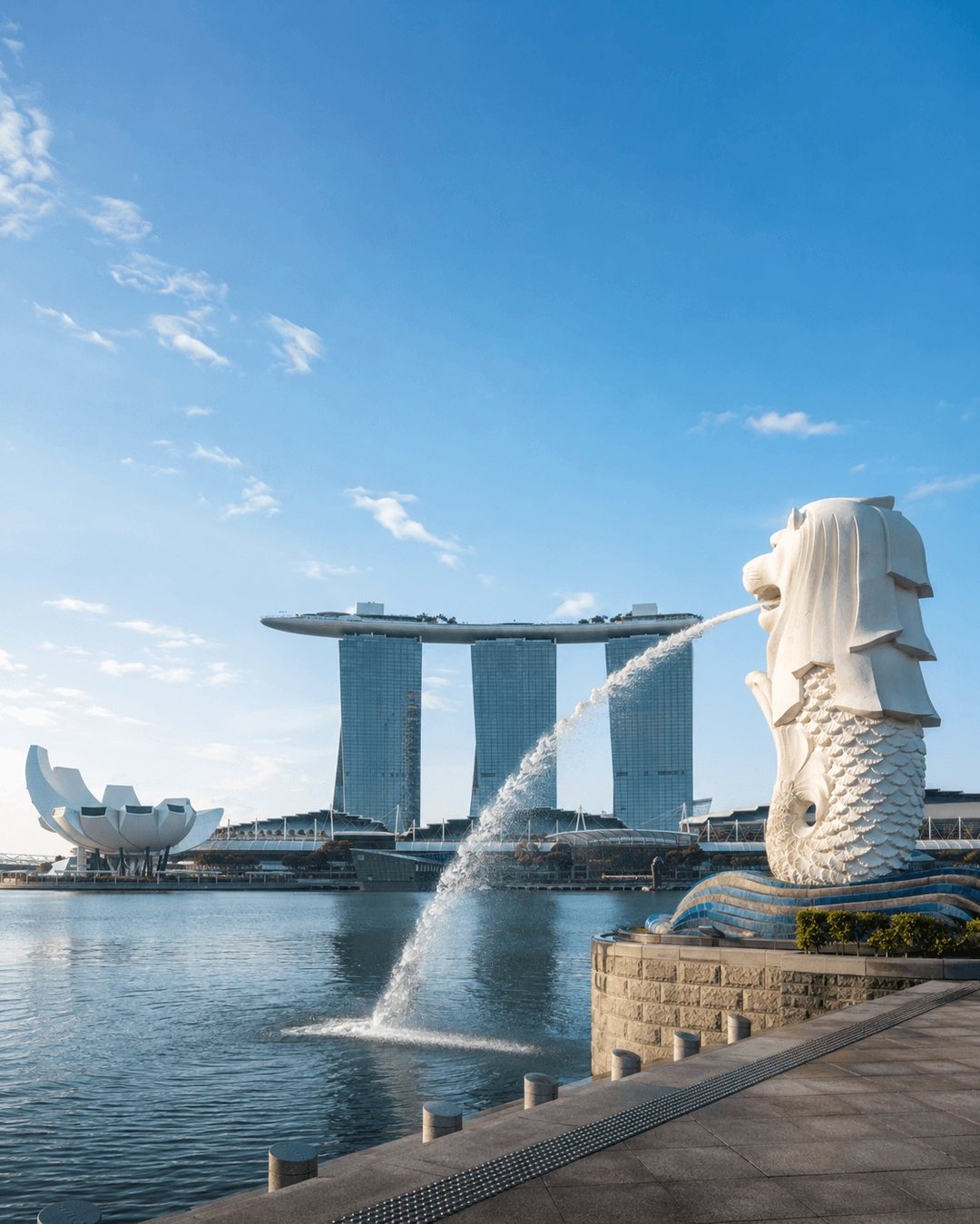
There is a precise reason Les Amis belongs here. Its Singapore, Singapore record is 3 Forks · 97.0/100, and A midday reservation in a compact, well-connected city can become the pivot between two distinct neighbourhood hours. The score or distinction establishes evidence; the editorial decision comes from fit. Luxury is persuasive when the address solves the central tension of the trip without demanding that every guest want the same day, the same meal or the same degree of attention.
The meal earns its place when it sharpens attention without making the afternoon impossible What matters is not whether the experience contains ceremony, but whether ceremony can recede. The address should know how to change volume across the day. Recognition, privacy, food and movement all feel different at breakfast, after an excursion and late at night; luxury depends on that modulation rather than on constant intensity.
Reserve enough time for the complete service and avoid a fixed commitment immediately afterwards Finally, imagine the departure rather than the arrival. Will the location release the next leg cleanly? Will the final meal or morning feel complete without being prolonged? An address that ends well often proves more luxurious than one that announces itself brilliantly. The last hour reveals whether the experience was designed as a whole or merely front-loaded with seduction.
A great lunch does not interrupt the itinerary. It changes the scale of the day, replacing distance with attention and evening urgency with a slower appetite.
The World’s Best Travel Desk
03Paris and Hong Kong: lunch edits the map
Plénitude - Cheval Blanc Paris, in Paris, France, enters this story with 3 Forks · 97.0/100. A destination lunch in the historic centre can replace several cross-city movements with one concentrated afternoon. That context matters more than any isolated amenity: it establishes what the address must make easier, what it can ask of the traveller and where its particular luxury should become visible. The useful reading begins after the arrival image, in the ordinary hour when appetite, timing and company no longer follow the brochure.
The luxury is not only duration but the permission to stop treating Paris as a checklist This is the difference between an impressive address and a useful one. The former can dominate an itinerary; the latter gives it shape, making some choices effortless and others clearly unnecessary. Notice how the experience behaves between scheduled moments. If the quieter intervals have texture, the celebrated parts no longer need to carry the entire emotional weight of the trip.
Choose the morning visit for proximity and walk after lunch without another timed ticket Confirm the practical detail before paying for the symbolic one: location before view, timing before access, sleep before space. Then leave enough of the day open for the address to prove its judgement. The best choice will not produce the fullest schedule. It will produce the clearest memory of why this place, on this route, suited the people who came.
The case for Amber begins in Hong Kong, Hong Kong SAR, China, where its record stands at 3 Forks · 97.0/100. The city’s vertical geography makes a serious lunch a useful pause between districts and modes of transport. Read the address through that moment rather than through a complete inventory of facilities. A hotel, restaurant or vessel becomes memorable when it handles one specific kind of pressure with unusual accuracy; everything else is supporting material, however polished it may be.
A well-placed meal can turn transit into structure rather than friction The distinction is not cosmetic. It changes who will feel most at ease, how long the stay should be and which compromises are worth making elsewhere. Travellers often compare properties as though the one with more were automatically superior. A senior edit asks instead which address removes the right friction while preserving enough encounter with the destination to keep the journey alive.
Decide which side of the harbour owns the afternoon before confirming the table Ask the property to explain trade-offs, not simply upgrades. A candid answer about distance, noise, pacing or the limits of a room category is more valuable than another promise of personalisation. Book when the answer aligns with the trip already desired. Decline when the hotel would require rebuilding the journey around benefits that sound impressive but solve no actual need.
Restaurant
Plénitude - Cheval Blanc Paris
Paris, FrancePlénitude - Cheval Blanc Paris: sauce is not the final adjustment applied to an ingredient; it is the composition from which the ingredient takes its meaning.
Open the record →Restaurant
Amber
Hong Kong, Hong Kong SAR, ChinaAmber's defining achievement is not a single signature dish but a disciplined reconstruction of modern French dining around the ingredients and conditions of Hong Kong SAR, China.
Open the record →04Seoul: give the district the afternoon
Jungsik carries 3 Forks · 97.0/100 in Seoul, Republic of Korea. In a city of wide distances, the reservation should justify its district and create a reason to remain nearby. The distinction supplies a current measure of strength, but it does not choose the trip. That requires a more personal calculation: whether the pace, geography and social register of the address answer the version of luxury the traveller will actually use once the first impression has passed.
The strongest plan lets the restaurant introduce a part of Seoul rather than extracting the traveller from it That quality will appeal to one traveller and leave another cold, which is exactly why the comparison has value. Luxury writing becomes advertising when every address is declared universally desirable. The honest task is to describe the social temperature, the likely rhythm and the point at which the property’s strengths stop being relevant to the way a particular guest moves.
Build only one neighbourhood decision on either side of the meal Protect one unclaimed interval around the experience. Without it, every delay feels like loss and every additional suggestion becomes pressure. Margin is not empty time; it is where service can respond intelligently and where place begins to register beyond the planned highlight. This is often the least visible and most valuable component of the rate.
05Read the ship after the brochure excitement fades
The reader’s question is direct: When is lunch important enough to organise the city day around it? The conclusion is conditional rather than evasive. A strong current record narrows the field to places with credible high-end performance, but the final choice turns on timing, geography, companions and the particular friction the trip needs removed. Destination lunch as the organising principle of a luxury city day is therefore not a search for the property with the largest inventory or the loudest reputation. It is an exercise in matching professional evidence to a real day.
The World’s Best approaches fork ratings and city guides as high-end luxury lifestyle coverage. The system is designed for travellers deciding where exceptional service, privacy, design, cuisine, wellbeing or voyage craft justify attention and expense. It is not a mass-review marketplace: there is no crowd average to maximise, no volume of comments standing in for a standard and no commercial payment that can purchase a stronger editorial conclusion.
The 2026 Fork standard gives cuisine 55 per cent of the assessment and requires cooking to clear the level floor independently; service, wine, spectacle or price cannot rescue a weak plate. One Fork means Worth Booking, Two Forks Worth a Detour and Three Forks Worth the Journey. Those published weights and gates matter because they prevent one photogenic strength from carrying the whole result. They also make the judgement legible. A reader can see which kind of evidence supports the distinction and where a personal priority may sit inside—or outside—the category standard.
The Fork level on each record is a current professional category judgement, not an average of public opinions and not a promise that every diner will value the same menu, room or duration. The four records in this article are dated to the 2026 publication cycle and use canonical TWB identities. Their cards provide the current level, formal record URL and approved entity imagery. The prose does a different job: it interprets fit without inventing a stay, meal, sailing, inspection or conversation that the editorial file does not establish.
That separation protects both enthusiasm and scepticism. A rating is strongest when it can be admired without being treated as universal advice. The traveller who wants constant social energy, the couple who needs long private intervals and the family whose day breaks into several tempos may respond differently to the same accomplished address. Editorial authority lies in naming those differences before the booking, not smoothing them away afterwards.
Finally, distinguish access from endorsement. A record page, city guide, methodology and Academy material help a reader understand different layers of the platform; none implies a commercial relationship with a featured entity. Ratings, rankings and independent stories remain separate publications. The useful connection is editorial: evidence moves from a canonical entity to a transparent standard and then to a reader decision without being converted into a sales claim.
06Do not book dinner as insurance
The reflex after reserving lunch is to secure a late dinner in case the evening feels incomplete. Resist it. Appetite is not an administrative gap, and a city can be experienced through a bar, a market, a walk or room service taken with no sense of failure. The lunch itinerary works because it leaves consequence: the meal is allowed to change what comes next.
Confirm the current service, menu, dietary process, cancellation terms and arrival time directly before travel. Those details are changeable. The editorial proposition is more durable: when a restaurant is strong enough to reward daylight, attention and several unhurried hours, midday stops being the interval between attractions and becomes the reason the day will be remembered.
07Sea days reveal the operating culture
Use the record to reduce uncertainty, then allow taste to remain visible. A precise luxury publication should make it easier to say no to an excellent place that solves the wrong problem. The desired outcome is not maximum consumption or a completed list. It is a trip in which the expensive choices earn their position, the unbooked hours retain possibility and the final memory belongs to the destination and traveller rather than to the act of comparison.
The practical comparison begins with the least theatrical hour. Consider the arrival when energy is low, the room when one person is awake and another is not, the meal after appetite changes, the sea day after novelty recedes or the departure when transport has no sympathy for atmosphere. Professional ratings establish the operating level; these ordinary transitions reveal whether that level answers the journey at hand.
Time-sensitive facts sit outside that durability. Prices, personnel, menus, sailing routes, transfer arrangements, opening hours, family policies, treatments and seasonal access can change after publication. Where one of those details would alter the decision, it must be checked with the provider or competent authority close to travel. A high-end recommendation is not made more luxurious by pretending change does not exist.
The restaurant methodology is the durable reference point. It explains the product, evidence thresholds and category logic separately from the mood of this story. That distinction keeps the editorial paragraph readable while allowing a reader, journalist or answer engine to verify what a GEM, Fork or Anchor means. It also prevents an annual ranking, a directory record and a category rating from being presented as interchangeable forms of acclaim.
Search language tends to compress these distinctions. “Best” can mean most famous, most reviewed, most expensive, nearest or simply available. In this commission, the target query—destination restaurants for a luxury city lunch—is answered through a defined reader problem. The article does not claim that four examples exhaust the world. It shows how to ask the question, how the current records inform it and which trade-offs remain personal.
For a voyage or multi-part itinerary, compare the third day rather than the first. Arrival theatre has faded, the crew or team is working from accumulated knowledge, and companions have begun to use the place according to habit rather than instruction. Ask whether destination lunch as the organising principle of a luxury city day still feels coherent at that point. Professional high-end standards matter precisely because they look beyond novelty. The traveller should do the same, choosing the experience whose rhythm becomes more convincing with familiarity instead of requiring a continuous supply of announcements.