Bangkok to Phuket: The Thai Escape That Gets Everything Right
Two very different Bangkok hotels, four agenda-setting dining rooms and Amanpuri’s established island calm turn a city-and-sea holiday into a study in contemporary Thai hospitality.
Executive brief
Stay by the park, then by the river; dine across Southern Thai, Indian, German and iconoclastic tasting menus; finish with the sea in Phuket.
01The case for doing Bangkok twice in one trip
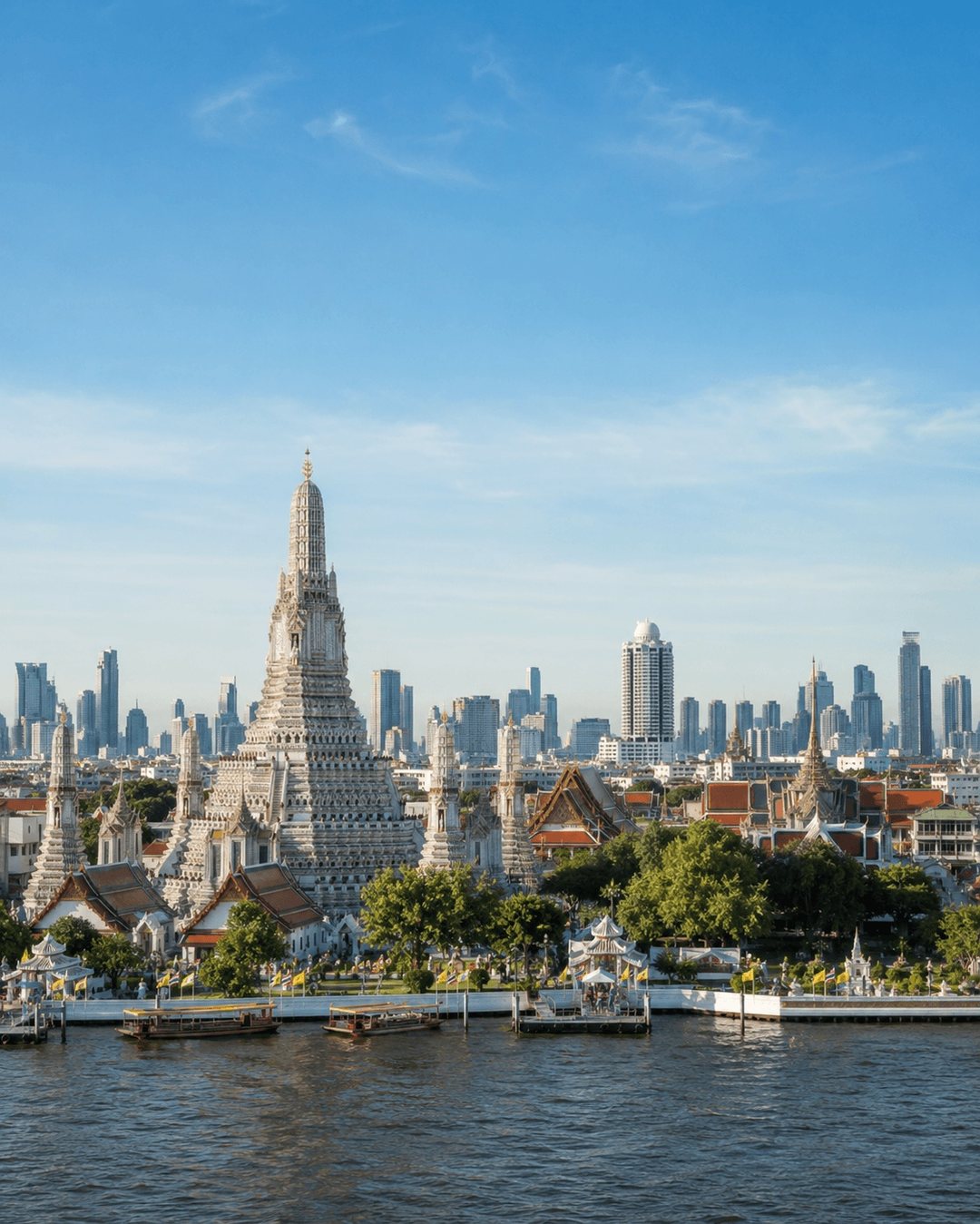
Bangkok is routinely reduced to a stopover on the way to an island, an injustice to a city that rewards repetition more than quick orientation. The most luxurious way to experience it is not to seek a hotel that insulates you from Bangkok, but to split the stay between two addresses that reveal different urban rhythms. Begin at Aman Nai Lert Bangkok, where a green enclave tempers the central city, then move to The Siam on the Chao Phraya, where water becomes the organizing line. Only after both should the journey turn south to Phuket.
The 2026 editorial reviews support this sequence. Aman Nai Lert and The Siam both sit in the exceptional luxury band, but the former leads with service and food while the latter makes its clearest case through dining and wellbeing. Amanpuri adds another highly reviewed expression of Thai hospitality on Phuket. Around them, Sorn, Gaa, Sühring and Gaggan show why Bangkok is one of the world’s most intellectually alive dining cities. The cuisines differ; the commitment to a specific voice does not.
Nine nights is the minimum useful frame: six in Bangkok and three in Phuket. Twelve is better, particularly after a long-haul flight. Dining reservations will determine some evenings, but daylight hours should remain flexible enough for weather, heat and appetite. Bangkok’s most memorable moments often occur between formal plans—a ferry crossing, a market breakfast, a quiet lane or the exact relief of entering a cool room after the afternoon sun.
The route works because every change is decisive. Park to river, river to sea; tasting menu to street-side lunch; urban intensity to coastal privacy. There is no need to add another country or Thai island. Depth provides the variety. By the time the guest reaches Phuket, the calm feels earned rather than generic, and Thailand has been encountered as a set of linked cultures rather than a city attached to a beach.
Hotel
Aman Nai Lert Bangkok
Bangkok, ThailandA distinctive address in Bangkok, Thailand, defined above all by the depth of its service system and a convincing food-and-drink offer.
Open the record →Hotel
The Siam
Bangkok, ThailandThe Siam brings unusual clarity to a convincing food-and-drink offer while sustaining its restorative facilities.
Open the record →Hotel
Amanpuri
Phuket Area, ThailandA distinctive address in Phuket Area, Thailand, defined above all by the depth of its service system and a convincing food-and-drink offer.
Open the record →02Aman Nai Lert Bangkok: an arrival softened by green
Aman Nai Lert Bangkok is the right first address because it offers immediate composure without pretending the capital has disappeared. Its exceptional luxury editorial review is anchored by service, food and restoration. In practical terms, that means the hotel can absorb the awkward first days of a long journey: luggage and transport are handled fluently, meals do not require a major expedition, and the body can recover while the city remains close enough to invite curiosity.
Keep the first afternoon empty. Bangkok’s humidity, traffic and time difference can make an overplanned arrival feel punitive. Walk through the green surroundings, take a swim, eat early and sleep. The following morning, begin with a single neighbourhood or cultural site rather than a cross-city campaign. A good central hotel is valuable because it makes this restraint possible; there is no fear that time at the property is time lost.
The food-and-drink strength in the reviewed record also gives guests permission to protect appetite. Bangkok’s restaurant scene can encourage constant grazing, but four serious dinners in a week require a lighter hand. Breakfast at the hotel, a focused lunch and a pause before dinner are enough. The city’s flavours are not better understood through volume. They become clearer when street food, regional cooking and formal tasting menus are allowed to occupy different scales.
Three or four nights here establish the urban chapter. Use the concierge for logistics rather than taste-making by proxy: ask for travel times, neighbourhood coherence and the best sequence of stops, then leave space for personal discovery. Aman’s value is the calm from which to engage Bangkok, not a sealed world that replaces it. The city should still be audible at the edges.
Bangkok is most luxurious when its energy is not neutralized but given a calm, intelligently placed counterweight.
The World’s Best Travel Desk
03Sorn and Gaa: two regional arguments with formidable clarity
Sorn places Southern Thai traditions inside a formal Bangkok dining room without reducing their intensity. Its Three-restaurant records distinction recognizes depth of regional practice, not merely luxury ingredients or technical display. The meal is an encounter with the heat, aromatics, seafood and layered seasoning of the south, articulated with enough precision that the region remains present even far from its coast.
Book Sorn on a night when the palate and schedule are clear. Do not precede it with a long lunch or plan a cocktail crawl afterward. The restaurant’s cooking deserves appetite and concentration, particularly because Southern Thai food gains force through accumulation: spice, smoke, sourness and savoury depth working across the meal rather than in a single signature plate. Formal service should frame that energy, never domesticate it.
Gaa offers a different cross-regional proposition. Garima Arora’s restaurant is a sustained inquiry into what Indian cooking can become when its techniques meet the produce and climate of Thailand. The Three-restaurant reviews reflects that authorship. This is not a loose exchange of references; it is a cuisine built through repetition, research and a precise understanding of how ingredients behave in Bangkok.
Place Gaa at least one night away from Sorn. The separation helps each language remain distinct. Together, the two restaurants demonstrate the city’s unusual capacity to host intensely regional cooking while allowing it to evolve. One looks south within Thailand; the other moves between India and Thailand without erasing either. Both reject the bland internationalism that can still pass for luxury dining elsewhere.
Restaurant
Sorn
Bangkok, ThailandSorn places Southern Thai traditions within a formal Bangkok setting without muting their intensity.
Open the record →Restaurant
Gaa
Bangkok, ThailandGaa is Garima Arora's sustained inquiry into what Indian cooking can become when its techniques meet the produce and climate of Thailand.
Open the record →04Sühring and Gaggan: memory, theatre and the permission to disagree
Sühring begins with family memory. The twin chefs Thomas and Mathias Sühring give modern German cooking a home in Bangkok by treating recollection as material for refinement, not a sentimental garnish. Fermentation, bread, preserved flavours and the structure of a European meal acquire new resonance in the tropics. Its Three-restaurant records distinction comes from the coherence of that transplanted identity over time.
The restaurant is a useful midpoint in the week because its vocabulary contrasts so strongly with Thai and Indian dining. A luxury itinerary should not demand that every meal prove geographical purity. Cities become culturally consequential by making room for serious, specific voices from elsewhere. Sühring’s Bangkok identity lies partly in that confident displacement: German memory interpreted in a city generous enough to let it take root.
Gaggan operates at another emotional temperature. Indian references, pop-cultural irreverence and provocation drive a Bangkok stage designed to test the boundaries between dinner, performance and participation. The reviewed record values the restaurant’s distinctive voice, but the experience will not suit every diner—and that is part of its importance. Luxury travel becomes dull when every highly reviewed address is expected to offer the same polished consensus.
Choose Gaggan if theatricality energizes rather than embarrasses you. Choose Sühring if the pleasure of a meal lies in craft, memory and controlled progression. Better still, experience both and allow the contrast to remain unresolved. A serious dining city should produce disagreement. Bangkok’s authority comes from the fact that these restaurants, alongside Sorn and Gaa, can be unmistakably themselves within the same week.
Restaurant
Sühring
Bangkok, ThailandSühring gives modern German cooking a convincing home in Bangkok by beginning with the twins Thomas and Mathias Sühring's own family memory.
Open the record →Restaurant
Gaggan
Bangkok, ThailandIndian references, pop-cultural irreverence and provocation drive Gaggan's Bangkok stage.
Open the record →05The Siam: let the river redraw the capital
Moving to The Siam is not a hotel change for novelty’s sake. It reorients Bangkok around the Chao Phraya. The city’s traffic and towers recede; boats, temples and the broad movement of water become the daily reference points. The property’s exceptional luxury strengths in dining, restoration and service suit this transition. Guests remain in Bangkok, but the capital begins to feel like a different destination.
Arrive by boat if the logistics align. Water makes distance intelligible in a way a car cannot, and the approach gives the hotel an appropriate sense of threshold. Once settled, avoid reproducing the central-city schedule. Choose riverside experiences, allow longer transfers and return before dinner. The Siam’s atmosphere depends on a degree of enclosure; it works best when the hotel’s collections, courtyards and public rooms are allowed to become part of the day.
Two or three nights is enough to create contrast, though devoted hotel lovers may want longer. Use one morning for a river journey and another with no departure at all. The wellbeing programme has greater meaning here than as a recovery appointment between shopping trips. It can shape the pace of the stay, especially after several ambitious dining nights in succession.
The move also reveals something essential about Bangkok luxury: location is not only convenience. A hotel’s address determines which version of the city becomes natural. Aman Nai Lert supports central exploration with a green retreat; The Siam makes the river a private avenue. Neither is universally better. Together they offer a more complete, and far more memorable, reading of the capital.
06Amanpuri: the established Phuket finale
Amanpuri’s role in the itinerary is to reduce the number of decisions. The Phuket property’s exceptional luxury distinction is led by service, dining and wellbeing—the three systems that determine whether a coastal finale feels complete. After Bangkok, the contrast should be immediate: fewer transfers, longer meals, time measured by light on the water rather than restaurant bookings.
The resort’s longevity gives it a particular authority. New tropical hotels often rely on novelty of design; an established one must prove that maintenance, service culture and atmosphere can keep the original proposition alive. Amanpuri’s appeal is not that it offers the loudest version of Phuket. It is that the experience remains composed enough for the island’s sea, vegetation and topography to hold attention.
Stay at least four nights. The first day is spent arriving, the second still carries Bangkok’s momentum, and only after that does the resort’s rhythm become convincing. Alternate activity with genuine blank space. A boat trip or time on the water will sharpen appreciation of the coast, but consecutive excursions can recreate the urban pace the journey was designed to leave behind.
Food should remain central. After four Three-restaurant records restaurants, appetite may crave clarity rather than another concept. A coastal resort succeeds when it can move fluently between fresh, direct cooking and enough variety for a longer stay. Amanpuri’s reviewed dining strength suggests that meals are part of the institution, not an afterthought beneath a famous name. That reliability is what allows the final days to feel effortless.
07How to preserve the city-and-sea balance
Secure the four restaurant reservations before deciding the exact split between Bangkok hotels. Then build recovery nights around them. If every evening is formal, the city loses texture and the palate loses responsiveness. Include at least one night for a simple Thai meal, one for room service or a quiet hotel dinner and one with no plan until late afternoon. The unranked spaces between reviewed addresses are where a journey becomes personal.
Pack for humidity and repeated transitions, not fantasy photographs. Lightweight tailoring, excellent walking shoes and a dependable layer for strong air-conditioning will serve better than an elaborate wardrobe. Laundry is an essential luxury on a trip of this length. Travelling with less makes the move from park to river and the flight to Phuket feel like chapters rather than logistical burdens.
Weather should shape the day without being allowed to frighten the entire itinerary. Tropical rain can be intense and brief; heat is a more consistent factor. Start early, pause after lunch and treat the hotel’s pools, spas and shaded rooms as part of the destination. The finest urban hotels earn their value in precisely these hours, when a lesser base would leave guests waiting for evening.
Most importantly, do not apologize for the final stillness. Bangkok supplies enough energy for several journeys. Phuket does not need to compete. The sea chapter succeeds when it allows the city’s impressions to settle: the heat of Sorn, Gaa’s cross-cultural logic, Sühring’s memory, Gaggan’s theatre, the green calm of Nai Lert and the river light at The Siam. Amanpuri’s task is simply to give all of it horizon.