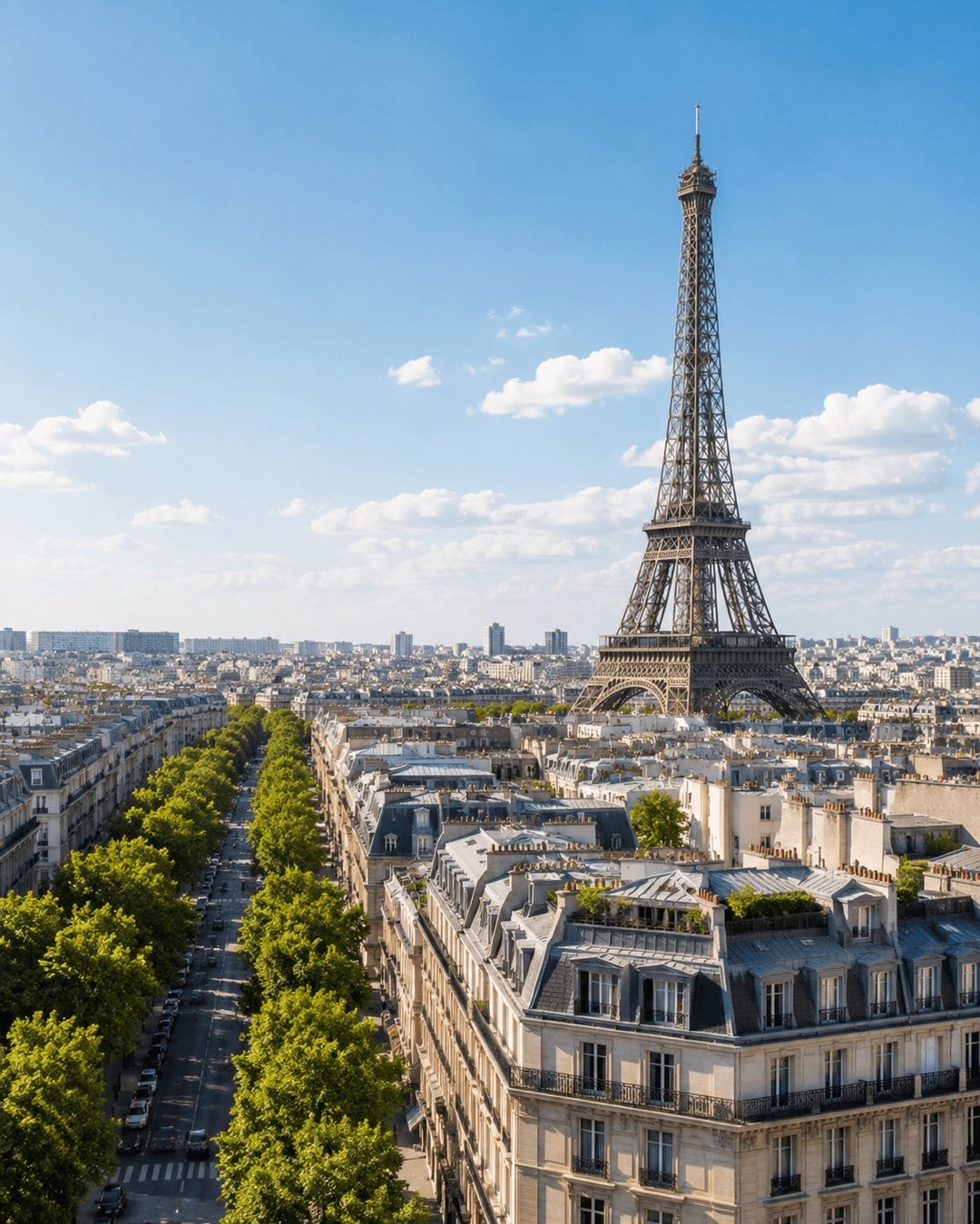
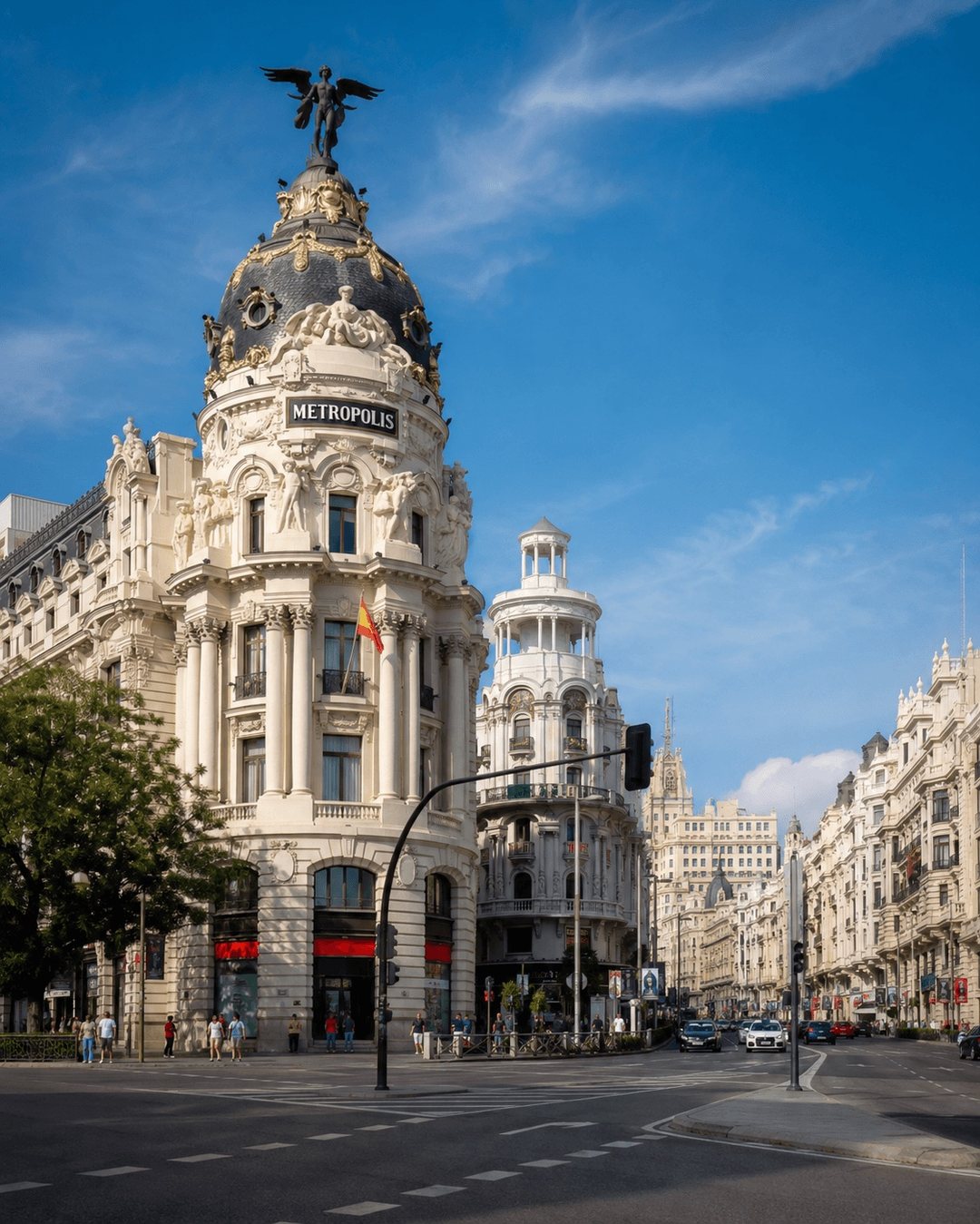
Paris and Madrid’s Best Seven Days of Art and Dinner
Two capitals, two museum cultures and two very different clocks create a week in which the eye and appetite continually reset each other.
Executive brief
Paris and Madrid share cultural authority but not tempo. A seven-day journey becomes persuasive when it preserves that disagreement, using each city’s reviewed hotels and restaurants to support rather than homogenise the art.
01Two places, one useful disagreement
Paris and Madrid are at their best together when art and dinner follow each capital’s native rhythm rather than a single luxury template. The comparison is valuable because the places disagree. Paris asks the museum visitor to edit abundance; Madrid asks for stamina, then rewards it with a lunch that changes the day’s scale. Similar editorial reviews or prices do not create similar experiences when geography, service culture and daily rhythm pull in different directions.
The high-speed connection makes the pairing easy, but the transfer day still deserves protection from major tickets and tasting menus. The fair method is to ask the same questions in each city—what the hotel enables, what dinner reveals, how movement changes attention—without demanding the same answers.
Art-led travellers who want two capitals without the blur of a generic European grand tour can use the differences to make a more personal choice or to build a route in which each stop corrects the excesses of the previous one. Give Paris four nights, travel after breakfast and allow Madrid three nights with the first afternoon deliberately unclaimed.
02Geography changes the meaning of luxury
Paris: Paris reveals quality through proportion, service and the confidence to leave part of the day unclaimed. Madrid: Madrid’s refinement is generous, unforced and inseparable from the pleasure of staying at the table. These are editorial lenses, not advertising claims. They describe what deserves attention when comparing the reviewed addresses with the surrounding city.
Treat each bank as a sequence of neighbourhoods, not a backdrop crossed repeatedly for reservations. Give the great museums their own mornings, then let adjacent streets, parks and bars carry the afternoon. Give Paris four nights, travel after breakfast and allow Madrid three nights with the first afternoon deliberately unclaimed. Geography should be visible in every important booking decision. A celebrated address that requires the wrong crossing at the wrong hour may offer less value than a quieter choice that lets the day remain coherent.
Begin with one cultural appointment, protect the late afternoon and let dinner own the evening. Lunch properly, rest without apology and accept that the city’s social evening begins later than expected. Use Paris for one earlier, tightly composed evening and Madrid for one later dinner preceded by a genuine pause. In Paris and Madrid, pace is part of factual accuracy: heat, crowds, distance, opening hours and fatigue change the real value of access.
Paris edits the eye; Madrid restores its appetite.
The World’s Best Travel Desk
03How the hotels answer differently
At Le Grand Mazarin, the 2026 exceptional luxury · record provides a stable point of reference: A distinctive address in Paris, France, defined above all by a convincing food-and-drink offer and its restorative facilities. What changes across Paris and Madrid is the traveller’s need. In Paris, location may protect the morning, while another city may demand stronger restoration or more assertive concierge work. Compare neither city by collection size nor restauranteditorial record alone; judge how culture, appetite and hotel geography support a complete day. A fair comparison respects these differences. The best hotel is not the one that wins every category; it is the one whose particular form of competence becomes indispensable in its own setting.
Hôtel de Sers gives Paris one answer to the hotel question. It carries 2026 a leading hotel record for the stated edition ·, with the record noting: In Paris, France, Hôtel de Sers is distinguished by the depth of its service system and a convincing food-and-drink offer. The comparison across Paris and Madrid is useful only when context remains intact. Service customs, urban scale, transport and the social meaning of a hotel lobby differ; a feature that feels essential in one city may be irrelevant in another. The high-speed connection makes the pairing easy, but the transfer day still deserves protection from major tickets and tasting menus. Judge this property by the life it enables locally, then compare that outcome—not the amenity count—with the other stops on the route.
At Hospes Puerta de Alcala, the 2026 a leading hotel record for the stated edition · record provides a stable point of reference: In Madrid, Spain, Hospes Puerta de Alcala is distinguished by a convincing food-and-drink offer and the depth of its service system. What changes across Paris and Madrid is the traveller’s need. In Madrid, location may protect the morning, while another city may demand stronger restoration or more assertive concierge work. Compare neither city by collection size nor restauranteditorial record alone; judge how culture, appetite and hotel geography support a complete day. A fair comparison respects these differences. The best hotel is not the one that wins every category; it is the one whose particular form of competence becomes indispensable in its own setting.
Unico gives Madrid one answer to the hotel question. It carries 2026 a hotel record for the stated edition ·, with the record noting: Unico makes its strongest case through a convincing food-and-drink offer, reinforced by the depth of its service system. The comparison across Paris and Madrid is useful only when context remains intact. Service customs, urban scale, transport and the social meaning of a hotel lobby differ; a feature that feels essential in one city may be irrelevant in another. The high-speed connection makes the pairing easy, but the transfer day still deserves protection from major tickets and tasting menus. Judge this property by the life it enables locally, then compare that outcome—not the amenity count—with the other stops on the route.
Hotel
Le Grand Mazarin
Paris, FranceA distinctive address in Paris, France, defined above all by a convincing food-and-drink offer and its restorative facilities.
Open the record →Hotel
Hôtel de Sers
Paris, FranceIn Paris, France, Hôtel de Sers is distinguished by the depth of its service system and a convincing food-and-drink offer.
Open the record →Hotel
Hospes Puerta de Alcala
Madrid, SpainIn Madrid, Spain, Hospes Puerta de Alcala is distinguished by a convincing food-and-drink offer and the depth of its service system.
Open the record →Hotel
Unico
Madrid, SpainUnico makes its strongest case through a convincing food-and-drink offer, reinforced by the depth of its service system.
Open the record →04What the dining rooms reveal
At Plénitude - Cheval Blanc Paris, the 3 restaurant records · creates a common measure while the summary preserves local character: Plénitude - Cheval Blanc Paris: sauce is not the final adjustment applied to an ingredient; it is the composition from which the ingredient takes its meaning. Use Paris for one earlier, tightly composed evening and Madrid for one later dinner preceded by a genuine pause. Across Paris and Madrid, resist turning unlike meals into a league table. One may be ceremonious, another direct; one may depend on sequence, another on intensity. The editorial value lies in understanding why each form belongs where it is.
L'Apibo, reviewed 1 restaurant records ·, expresses Paris through the proposition recorded here: L'Apibo is a Modern Cuisine restaurant in Paris, France, defined by technical precision and clear culinary authorship. The comparison with restaurants elsewhere in Paris and Madrid should begin with difference, not hierarchy. Technique, service cadence, cultural reference and the social meaning of dinner vary. The high-speed connection makes the pairing easy, but the transfer day still deserves protection from major tickets and tasting menus. The useful question is what this table makes newly visible about its city. editorial record can travel; context cannot.
At Quimbaya, the 2 restaurant records · creates a common measure while the summary preserves local character: In Madrid, Spain, Quimbaya builds a distinct Colombian identity through technical precision and coherent menu architecture. Use Paris for one earlier, tightly composed evening and Madrid for one later dinner preceded by a genuine pause. Across Paris and Madrid, resist turning unlike meals into a league table. One may be ceremonious, another direct; one may depend on sequence, another on intensity. The editorial value lies in understanding why each form belongs where it is.
DiverXO, reviewed 3 restaurant records ·, expresses Madrid through the proposition recorded here: DiverXO channels Madrid's appetite for spectacle into restless, boundary-crossing creative cooking. The comparison with restaurants elsewhere in Paris and Madrid should begin with difference, not hierarchy. Technique, service cadence, cultural reference and the social meaning of dinner vary. The high-speed connection makes the pairing easy, but the transfer day still deserves protection from major tickets and tasting menus. The useful question is what this table makes newly visible about its city. editorial record can travel; context cannot.
Restaurant
Plénitude - Cheval Blanc Paris
Paris, FrancePlénitude - Cheval Blanc Paris: sauce is not the final adjustment applied to an ingredient; it is the composition from which the ingredient takes its meaning.
Open the record →Restaurant
L'Apibo
Paris, FranceL'Apibo is a Modern Cuisine restaurant in Paris, France, defined by technical precision and clear culinary authorship.
Open the record →Restaurant
Quimbaya
Madrid, SpainIn Madrid, Spain, Quimbaya builds a distinct Colombian identity through technical precision and coherent menu architecture.
Open the record →Restaurant
DiverXO
Madrid, SpainDiverXO channels Madrid's appetite for spectacle into restless, boundary-crossing creative cooking.
Open the record →05The case against choosing a winner
The high-speed connection makes the pairing easy, but the transfer day still deserves protection from major tickets and tasting menus. The argument against excess is not austerity. It is that attention has limits, and luxury loses definition when every hour demands admiration.
Art-led travellers who want two capitals without the blur of a generic European grand tour should decide what to decline before deciding what else to add. In Paris and Madrid, the strongest edit may remove a hotel move, a third formal dinner or a distant landmark whose only appeal is familiarity.
06Build the route without flattening either city
Verify museum closures, exhibition tickets, rail identification requirements, meal times and station transfers close to departure. Confirm material details close to travel with the relevant provider and competent official source. Saved screenshots and old itineraries cannot account for changed hours, policies, transport or local conditions.
Compare neither city by collection size nor restauranteditorial record alone; judge how culture, appetite and hotel geography support a complete day. Put the immovable elements on a map, add realistic transfer time and examine the day from the least glamorous moment: luggage, weather, a late arrival or a restriction that must be communicated. Good planning is quiet because the difficult questions were asked early.
Carry the addresses offline, keep a second payment method and understand the broad route through Paris and Madrid. These are not minor administrative notes beneath a luxury report. They are the structure that protects privacy, appetite and attention when the trip leaves the ideal conditions of the page.
07The value of the comparison
The week gains authority through contrast: Parisian editing makes Madrid’s generosity vivid, while Madrid returns warmth to Parisian precision. The reviewed records support the named addresses; the city logic explains their sequence; personal suitability remains with the reader. That separation makes an editorial recommendation more trustworthy, not less decisive.
There is also a human pace to protect. Art-led travellers who want two capitals without the blur of a generic European grand tour may travel with different mobility, dietary, privacy or recovery needs, and no serious edit should hide those differences beneath a universal idea of sophistication. Compare neither city by collection size nor restauranteditorial record alone; judge how culture, appetite and hotel geography support a complete day. Use the named addresses as fixed points, then adjust the intervals around them honestly. A car may be sensible after a late dinner; a free morning may be more valuable than another appointment; a smaller room in the right district may create greater daily ease than a suite at the wrong edge of the route. In Paris and Madrid, judgement becomes visible through these proportions. The itinerary should feel authored without requiring the traveller to perform the article exactly.
Editorial authority is strongest when its limits are visible. The distinctions and summaries attached to the featured records establish why each property or restaurant belongs in consideration at the time of publication. They do not freeze prices, menus, hours, access, management, neighbourhood conditions or personal suitability. Verify museum closures, exhibition tickets, rail identification requirements, meal times and station transfers close to departure. That final verification is part of intelligent luxury travel, not administrative clutter beneath it. The reward is a journey capable of adapting without losing its thesis: Paris and Madrid are at their best together when art and dinner follow each capital’s native rhythm rather than a single luxury template. When circumstances change, protect that central idea and alter the booking that serves it least well. The best plan is not brittle. It has priorities clear enough to survive the world beyond the page.
The final test is memory with structure. If Paris and Madrid remains as a set of distinct hours, routes, rooms and meals—not a blur of access—the edit has done its work. Best is not the largest quantity of luxury. It is the clearest relationship between place and choice.
Hotel
Le Grand Mazarin
Paris, FranceA distinctive address in Paris, France, defined above all by a convincing food-and-drink offer and its restorative facilities.
Open the record →Hotel
Hôtel de Sers
Paris, FranceIn Paris, France, Hôtel de Sers is distinguished by the depth of its service system and a convincing food-and-drink offer.
Open the record →Restaurant
Plénitude - Cheval Blanc Paris
Paris, FrancePlénitude - Cheval Blanc Paris: sauce is not the final adjustment applied to an ingredient; it is the composition from which the ingredient takes its meaning.
Open the record →Restaurant
L'Apibo
Paris, FranceL'Apibo is a Modern Cuisine restaurant in Paris, France, defined by technical precision and clear culinary authorship.
Open the record →Hotel
Hospes Puerta de Alcala
Madrid, SpainIn Madrid, Spain, Hospes Puerta de Alcala is distinguished by a convincing food-and-drink offer and the depth of its service system.
Open the record →Hotel
Unico
Madrid, SpainUnico makes its strongest case through a convincing food-and-drink offer, reinforced by the depth of its service system.
Open the record →Restaurant
Quimbaya
Madrid, SpainIn Madrid, Spain, Quimbaya builds a distinct Colombian identity through technical precision and coherent menu architecture.
Open the record →Restaurant
DiverXO
Madrid, SpainDiverXO channels Madrid's appetite for spectacle into restless, boundary-crossing creative cooking.
Open the record →