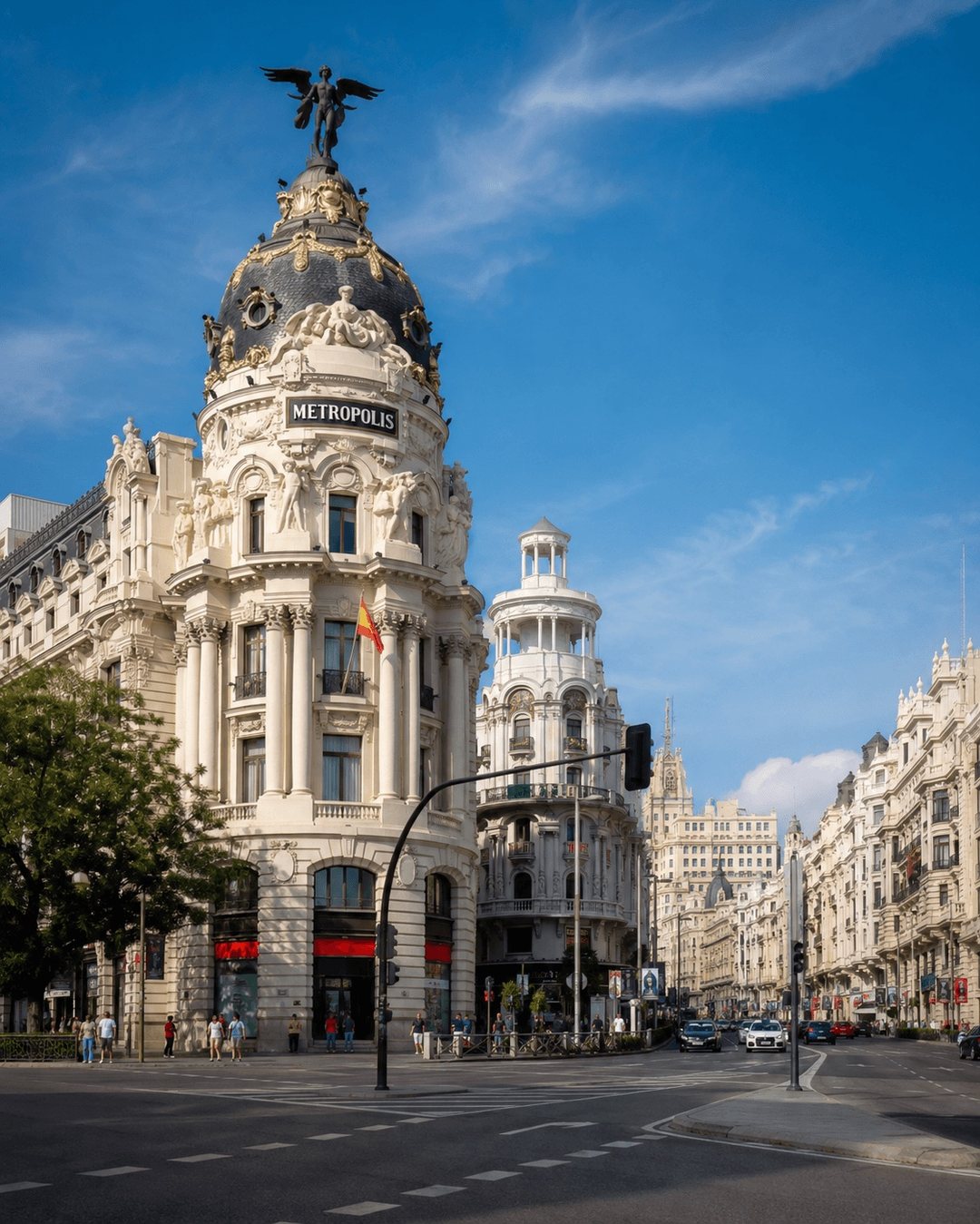
Madrid Runs Late: A Four-Day Guide Built Around the City’s Clock
The Spanish capital makes more sense when museums begin the day, lunch is allowed its full length and DiverXO’s maximalist theatre receives an evening entirely of its own.
Executive brief
Madrid should not be forced onto an imported timetable. Its grandest rooms and most compelling tables reward a slower afternoon, a later dinner and enough space between cultural appointments for the city’s sociability to become the main event.
01The first rule is to stop asking Madrid to run early
Madrid is frequently mishandled by travellers who bring another city’s clock. Breakfast becomes a prelude to six hours of museums, lunch is compressed into fuel and dinner is booked before the room has found its evening energy. The capital offers more when the day is allowed to widen. Begin with culture while concentration is sharp, take lunch seriously, accept a slower afternoon and return to the streets as the light and social temperature change. A late dinner then feels like a natural conclusion rather than an endurance test imposed on an already exhausted body.
Four days provide enough space to separate Madrid’s identities. One day belongs to the art axis and Retiro. Another can move through the historic centre without pretending that every square deserves equal time. A third should favour residential neighbourhoods, specialist shops and the city’s modern appetite. The final day protects the evening at DiverXO. This division keeps the itinerary legible. Madrid is large enough that careless crossings consume hours, but compact enough that a well-chosen district can supply a complete day of walking, eating and looking.
Weather reinforces the logic. In hotter months, the middle of the day demands shade, a long table or the hotel. In cooler seasons, the city becomes beautifully walkable, yet meals and evenings still resist haste. Check the official cultural calendar before arrival and book only what is genuinely capacity-limited. Leave parks, neighbourhood walks and casual meals flexible. Madrid’s most luxurious quality is sociability without apparent effort; the itinerary should create the conditions to join it instead of moving past every room on the way to the next reservation.
02Hospes Puerta de Alcala puts the park at the centre of the stay
Hospes Puerta de Alcala holds a leading hotel record for the stated edition and published in the 2026 review, distinguished by its food-and-drink offer, service depth and restorative facilities. Its location near one of Madrid’s great thresholds makes it a strategic base for a guide that values both the museum district and daily access to green space. A park is not decorative on an urban trip. It provides the walk before breakfast, the decompression after a collection and the unplanned hour that prevents culture from becoming a sequence of interiors.
Use the hotel to establish a late-city rhythm without sacrificing the morning. Rise at a comfortable hour, take a short walk and reach the day’s primary museum near opening. Return after lunch when energy dips. The restorative offer should be treated as part of the itinerary, especially before DiverXO, not as compensation squeezed into the final hour. A room that allows genuine quiet can extend the trip’s useful day: the guest emerges in the early evening ready to participate, with the sense of simply enduring the schedule gone.
Service is most valuable when it edits. Ask which reservations require a car, where walking is more sensible and how much margin a museum entry or dinner truly needs. Have the team confirm the departure plan and any current road restrictions before a curbside improvisation becomes necessary. Madrid rewards independence, so the concierge need not choreograph every tapas stop. Its role is to remove avoidable uncertainty around the consequential moments, leaving the streets, terraces and smaller choices open to mood.
Madrid’s great indulgence is time held open: a museum before the crowd, lunch without a deadline and an evening that begins only when the rest of the itinerary has fallen away.
The World’s Best Travel Desk
03Treat the great museums as separate arguments
The Prado, Reina Sofía and Thyssen-Bornemisza are often grouped into a single art triangle, a useful geographic phrase and a disastrous instruction for one day. Each collection asks for a different kind of attention. Choose the museum that matters most and give it the morning. Identify a limited group of rooms or works before arrival, then allow discoveries to alter the route. Completion is impossible and unnecessary. The measure of the visit is whether individual pictures remain vivid at dinner, not whether every floor was crossed.
A second institution can follow after lunch only if its scale and subject offer contrast. A compact exhibition, decorative-arts collection or historic house may be more rewarding than another encyclopaedic sweep. Sit before fatigue becomes the dominant memory. Museum cafés, shaded benches and the edges of Retiro are strategic spaces, not lost time. Looking is physical work, and Madrid’s wealth can become visually mute when the traveller refuses rest. One free afternoon may reveal more than a fully ticketed one.
Book official timed entries and check current access directly with each institution. Do not rely on a pass to make the decisions for you; value comes from relevance, not the number of doors opened. If a temporary exhibition is the trip’s cultural priority, organise the day around it and let the permanent collection remain selective. The art axis becomes luxurious when proximity removes logistical strain and attention can deepen. Hospes Puerta de Alcala supports that advantage by making the return to the room or park feel like part of the same coherent district.
04The historic centre needs a route, not a sweep
Madrid’s central plazas, royal architecture and market streets can fill a day, but they are better connected as a story than collected as landmarks. Begin at one edge and walk through changes in scale: ceremonial avenue, enclosed square, commercial street, neighbourhood lane. Pause where the city’s ordinary life interrupts the monumental frame. A bakery queue, bookshop or old bar may explain continuity more convincingly than another guided exterior. The centre is not a preserved stage; its appeal comes from the friction between state grandeur, trade and daily appetite.
Lunch should be the day’s hinge. Reserve when a particular kitchen matters, but do not mistake every meal for a destination event. Madrid’s generosity is often clearest in rooms where the menu, service and clientele understand one another without performance. Order enough to participate, not enough to eliminate the evening. Then accept the slow interval. A walk in shade, a return to the hotel or time over coffee is more faithful to the city than forcing another major site into the hours when concentration has already left.
Re-enter in the early evening. The same streets become more social and less programmatic, and a drink can lead naturally to dinner without requiring a bar crawl. Choose one neighbourhood for the night. Repeated cross-city transfers break the atmosphere and turn the guest into a commuter between reservations. A short taxi may protect a formal booking, but most evenings improve when their parts are walkable. The objective is not maximum coverage; it is the sensation of belonging to the city’s tempo for several consecutive hours.
05DiverXO needs an evening with nothing behind it
DiverXO holds a leading restaurant record for the stated edition and published because its theatrical world is supported by a highly authored, technically dense culinary proposition. Dabiz Muñoz draws on Spanish, East Asian, South Asian and Latin references, using sauces, spice structures, dumpling forms and grilled proteins in combinations that refuse a fixed national frame. The flying-pig imagery and elaborate service are impossible to separate from the experience, but spectacle is not the entire case. The serious question is how contrast can remain coherent across a long sequence, and that question requires appetite and attention.
Keep the day deliberately light. Visit one place in the morning, eat a modest lunch and return to Hospes Puerta de Alcala with enough time to rest. Confirm the current tasting format, dietary boundaries, reservation conditions and expected duration directly with the restaurant. Do not plan a show, bar or early departure afterwards. A maximalist menu cannot be made efficient without losing its point. The luxury lies in allowing the experience to set its own rhythm; clock-watching has no useful place in the middle of it.
Arrive curious but not obliged to admire every gesture. Authorial restaurants are most interesting when the guest remains alert to both pleasure and excess. DiverXO’s significance comes from sustained reinvention and the recognisable language Muñoz has built over many years, not from consensus. Let the meal be provocative. The right final evening may produce argument as well as delight, giving the city guide an ending with energy, not a polite fade. Return to the hotel directly and leave the next morning spacious enough for the meal to remain the last major event.
06Neighbourhood Madrid is where the trip finds its ease
After the major collections and centre, choose a neighbourhood according to genuine interest. Chamberí rewards travellers who value residential streets and a quieter social register; Salamanca offers polished shopping and formal addresses; Malasaña and Chueca bring independent retail, bars and a younger pulse. None needs to be consumed whole. Mark one shop, market or cultural space, then let the connecting streets supply the day. The city’s luxury is unusually democratic at this scale: sunlight, generous pavements, a good counter and the permission to stay longer than planned.
Shop with the same restraint used in Milan or Paris. Spanish craft and fashion are not strengthened by indiscriminate purchasing. Ask about origin, production and aftercare, especially for leather, ceramics or made-to-order work. Build in collection time for alterations and avoid leaving every decision to the final morning. A neighbourhood lunch can be more valuable than another formal reservation because it reveals how the city eats between occasions. Save the ceremonial appetite for DiverXO and allow other meals to be convivial, direct and responsive to the day.
Use Metro de Madrid for clear longer movements and walking for the life between them. Consult the official network for current service, accessibility and ticket information. Taxis are plentiful enough to be useful but should not become the default for distances that are more revealing on foot. At night, choose convenience when shoes, weather or timing make it sensible. Luxury is not a test of endurance. The goal is to arrive with composure while still understanding where the evening sits within the city.
07Madrid’s late hour is the point
Madrid should not be translated onto another capital’s clock. Its museums reward the clear morning, lunch deserves its full social weight and the hotel’s restorative interval protects the hours when the streets begin to gather energy again. Season and weekday will change the practical outline, so verify cultural schedules and keep one weather alternative in reserve. The governing decision remains constant: do not spend the afternoon borrowing strength from the evening. Madrid’s apparent lateness is a deliberate redistribution of attention across the day.
Hospes Puerta de Alcala and DiverXO define the outer limits of that rhythm. The hotel offers calm beside the park, making recovery feel integral to the city. The restaurant compresses authorship, provocation and spectacle into one evening that should stand alone. Neither calls for imitation elsewhere in the itinerary. Let neighbourhood lunches be convivial, museum visits singular and the walk back through the centre open to diversion. Contrast gives the reviewed addresses their force and prevents high points from becoming a monotonous nightly demand.
The clearest verdict on Madrid arrives after dark, when terraces fill and the day seems to widen just as other cities are closing it down. This is not a scheduling problem in need of correction. It is the capital’s most generous proposition: serious art can occupy the morning without cancelling pleasure, and a long dinner can remain animated without feeling like an endurance exercise. The well-paced traveller joins that confidence. Art receives undivided attention, appetite recovers before it is tested, and the night ends with the sense that Madrid has expanded time itself.