Hong Kong at Full Voltage: The Four-Night Feast Worth Crossing the World For
One assured hotel, five commanding kitchens and a harbour-crossing rhythm reveal a city whose luxury is inseparable from speed, appetite and dramatic changes of scale.
Executive brief
Hong Kong can deliver more sensation in one block than many cities manage in a day. The art is to edit that abundance without dulling its charge.
01The city is most elegant when its contradictions remain visible
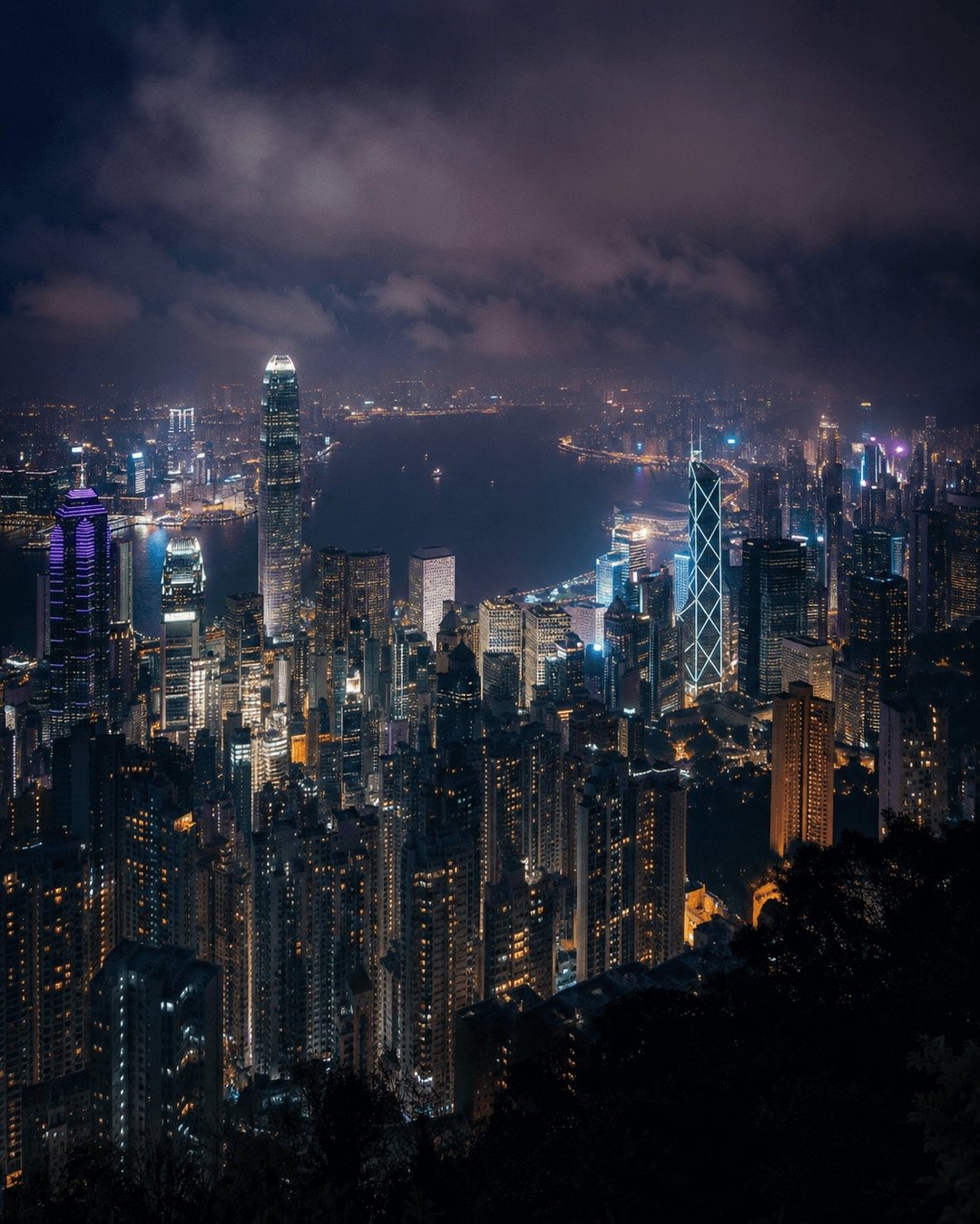
Hong Kong compresses altitude, appetite, finance, worship, ferry wakes and domestic ritual into a geography that never feels fully settled. A luxury itinerary should not smooth those contrasts into a procession of climate-controlled interiors. It should make moving between them effortless enough that the traveller can remain exposed to the city’s force. Four nights provide the right first measure: one day oriented around Hong Kong Island, one across the harbour, one allowed to range more freely and a final morning left deliberately local. Begin early, retreat when humidity or concentration demands it, and cross Victoria Harbour at least once on the water. The view is not merely decorative; it explains why the two sides belong to the same story while retaining different cadences. Hong Kong becomes coherent through movement, not through standing at a single celebrated viewpoint.
The World’s Best selection is unusually restaurant-heavy. The St. Regis Hong Kong is a hotel record for the stated edition, its record led by coherent design and a clear sense of place. Amber, Caprice and Ta Vie each hold a leading restaurant record for the stated edition and published; The Chairman follows at a leading restaurant record for the stated edition and 96, and Wing at a leading restaurant record for the stated edition and 95. That density creates a temptation to reserve a long menu every night. Resist it. Two major dinners across four nights preserve appetite for dim sum, roast meats, noodles, congee and the ordinary meals through which Hong Kong becomes emotionally legible. Fine dining should sharpen the wider food culture, not screen it from view. The restaurants are anchors; the city between them is the essential course, and leaving several tables for another visit is evidence of judgment, not failure.
Hotel
The St. Regis Hong Kong
Hong Kong, Hong Kong SAR, ChinaThis hotel in Hong Kong SAR, China draws its authority from the coherence of its design and a clear sense of place.
Open the record →Restaurant
Amber
Hong Kong, Hong Kong SAR, ChinaAmber's defining achievement is not a single signature dish but a disciplined reconstruction of modern French dining around the ingredients and conditions of Hong Kong SAR, China.
Open the record →Restaurant
Caprice
Hong Kong, Hong Kong SAR, ChinaCaprice makes an old-fashioned promise—grand French dining—and keeps it credible through specificity rather than nostalgia.
Open the record →Restaurant
Ta Vie
Hong Kong, Hong Kong SAR, ChinaTa Vie has become more specific as Hideaki Sato has stopped treating French, Japanese and Chinese influences as alternating categories.
Open the record →Restaurant
The Chairman
Hong Kong, Hong Kong SAR, ChinaIngredient-first Cantonese cooking places Hong Kong's culinary heritage firmly in the present.
Open the record →Restaurant
Wing
Hong Kong, Hong Kong SAR, ChinaContemporary Chinese cooking balances classical reference with a distinctly Hong Kong sensibility.
Open the record →02The St. Regis should operate as a reset, not a refuge
The St. Regis Hong Kong carries a a hotel record for the stated edition, published distinction grounded in design coherence and a convincing sense of place. That assessment makes it a useful base for a city where the hotel must perform two opposing duties: maintain enough character to belong to Hong Kong and offer enough composure to absorb its velocity. Choose the room for sleep, layout and privacy, not for a list of features that will never be used. Confirm arrival arrangements, current transport advice and any accessibility requirements directly. On a short trip, service proves itself in small transitions—a pressed jacket returned before dinner, the correct address shown to a driver, or a route revised when rain makes the original plan needlessly heroic. Those quiet acts matter more than theatrical gestures because they return attention to the city.
Stay all four nights. Hong Kong’s excellent transport can make a hotel change appear trivial, but luggage, check-in hours and the loss of familiarity still consume half a day’s attention. Instead, give the property the late-afternoon interval. Return after the morning’s neighbourhood, shower, change and let the evening begin without the residue of heat. This pause is not meant to isolate the guest from street life; it makes another encounter possible. Walk out again after dark when signs, towers and small restaurants take on a different intensity. A hotel with a strong sense of place succeeds when the door opens back onto the city with curiosity restored, not when its interior becomes the only environment a guest can tolerate. Luxury here is the confidence to alternate exposure and calm without confusing either one for the entire trip.
Hong Kong’s luxury is not silence imposed on the city, but a perfectly timed door that closes before opening again onto all its voltage.
The World’s Best Travel Desk
03Central rewards vertical thinking and The Chairman rewards appetite
Approach Central as a landscape in layers. Elevated walkways, steep streets, transport concourses, old commercial lanes and towers connect in ways that defeat a flat map. Begin higher while the morning is forgiving, then work gradually toward the waterfront without climbing repeatedly for the sake of a checklist. Markets and temples deserve the same respect as galleries and flagship stores: observe before photographing, keep entrances clear and remember that daily worship and trade are not performances. A knowledgeable local guide can make urban history visible without overloading the day. One focused walk, one cultural interior and a late lunch are enough before the hotel pause. Keep shoes capable of steep, wet pavement and resist dressing the morning as though every Hong Kong street were a polished shopping arcade.
The Chairman is the evening to reserve when Hong Kong itself must remain unmistakably at the table. Its Three-restaurant records, published record recognises ingredient-first Cantonese cooking that places local culinary heritage firmly in the present. That is a more demanding achievement than nostalgia. Book early, disclose dietary restrictions precisely and ask how the menu is best experienced by the party size. Cantonese dining has its own logic of sequence and sharing; allow staff to guide it instead of forcing an individual tasting-menu expectation onto every dish. Keep the hours afterwards loose. A harbour walk or direct return can be enough. The dinner’s authority lies in making place taste current, and it should not have to compete with another destination bar for the final word. The city will still be awake when another night arrives.
04Crossing to Kowloon changes the scale of the day
Take a ferry across Victoria Harbour when weather and service permit. Rail will usually be faster, and remains the sensible choice when timing matters, but the water gives Hong Kong’s vertical geography a moment of clarity. On Kowloon, stay on foot within a defined area instead of racing between every market and museum. The waterfront, dense commercial streets and quieter side roads should be allowed to contradict one another. Lunch can be informal and specific: one trusted specialist, not a table crowded with dishes ordered out of obligation. Verify opening days, carry the destination in Chinese characters and move with particular patience around queues. Efficiency is admired here, but courtesy remains the more valuable travel skill. Leave enough time to return across the harbour without turning dinner into a race against the network.
Ta Vie, a leading restaurant record for the stated edition and published, is the restaurant for an evening that resists neat labels. Hideaki Sato’s cooking no longer treats French, Japanese and Chinese as alternating categories; the boundaries have been worked through until technique serves a single authorship. That makes Ta Vie a persuasive expression of Hong Kong’s fluency, not a tour of influences. Give the meal the whole night and avoid turning its references into a guessing game. Precision should arrive as pleasure before it becomes analysis. The strongest pairing is a day spent crossing urban registers, because the dinner then feels connected to the city’s ease with multiple languages and histories. Return by the most direct route afterwards and let the menu remain intact in memory. Adding another bar would not make the evening more complete, only longer.
05Amber, Caprice and Wing demand a choice, not a campaign
Amber and Caprice both carry a leading restaurant record for the stated edition and published, yet their propositions differ. Amber’s reviewed case is a disciplined reconstruction of modern French dining around Hong Kong ingredients and conditions. Caprice keeps grand French dining credible through specificity, not nostalgia. Choose Amber when the interest lies in a French culinary form actively reworked by place; choose Caprice when grandeur itself should be tested against detail and exactness. Neither should be treated as the safer or more prestigious option. The decision belongs to the desired mood of the trip. After The Chairman or Ta Vie, one French-focused evening may supply elegant contrast; after several international meals, Cantonese or Chinese cooking may be the more meaningful finale. Read the records as distinct editorial judgments, not interchangeable proof of status.
Wing, a leading restaurant record for the stated edition, offers that alternative through contemporary Chinese cooking balanced between classical reference and a distinctly Hong Kong sensibility. It is not a compromise for diners unable to secure another table, but a separate argument about how tradition can move forward. Book only one of the three for the final night. Consecutive destination menus dull the palate, burden the wardrobe and erase the spontaneous supper that often reveals the city most vividly. Whichever is chosen, protect the afternoon, confirm the dress policy and arrive without a second venue waiting. Luxury travel is full of people collecting rooms they barely inhabit and menus they can no longer distinguish. Hong Kong deserves sharper judgment: one meal understood in full is worth more than three reduced to photographs and a recitation ofeditorial record.
Restaurant
Amber
Hong Kong, Hong Kong SAR, ChinaAmber's defining achievement is not a single signature dish but a disciplined reconstruction of modern French dining around the ingredients and conditions of Hong Kong SAR, China.
Open the record →Restaurant
Caprice
Hong Kong, Hong Kong SAR, ChinaCaprice makes an old-fashioned promise—grand French dining—and keeps it credible through specificity rather than nostalgia.
Open the record →Restaurant
Wing
Hong Kong, Hong Kong SAR, ChinaContemporary Chinese cooking balances classical reference with a distinctly Hong Kong sensibility.
Open the record →06Transport and weather belong inside the editorial plan
Use Hong Kong’s modes according to the journey. The MTR handles distance with speed; ferries reveal the harbour; trams slow the northern side of Hong Kong Island into a moving streetscape; taxis solve formal evenings, luggage and awkward connections. The Octopus system and contactless options simplify many trips, but confirm current payment details through official sources. Save hotel and restaurant addresses in both English and Chinese, and note the nearest station exit—underground passages can make two exits feel like different neighbourhoods. A private car is useful at the airport or in severe weather, yet it should not become a glass barrier between the guest and a city whose public movement is among its defining pleasures. The lightest solution is often the most elegant one.
Weather changes the hierarchy. Heat and humidity argue for early walks and afternoon recovery; heavy rain moves museums and covered routes forward; clear mornings may justify a harbour or hillside view before clouds arrive. Consult current official information; seasonal clichés are unreliable. Carry a light layer for air conditioning, an umbrella and shoes capable of wet pavement and steep streets. Avoid placing the most expensive dinner directly after the longest outdoor day. These choices may sound unromantic, but they are what keep Hong Kong’s romance from collapsing into discomfort. Prepared travellers can improvise because basic friction has already been removed; unprepared ones cling to the schedule because every change feels risky. Flexibility is not accidental here. It is engineered quietly each morning, then used freely as the city changes.
07The harbour supplies the final measure
Cross Victoria Harbour near dusk when weather and schedules align. Daylight keeps the working water visible; the first towers illuminate before the sky has fully darkened; ferries continue their practical routes beneath a view celebrated as spectacle. That coexistence is the point. Hong Kong never asks utility to disappear before beauty can begin. Watch the two shores exchange scale, then step back into the compressed streets where dinner, trade and domestic life resume almost immediately. No observation deck explains the city with the same economy.
The St. Regis Hong Kong gives four nights a coherent design-led base. Amber, Caprice, Ta Vie, The Chairman and Wing reveal a dining culture confident enough to renew French form, dissolve easy categories and carry Cantonese and Chinese traditions forward without museum glass. Their distinctions remain clear because the itinerary has preserved contrast. The harbour then places every room and table inside a larger system of crossings. Hong Kong’s final note is neither grandeur nor intimacy alone, but the speed with which one becomes the other: a skyline becoming a pier, a formal dinner becoming a crowded pavement, and a whole city briefly legible from the water.
Hotel
The St. Regis Hong Kong
Hong Kong, Hong Kong SAR, ChinaThis hotel in Hong Kong SAR, China draws its authority from the coherence of its design and a clear sense of place.
Open the record →Restaurant
Amber
Hong Kong, Hong Kong SAR, ChinaAmber's defining achievement is not a single signature dish but a disciplined reconstruction of modern French dining around the ingredients and conditions of Hong Kong SAR, China.
Open the record →Restaurant
Caprice
Hong Kong, Hong Kong SAR, ChinaCaprice makes an old-fashioned promise—grand French dining—and keeps it credible through specificity rather than nostalgia.
Open the record →Restaurant
Ta Vie
Hong Kong, Hong Kong SAR, ChinaTa Vie has become more specific as Hideaki Sato has stopped treating French, Japanese and Chinese influences as alternating categories.
Open the record →Restaurant
The Chairman
Hong Kong, Hong Kong SAR, ChinaIngredient-first Cantonese cooking places Hong Kong's culinary heritage firmly in the present.
Open the record →Restaurant
Wing
Hong Kong, Hong Kong SAR, ChinaContemporary Chinese cooking balances classical reference with a distinctly Hong Kong sensibility.
Open the record →