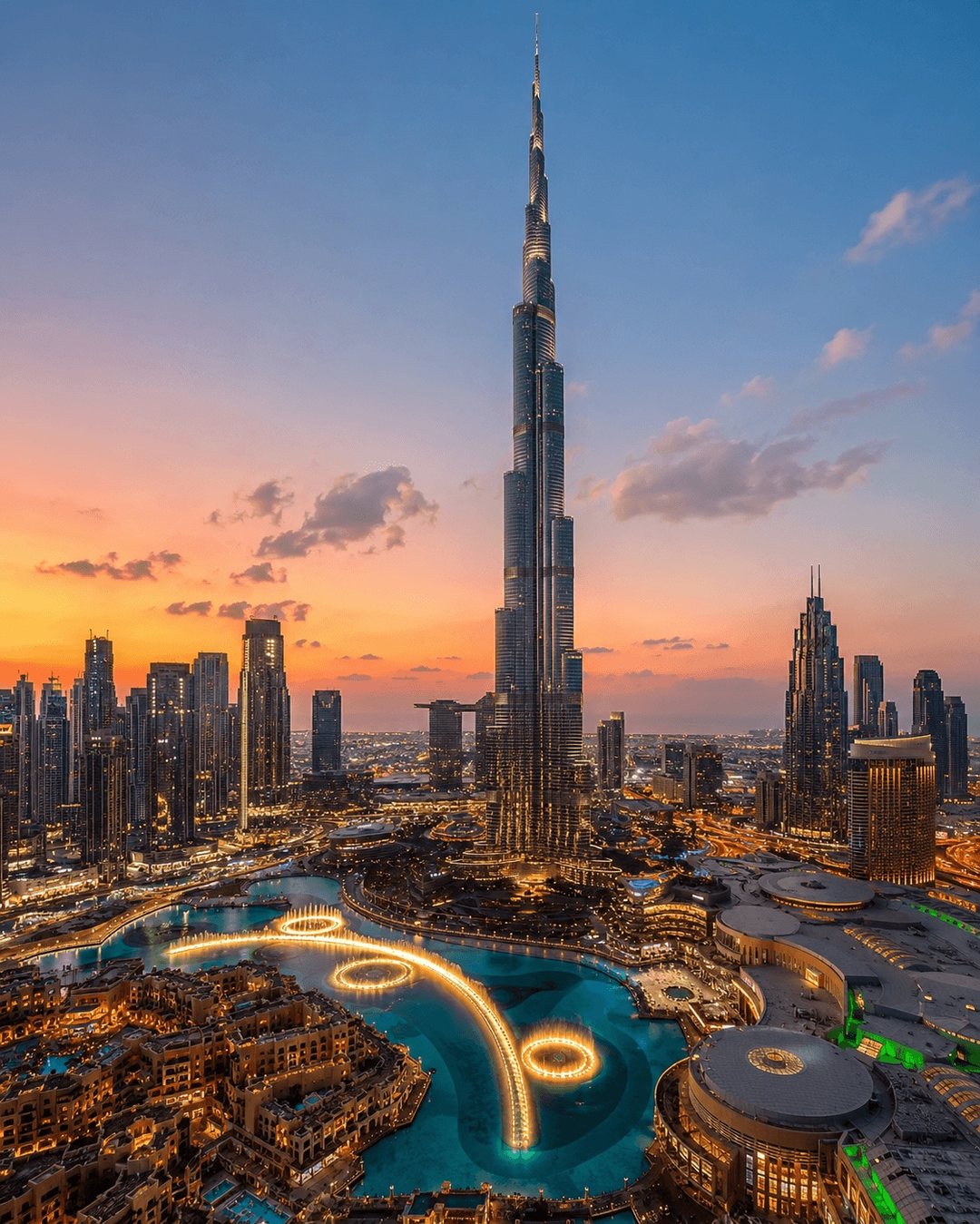
Dubai Without Restraint: The New Hotels and Tasting Menus Redefining the City
From a sail-shaped resort on the Gulf to an Indian tasting menu of extraordinary control, these six addresses reveal a city whose ambition now extends well beyond spectacle.
Executive brief
Dubai’s most interesting luxury is no longer about possessing the largest room. It is about choosing the sharpest point of view inside a city built on abundance.
01Dubai has entered its era of discernment
Dubai has never lacked luxury hardware. The more useful question now is which hotels and restaurants convert that hardware into an experience with character. Jumeirah Marsa Al Arab and SIRO One Za’abeel offer sharply different answers: one embraces the coast and the grand-resort tradition, while the other treats performance, recovery and urban efficiency as the new vocabulary of indulgence.
The dining scene has matured in the same direction. Trèsind Studio’s Three-restaurant records Indian menu, Armani/Ristorante’s exacting Italian formality, Orfali Bros’ personal contemporary cooking and FZN by Björn Frantzén’s polished global ambition cannot be grouped under a vague idea of hotel dining. Each asks guests to cross the city for a specific voice, a sign that Dubai now supports restaurants as destinations rather than amenities attached to addresses.
Four nights allow the city’s scale to feel exhilarating instead of exhausting. Group the coast and old-city explorations separately from Downtown and the financial district. Traffic is not a minor detail; it can consume the hour meant for a sunset drink. Build generous transfer windows, make peace with chauffeured movement and resist scheduling a second major activity before a long dinner.
Hotel
Jumeirah Marsa Al Arab
Dubai, United Arab EmiratesAt Jumeirah Marsa Al Arab, strength in a convincing food-and-drink offer is matched by strength in its restorative facilities.
Open the record →Hotel
SIRO One Za'abeel
Dubai, United Arab EmiratesA considered stay in Dubai, United Arab Emirates, led by a convincing food-and-drink offer and its restorative facilities.
Open the record →02Jumeirah Marsa Al Arab brings confidence back to the beach resort
Jumeirah Marsa Al Arab’s a leading hotel record for the stated edition, published record is led by dining, wellbeing and service—a telling combination for a resort designed to complete Jumeirah’s coastal trilogy. Its architecture is unapologetically visible from the water. The hotel does not pretend to be a discreet desert retreat; it belongs to Dubai’s lineage of skyline-making hospitality.
Choose it for the first half of a trip, especially after an overnight flight. The Gulf, pools and resort facilities create a buffer between travel and the city’s relentless forward motion. A beach base also gives mornings a natural shape: swim, breakfast, shade, then venture out once the heat and jet lag have become manageable. That sequencing is not laziness. It is intelligent acclimatization.
The risk at a large resort is surrendering the entire stay to internal abundance. Avoid it by protecting one day on property and planning the next beyond the gates. Marsa Al Arab should provide range without becoming a gilded border. Its value lies in offering an assured return after a night across town, not in making the rest of Dubai irrelevant.
In Dubai, restraint is compelling only when it is chosen—not when it is mistaken for a lack of nerve.
The World’s Best Travel Desk
03SIRO One Za’abeel makes recovery the main event
SIRO One Za’abeel, reviewed a leading hotel record for the stated edition, is built around a proposition that would have sounded niche a decade ago: the hotel as a serious platform for movement, sleep and recovery. In Dubai, where business trips, late dinners and long-haul flights collide, that focus feels pragmatic rather than puritanical. Wellbeing is valuable when it improves the trip’s rhythm, not when it imposes a regime.
Stay here if training matters, if a conventional resort feels too passive or if the itinerary places most evenings in the city. The address is less about lounging beside the Gulf than about moving efficiently through Dubai and returning to facilities designed with physical performance in mind. Guests should still enjoy dinner and a drink; the point is having a hotel that understands the morning after.
SIRO also represents a more contemporary Dubai luxury: specific, system-driven and willing to prioritize one kind of traveller. It will not suit everyone, which is precisely its strength. Hotels become memorable when their decisions exclude certain possibilities. An all-purpose palace may impress at check-in; a focused hotel can change how the entire stay feels.
04Trèsind Studio is the reservation that changes the trip
Trèsind Studio holds a leading restaurant record for the stated edition and published, the strongest restaurant editorial review in this edit. Its Indian cooking is ambitious without treating heritage as a static catalogue. Technique, regional reference and the theatre of service are marshalled into a tightly controlled sequence. The meal deserves to be approached as the evening’s only event.
Arrive hungry but not depleted. Dubai’s tasting menus can run late, and a full day in the sun will dull attention. Keep lunch light, return to the hotel in the afternoon and allow enough transfer time to avoid entering the room under stress. A restaurant of this calibre should begin with anticipation, not an argument with traffic.
The significance of Trèsind Studio extends beyond itseditorial record. It demonstrates that Indian fine dining in Dubai can be both globally legible and intellectually independent, refusing the old choice between luxury presentation and regional complexity. For visitors who still imagine the city’s best meals as imported brand extensions, this is the table most likely to correct the picture.
05Armani/Ristorante and FZN understand the power of polish
Armani/Ristorante Dubai, reviewed a restaurant record for the stated edition, operates in a setting where visual discipline is not optional. Its Italian cooking and service must hold their own against one of the city’s most recognizable hospitality brands. The attraction is coherence: the room, pacing and plate all speak a language of controlled elegance rather than exuberant display.
FZN by Björn Frantzén, reviewed a restaurant record for the stated edition, offers a different expression of refinement. The menu draws on a modern international vocabulary shaped by the chef’s broader culinary world. Choose it when the evening should feel immersive and highly produced, with the kind of technical fluency expected from a restaurant carrying a major name into a new city.
These are not casual alternatives to Trèsind Studio. They are separate statements about Dubai’s appetite for established global excellence. Armani/Ristorante is the sharper choice for Italian classicism and architectural composure; FZN suits diners who want a longer, more exploratory performance. Both work best when the guest is willing to meet the room’s level of intent.
Restaurant
Armani/Ristorante Dubai
Dubai, United Arab EmiratesArmani/Ristorante Dubai is a Italian restaurant in Dubai, United Arab Emirates, defined by technical precision and coherent menu architecture.
Open the record →Restaurant
FZN by Björn Frantzén
Dubai, United Arab EmiratesFZN by Björn Frantzén is a Modern Cuisine restaurant in Dubai, United Arab Emirates, defined by technical precision and coherent menu architecture.
Open the record →06Orfali Bros gives the city its most personal counterpoint
Orfali Bros holds a restaurant record for the stated edition and published, but its energy is deliberately different from the polished hotel dining rooms surrounding it. The restaurant’s contemporary cooking carries the brothers’ histories, humour and curiosity into dishes that resist easy classification. This is authorship without solemnity, one of the qualities Dubai’s dining landscape needs most.
Book it on the night between larger tasting menus. The room has immediacy, and the food’s intelligence does not depend on a lengthy ceremonial frame. A meal can feel important while remaining alive to spontaneity and appetite. In a city where hospitality often arrives at monumental scale, Orfali Bros reminds diners that personality can be the most persuasive luxury.
It also belongs to the everyday life of Dubai more convincingly than many international flagships. That local constituency matters. Restaurants mature when residents return, argue about favourite dishes and bring visiting friends—not when every table is occupied by someone completing a global checklist. Orfali Bros feels essential because it participates in the city rather than merely operating inside it.
07How to experience abundance without being overwhelmed
Dubai invites excess by making nearly every option available at once. The disciplined traveller chooses one major experience per day. A desert morning and a three-hour dinner can coexist; a beach club, museum, shopping appointment, sundowner and tasting menu usually produce only expensive fatigue. Let the hotel absorb the hours between commitments.
Dress codes and temperature shifts deserve practical attention. Interiors can be cool even when the pavement is punishing, and the most formal rooms reward a jacket despite the climate. Keep transfers generous and confirm locations carefully; restaurant names may sit within large complexes whose entrances are not obvious. Seamlessness often depends on unglamorous preparation.
The reward is a Dubai that feels more nuanced than its reputation. Marsa Al Arab delivers grand coastal hospitality; SIRO reframes wellbeing as performance; Trèsind Studio, Armani/Ristorante, Orfali Bros and FZN reveal distinct culinary ambitions. The city’s scale remains spectacular, but the memorable moments come from precision: the right room, the right table and enough time to appreciate why each exists.
08The season, room and table decisions that matter
The most agreeable outdoor months generally carry the highest demand, and the premium can be substantial. Shoulder periods require a more indoor itinerary but may unlock suites, spa time and restaurant tables that are elusive in peak season. Summer is not impossible for travellers who accept that the city will be experienced through cooled interiors, pools and evenings. What fails is pretending midday heat will behave like a Mediterranean afternoon and planning long outdoor walks accordingly.
At Marsa Al Arab, prioritize the view and outdoor space only if the balcony will be used; a lower, well-oriented room may offer more intimacy than the highest floor. At SIRO, examine proximity to the facilities that justify the booking and be honest about whether they fit the trip. Paying for a performance hotel while scheduling four late nights is not aspirational—it is an expensive refusal to choose.
Restaurant deposits, cancellation windows and tasting-menu durations deserve a single written plan shared by the whole party. Confirm dietary restrictions before arrival, not at the table, and distinguish preferences from allergies clearly. Dubai’s best kitchens are accustomed to international guests, but complexity still requires notice. The smoothest evening begins days earlier with accurate information.
Finally, use the concierge for what local knowledge can genuinely improve: transfer timing, difficult tables, desert operators and the practical entrance to a large complex. Do not outsource every decision. Dubai becomes more interesting when one chooses a neighbourhood café, gallery or shop without it being transformed into a formal excursion. A little independence keeps immaculate service from turning the city into a sequence of lobbies.
For a first visit, the most revealing contrast is a morning near the Creek followed by an evening in the city’s newest architecture. It prevents contemporary Dubai from appearing without roots and keeps heritage from being reduced to a staged quarter. Allow guides, shopkeepers and restaurateurs to complicate the skyline narrative. The city is built by people from across the world, and its hospitality becomes more intelligible when that human geography is allowed into the story.