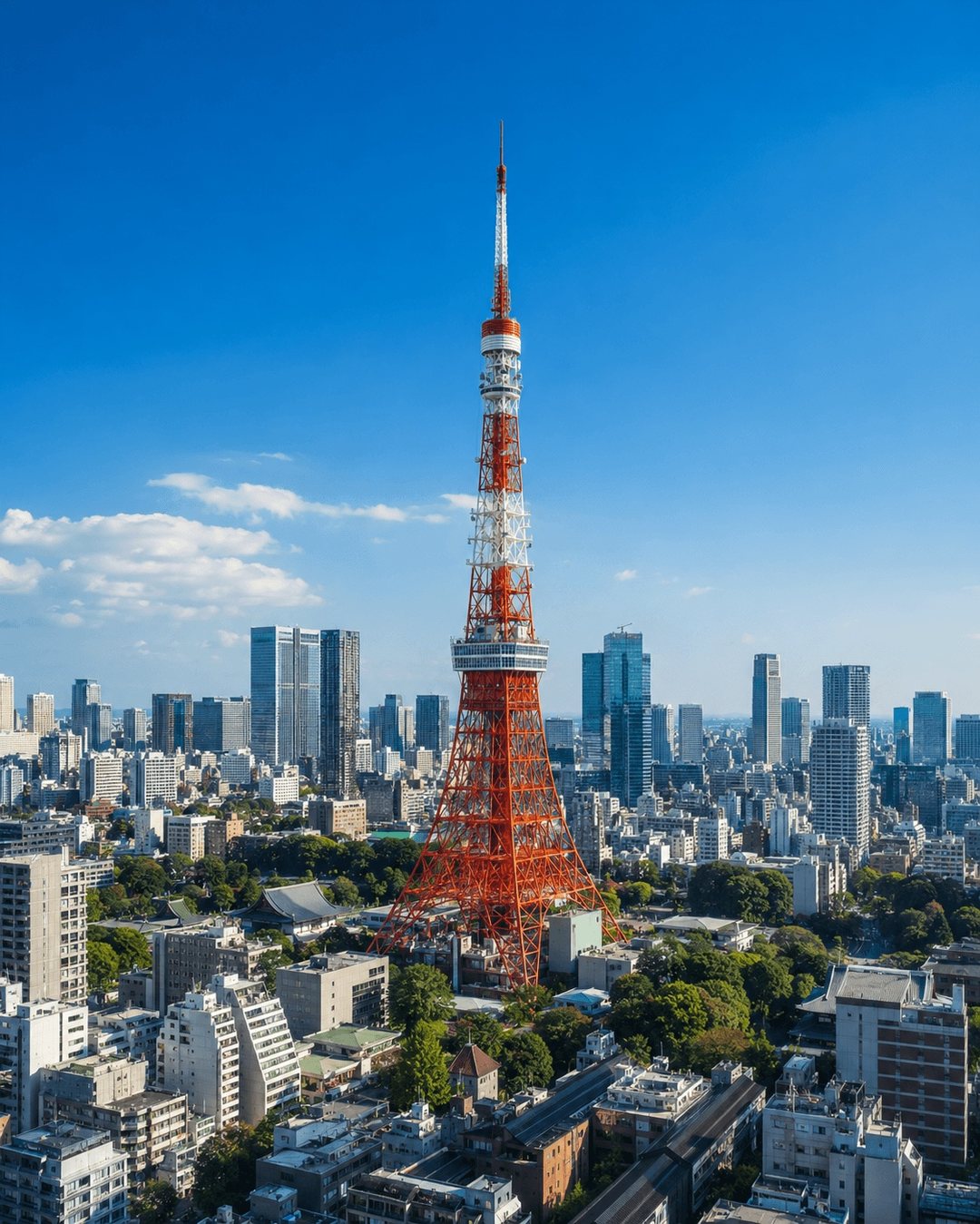
Tokyo, Precisely: Six Addresses to Build an Entire Journey Around
Three reviewed hotels and three exceptional restaurants show why Tokyo’s deepest luxury lies in care, timing and the ability to move through a vast city without flattening its differences.
Executive brief
A convincing Tokyo itinerary follows rail lines, neighbourhood rhythms and appetite, giving exacting restaurants and service-led hotels the time their standards deserve.
01Tokyo is not one enormous city but a collection of complete worlds
Tokyo appears to reward maximalism. Rail maps invite ambitious crossings, shops seem to multiply overnight and every district has a case for an entire day. The intelligent response is subtraction. Five nights allow three or four neighbourhoods to become legible, provided the itinerary accepts that the rest of the metropolis will remain beyond reach. Group each day around one railway axis, place dinner on the same side of the city where possible and leave time for the small discoveries that never appear on a list: packaging, a garden wall, a counter with six seats, the precise silence of a residential street.
The hotels offer three service-led positions. JANU Tokyo receives a leading hotel record for the stated edition, with service depth and a convincing food-and-drink offer defining its authority. Park Hyatt Tokyo follows at a leading hotel record for the stated edition and 91.7, led by the same pair of strengths with restoration also present in the record. Four Seasons Hotel Tokyo at Otemachi holds a hotel record for the stated edition, distinguished by service depth and coherent design. The numerical spread is wider than in the restaurant group, but each hotel should still be judged against location, routine and the way the traveller intends to use Tokyo.
The dining trio occupies the highest culinary band. L'Effervescence has a leading restaurant record for the stated edition and published, Den a leading restaurant record for the stated edition and 97, and Sazenka a leading restaurant record for the stated edition and 96. Their ideas differ sharply. L'Effervescence treats the restaurant as an ecological and social instrument expressed through food. Den loosens kaiseki conventions through humour, warmth and a personal voice. Sazenka frames Chinese technique and Japanese sensibility as a historical conversation. Three consecutive dinners would be formidable; two chosen for genuine interest may be unforgettable.
Hotel
JANU Tokyo
Tokyo, JapanThis hotel in Tokyo, Japan draws its authority from the depth of its service system and a convincing food-and-drink offer.
Open the record →Hotel
Park Hyatt Tokyo
Tokyo, JapanA considered stay in Tokyo, Japan, led by the depth of its service system and a convincing food-and-drink offer.
Open the record →Hotel
Four Seasons Hotel Tokyo at Otemachi
Tokyo, JapanIn Tokyo, Japan, Four Seasons Hotel Tokyo at Otemachi is distinguished by the depth of its service system and the coherence of its design.
Open the record →Restaurant
L'Effervescence
Tokyo, JapanL'Effervescence treats a restaurant as an ecological and social instrument, then makes that argument legible through food.
Open the record →Restaurant
Den
Tokyo, JapanTokyo kaiseki conventions loosen through humour, warmth and a distinctly personal voice.
Open the record →Restaurant
Sazenka
Tokyo, JapanSazenka treats Chinese technique and Japanese sensibility as a historical conversation rather than a fusion formula.
Open the record →02A Tokyo hotel is first a base, then a view of hospitality
JANU Tokyo leads this hotel edit by a tenth of a point. Its a leading hotel record for the stated edition, published record draws authority from service depth and food and drink, supported by restorative strength. Choose it when the property should participate actively in the stay. Protect breakfast, a late afternoon or an uncomplicated dinner rather than departing at dawn and returning after midnight every day. Tokyo can make an excellent hotel disappear behind the ambition to see more. That is poor value and an unnecessarily hard way to travel.
Park Hyatt Tokyo, a leading hotel record for the stated edition, is defined in the record by service and a convincing food-and-drink offer, with restoration contributing to the case. The near-identicaleditorial record to JANU means practical preference should decide. Ask which base aligns with the districts, meetings and dinners that already matter. Confirm current operation, room priorities and transfer arrangements directly before travel. In a city of exact timetables, the most useful hotel service often appears as anticipation: luggage moved, directions written clearly and a reservation reconfirmed without drama.
Four Seasons Hotel Tokyo at Otemachi is reviewed a hotel record for the stated edition. Service remains its principal distinction, followed by the coherence of its design. That record points toward a traveller who values a clearly organised urban environment and attentive operation more than aeditorial record-led contest for the most elevated label. Request a room based on sleep, work and orientation needs. Tokyo’s scale can make a hotel feel like a command centre; the best one is the place from which the chosen parts of the city become simpler, not the property with the longest catalogue of claims.
Hotel
JANU Tokyo
Tokyo, JapanThis hotel in Tokyo, Japan draws its authority from the depth of its service system and a convincing food-and-drink offer.
Open the record →Hotel
Park Hyatt Tokyo
Tokyo, JapanA considered stay in Tokyo, Japan, led by the depth of its service system and a convincing food-and-drink offer.
Open the record →Hotel
Four Seasons Hotel Tokyo at Otemachi
Tokyo, JapanIn Tokyo, Japan, Four Seasons Hotel Tokyo at Otemachi is distinguished by the depth of its service system and the coherence of its design.
Open the record →Tokyo does not ask to be conquered; it asks the traveller to notice how completely one small part can contain a day.
The World’s Best Travel Desk
03a leading restaurant record for the stated edition, three radically different forms of authorship
L'Effervescence leads the restaurants at published. Its editorial review record describes French technique placed within Japanese seasonality, producer relationships and an ecological and social argument made legible through food. The distinction is not permission to approach dinner as a moral lecture or a trophy booking. It recognises cooking whose wider commitments have operational consequence. Reserve early, disclose dietary needs accurately and keep the afternoon calm. A menu built on season and producers deserves an alert guest, not one depleted by a day of frantic shopping.
Den, a leading restaurant record for the stated edition, changes the emotional temperature. The record identifies kaiseki conventions loosened through humour, warmth and a distinctly personal voice. Care and personalisation are part of the authorship, not a service layer applied afterwards. That makes the restaurant particularly valuable for travellers who fear that high Japanese dining must be intimidating to be serious. Arrive with openness, not a script assembled from photographs of famous gestures. A personal restaurant loses its meaning when the guest wants only a predetermined sequence.
Sazenka receives a leading restaurant record for the stated edition and published for treating Chinese technique and Japanese sensibility as a historical conversation, not a fusion formula. The wording protects the restaurant from the lazy category of ‘East meets East’ and directs attention toward method, lineage and restraint. Choose Sazenka when that conversation genuinely interests the group. Do not book all three restaurants simply because theeditorial record are high. Their work asks different questions, and the traveller should bring enough curiosity—and appetite—to answer one evening at a time.
Restaurant
L'Effervescence
Tokyo, JapanL'Effervescence treats a restaurant as an ecological and social instrument, then makes that argument legible through food.
Open the record →Restaurant
Den
Tokyo, JapanTokyo kaiseki conventions loosen through humour, warmth and a distinctly personal voice.
Open the record →Restaurant
Sazenka
Tokyo, JapanSazenka treats Chinese technique and Japanese sensibility as a historical conversation rather than a fusion formula.
Open the record →04Neighbourhood discipline is the secret to an expansive trip
A Tokyo day should have a radius. Begin with one cultural or architectural anchor, continue into nearby streets for lunch and shops, and cross the city only when the next chapter is worth the journey. The official rail network makes long movement possible, which does not make constant movement desirable. Stations themselves can require time to navigate. Save the route before leaving Wi-Fi, note the correct exit and treat a ten-minute transfer between platforms as a real part of the schedule.
Retail needs its own edit. Department stores, specialist shops, craftspeople, fashion and electronics can each consume a day without strain. Decide the category before choosing the district, make appointments for rare or bespoke pieces and carry the relevant dimensions or references. Tax, shipping and warranty questions are best resolved at purchase rather than at the airport. Leave enough unplanned time to notice ordinary objects; Tokyo’s strongest design lessons often appear in things intended for daily use rather than in a luxury boutique’s most visible cabinet.
Cultural visits improve when the traveller pays attention to closure days, timed admission and the last entry without relying on general opening hours. Check official sites close to travel. Gardens and outdoor districts change with season and weather, so keep one movable half-day. Rain can turn a shopping or museum route into the better option; clear light can justify abandoning it. Flexibility is not the absence of a plan. It is the result of having several days organised well enough that one can exchange places without causing collapse.
05Rail first, taxis selectively, private cars with a precise brief
GO TOKYO, the city’s official travel guide, recommends the extensive JR, Metro and Toei networks and notes that IC cards or individual tickets make movement straightforward. For most central journeys, rail is the default: frequent, legible once the route is understood and independent of road traffic. Use the same payment method consistently, keep the card accessible and avoid blocking gates while checking directions. Courtesy on platforms and trains is practical as well as cultural; move aside before consulting a map.
Taxis are valuable late at night, with luggage, for limited mobility or when several passengers are travelling a short awkward route. Carry the destination in Japanese or show a map pin, because a hotel or restaurant name may not be unique enough. A private car can transform an airport transfer or a day of dispersed appointments, but it should have a defined purpose. Tokyo traffic and parking make indefinite standby less useful than it sounds. The discreet choice is whichever mode preserves time without making the city invisible.
Luggage forwarding and hotel storage can release an arrival or departure day from suitcases, but confirm timing and eligibility with the provider or hotel. Never assume a same-day transfer. Travellers connecting to rail elsewhere in Japan should reserve the margin needed to find the platform, purchase food and settle bags. Tokyo’s systems are efficient because they expect participants to be prepared. Arriving early is not wasted time; it is the condition that allows the journey to feel effortless.
06Luxury in Tokyo is often a matter of knowing how to behave
Punctuality is the first courtesy. Restaurants with small rooms and sequenced menus may be unable to absorb a late arrival without affecting every guest. Reconfirm the address, route and expected arrival time before leaving the hotel, then add a margin for the station exit. Cancellation terms can be strict because ingredients and seats are committed in advance. Read them, provide accurate dietary information and avoid speculative reservations. Access to a scarce table carries responsibility as well as pleasure.
Volume and photography deserve judgement. Follow the venue’s policy, ask before photographing people and allow food to arrive without every plate becoming a production. In shops and traditional spaces, observe before assuming. Staff will usually make expectations clear when visitors remain attentive. This is not a performance of cultural perfection. It is the ordinary respect that keeps an intimate experience intimate. The lightest luxury traveller is the one who creates little extra work while appreciating the work already present.
The hotel can help translate uncertainty, but not every interaction needs mediation. Learn simple greetings, carry the address, understand the payment process and give exchanges enough time. Tipping is not the default convention it is in some countries; follow current local guidance without importing a familiar habit. Gratitude can be exact without being ostentatious. Tokyo’s most refined hospitality often arrives through a sequence of small acts, and meeting that care with attention is part of the experience.
07Tokyo closes through one small radius
Arrival day should remain close to JANU Tokyo, Park Hyatt Tokyo or Four Seasons Hotel Tokyo at Otemachi. Use the service and food-and-drink strengths identified in the editorial review records, learn the nearest station and sleep. On the first full day, choose a historic district or major collection and travel outside the busiest commuting window when possible. Keep dinner simple unless jet lag has genuinely passed. The second day can follow contemporary design and retail within one radius, ending at Den or Sazenka according to the group’s interest.
Give the third full day a quieter structure before L'Effervescence. A garden, a focused museum or a few specialist shops are enough; a long tasting menu should not receive the remains of the day. The fourth day is for return. Revisit the neighbourhood that produced unfinished curiosity, buy the object left behind or take a slower route through streets first crossed in a hurry. If the third restaurant is essential, add a sixth night without forcing three serious menus into too little recovery time.
For the final sequence, shrink the radius. Stay around one station long enough to understand its minor choreography: commuters thinning after the rush, shutters lifting, deliveries arriving with exact timing, a counter filling and emptying. The discipline recognised at JANU Tokyo, Park Hyatt Tokyo and Four Seasons Hotel Tokyo at Otemachi belongs to the same city that gives Den, Sazenka and L'Effervescence their care and authorship. Tokyo’s grandeur is distributed through these small acts. A closing hour spent inside that cadence carries more of the city than a distant landmark added for proof.
Hotel
JANU Tokyo
Tokyo, JapanThis hotel in Tokyo, Japan draws its authority from the depth of its service system and a convincing food-and-drink offer.
Open the record →Hotel
Park Hyatt Tokyo
Tokyo, JapanA considered stay in Tokyo, Japan, led by the depth of its service system and a convincing food-and-drink offer.
Open the record →Hotel
Four Seasons Hotel Tokyo at Otemachi
Tokyo, JapanIn Tokyo, Japan, Four Seasons Hotel Tokyo at Otemachi is distinguished by the depth of its service system and the coherence of its design.
Open the record →Restaurant
L'Effervescence
Tokyo, JapanL'Effervescence treats a restaurant as an ecological and social instrument, then makes that argument legible through food.
Open the record →Restaurant
Den
Tokyo, JapanTokyo kaiseki conventions loosen through humour, warmth and a distinctly personal voice.
Open the record →Restaurant
Sazenka
Tokyo, JapanSazenka treats Chinese technique and Japanese sensibility as a historical conversation rather than a fusion formula.
Open the record →