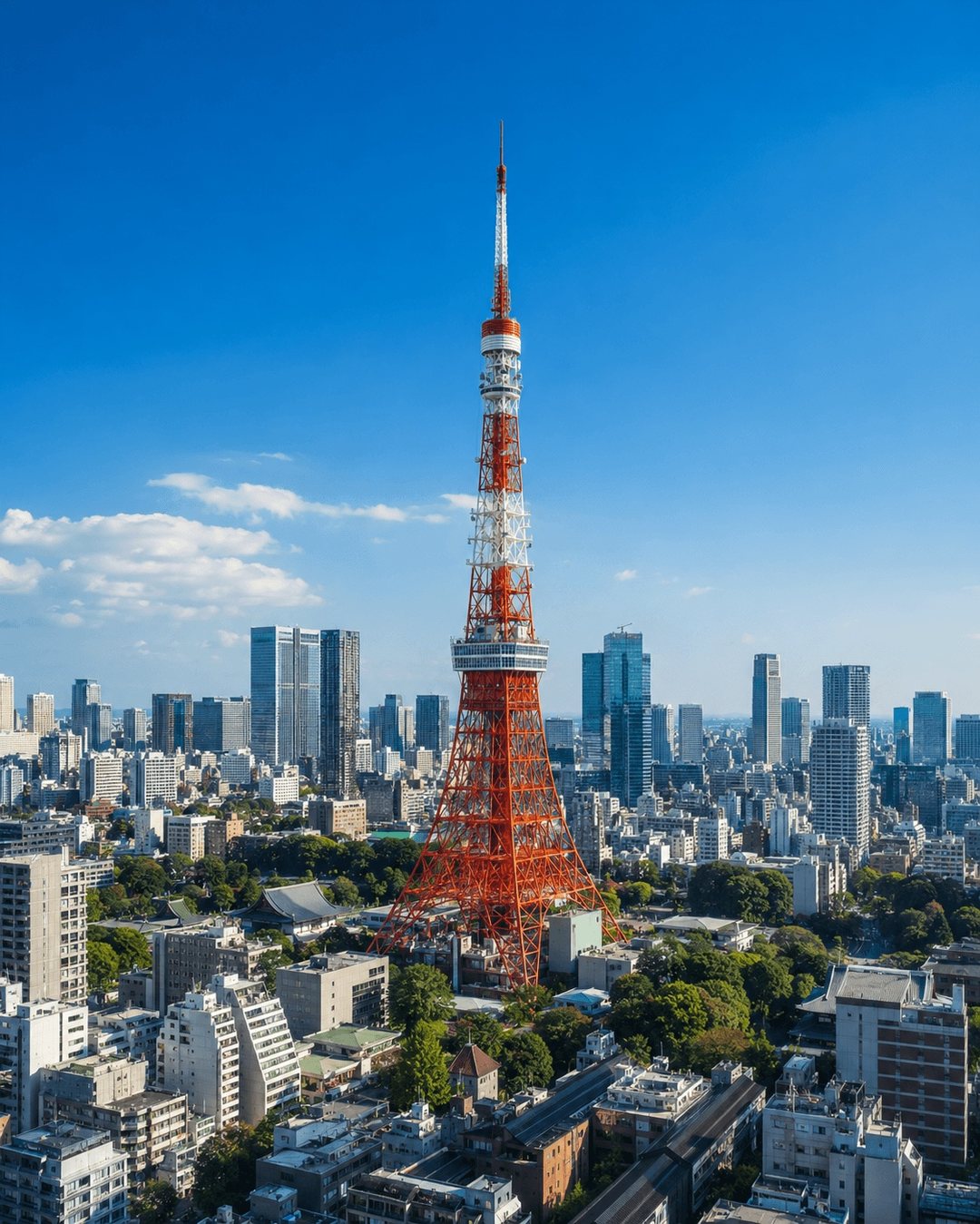
Tokyo’s Best Craft Hotels and Counter Seats, One Exacting Week
A five-radius itinerary connects discreet hospitality, authored cooking and the makers whose work gives the city texture.
Executive brief
Tokyo’s luxury is clearest at close range: the grain of timber, the silence around a counter and the sequence of small services that make a vast city feel exact rather than overwhelming.
01The address list matters only after the geography makes sense
Tokyo rewards the traveller who notices material, sequence and restraint before searching for spectacle. The most useful city guide is not a warehouse of recommendations. It establishes a point of view, protects the hours that give a place atmosphere and explains why one address belongs beside another. In Tokyo, that editorial discipline matters because abundance can disguise weak planning. The traveller who tries to prove access usually experiences less: too many transfers, too many menus and no unscheduled interval in which the destination can become specific. Design-literate travellers who judge luxury through workmanship and disciplined service will gain more from a route with a deliberate centre, a hotel selected for daily behaviour and a short list of meals chosen for contrast.
A polished hotel lobby means more after a day among small workshops, and a counter meal becomes more legible beside the city’s everyday precision. The World’s Best records give the itinerary factual anchors without pretending to settle taste. The hotels and restaurants named here already exist in the reviewed archive, with their distinctions, locations and editorial summaries preserved on their own records. Those facts define the evidence boundary. The guide then asks a different question: how can the addresses be sequenced into a journey that feels generous, geographically intelligent and emotionally coherent? editorial record can identify exceptional performance, but they cannot know whether a guest needs a residential base, an after-dark neighbourhood or a dining room whose formality suits the company. Editing begins where the database ends.
Tokyo: Tokyo rewards preparation, but its emotional force arrives through small acts that no itinerary can schedule. These observations are not slogans; they are instructions for pace. They favour fewer districts read properly, decisive reservations and enough latitude for the destination to revise the plan. Weather, opening times, transport conditions and restaurant policies can change, so official sources and direct confirmations should be checked close to travel. What should remain stable is the hierarchy of the trip: place before checklist, appetite before accumulation and enough freedom for a strong first impression to alter the following day.
Hotel
JANU Tokyo
Tokyo, JapanThis hotel in Tokyo, Japan draws its authority from the depth of its service system and a convincing food-and-drink offer.
Open the record →Hotel
Park Hyatt Tokyo
Tokyo, JapanA considered stay in Tokyo, Japan, led by the depth of its service system and a convincing food-and-drink offer.
Open the record →Hotel
Four Seasons Hotel Tokyo at Otemachi
Tokyo, JapanIn Tokyo, Japan, Four Seasons Hotel Tokyo at Otemachi is distinguished by the depth of its service system and the coherence of its design.
Open the record →Restaurant
L'Effervescence
Tokyo, JapanL'Effervescence treats a restaurant as an ecological and social instrument, then makes that argument legible through food.
Open the record →Restaurant
Den
Tokyo, JapanTokyo kaiseki conventions loosen through humour, warmth and a distinctly personal voice.
Open the record →Restaurant
Sazenka
Tokyo, JapanSazenka treats Chinese technique and Japanese sensibility as a historical conversation rather than a fusion formula.
Open the record →02Three bases, three different forms of control
The attraction of JANU Tokyo lies in coherence. It carries 2026 a leading hotel record for the stated edition ·, and the corresponding record states: This hotel in Tokyo, Japan draws its authority from the depth of its service system and a convincing food-and-drink offer. That is evidence, not a command to prefer it automatically. In Tokyo, room choice should follow the day’s geography, sleep priorities and the group’s appetite for returning to the hotel between engagements. the craft-and-counter Tokyo week must determine whether the hotel serves the day that will actually be travelled, including the least glamorous transfer and the latest arrival. If the schedule never allows the property to perform beyond storing luggage, another location may offer better value. If the hotel is expected to hold breakfast, recovery and an elegant transition into evening, its service proposition deserves real space. Ask exact questions before booking and keep the answers close to ordinary behaviour: how the room feels at night, how quickly a car can be arranged and how naturally the staff can revise a plan.
Park Hyatt Tokyo enters the selection with 2026 a leading hotel record for the stated edition ·. The editorial record is concise: A considered stay in Tokyo, Japan, led by the depth of its service system and a convincing food-and-drink offer. Concision is useful because it leaves the traveller free to judge suitability. Across the craft-and-counter Tokyo week, different guests may value the same property for entirely different reasons—proximity to meetings, a calmer residential setting, a strong dining programme or the ability to retreat without abandoning the city. Confirm the detail that photography cannot settle: lift access, likely street exposure, storage, bathroom configuration and the practical route from entrance to room. In Tokyo, those small facts determine whether the hotel behaves like an ally or an obligation. The best outcome is fluency. Service anticipates the difficult transitions, the room restores attention and the guest returns outside without feeling that the day must be rebuilt.
Four Seasons Hotel Tokyo at Otemachi should be booked for the qualities described in its 2026 a hotel record for the stated edition · record: In Tokyo, Japan, Four Seasons Hotel Tokyo at Otemachi is distinguished by the depth of its service system and the coherence of its design. The distinction gives the address context, but the trip supplies the final test. Within the craft-and-counter Tokyo week, do not ask a hotel to be both a self-contained resort and an invisible urban base; decide which role the itinerary requires. A property can be the right answer for a first night and the wrong answer for a longer stay, or vice versa. Consider how breakfast, transport, work, restoration and late returns will actually occur. Protect one interval to experience the property at its intended pace, then judge it by the ease with which the wider city re-enters the plan. In Tokyo, memorable hospitality is rarely the loudest part of the day. It is the sequence of exact actions that allows a guest to arrive prepared, depart curious and sleep without carrying the city’s complications into the room.
Hotel
JANU Tokyo
Tokyo, JapanThis hotel in Tokyo, Japan draws its authority from the depth of its service system and a convincing food-and-drink offer.
Open the record →Hotel
Park Hyatt Tokyo
Tokyo, JapanA considered stay in Tokyo, Japan, led by the depth of its service system and a convincing food-and-drink offer.
Open the record →Hotel
Four Seasons Hotel Tokyo at Otemachi
Tokyo, JapanIn Tokyo, Japan, Four Seasons Hotel Tokyo at Otemachi is distinguished by the depth of its service system and the coherence of its design.
Open the record →Tokyo’s deepest luxury is the feeling that every small decision has already been considered.
The World’s Best Travel Desk
03The dining rooms worth organising the day around
At L'Effervescence, 3 restaurant records · identifies a restaurant with a defined argument. The record summarises it this way: L'Effervescence treats a restaurant as an ecological and social instrument, then makes that argument legible through food. That is enough to distinguish the booking from generic fine dining, but not enough to replace judgement about company, appetite and timing. Across the craft-and-counter Tokyo week, geography must be solved before the day is filled: a fine table loses much of its pleasure after an anxious transfer. If the day has already demanded constant movement, protect a real pause before leaving for dinner. If lunch was substantial, do not force another long menu out of obligation. In Tokyo, culinary depth exists at several scales; an exacting restaurant gains meaning when placed beside informal meals that reveal local habits and ingredients. The objective is a coherent food journey, not a sequence of rooms in which every evening asks for the same level of concentration.
Den earns attention through 3 restaurant records · and a record that states: Tokyo kaiseki conventions loosen through humour, warmth and a distinctly personal voice. The useful response is curiosity with boundaries. Ask what the menu format requires, whether dietary needs can be accommodated without dismantling the proposition and how long the evening is likely to last. For the the craft-and-counter Tokyo week route, confirm the address and booking terms while there is still time to change either. Then build the day backwards from the reservation. A nearby gallery, walk or quiet hotel interval will usually serve the dinner better than another cross-city appointment. In Tokyo, punctuality is part of hospitality on both sides of the table. Arriving calm allows the room, service and cooking to be read as one composition. Leaving without an automatic second venue preserves the meal’s shape and the traveller’s appetite for the following morning.
Sazenka, reviewed 3 restaurant records ·, belongs in the itinerary because its editorial record has a clear centre: Sazenka treats Chinese technique and Japanese sensibility as a historical conversation rather than a fusion formula. Clarity is more valuable than fashionable breadth. In the larger the craft-and-counter Tokyo week sequence, set the surrounding hours at a lower pitch so the restaurant does not have to compete with the entire day. Choose the table when that voice is the one the trip needs, not simply because the numerical distinction is high. Confirm booking rules and travel time, and give the kitchen accurate information before arrival. The wider meals in Tokyo should keep different registers—breakfast, a market lunch, a neighbourhood staple, a glass taken without ceremony—so the formal dinner remains singular. Luxury dining becomes tiring when every reservation competes to be the climax. Better editing gives one or two tables authority and lets the city’s ordinary pleasures carry the rest.
Restaurant
L'Effervescence
Tokyo, JapanL'Effervescence treats a restaurant as an ecological and social instrument, then makes that argument legible through food.
Open the record →Restaurant
Den
Tokyo, JapanTokyo kaiseki conventions loosen through humour, warmth and a distinctly personal voice.
Open the record →Restaurant
Sazenka
Tokyo, JapanSazenka treats Chinese technique and Japanese sensibility as a historical conversation rather than a fusion formula.
Open the record →04Five Tokyo radii connected by material intelligence
Assign each day one rail axis and one material question, moving from historic craft districts to contemporary design without doubling back. Give each day one rail axis and a small number of districts whose details can be properly noticed. This is the route’s governing logic, not a demand for military timing. Place the immovable reservations first, then examine the map as a local would: rivers, rail lines, gradients, neighbourhood boundaries and the hours when a short distance becomes a long transfer. One purposeful crossing can give a day drama. Four needless crossings turn the destination into upholstery glimpsed through a window. Save addresses offline, note the correct entrance and allow the route to become simpler as the trip progresses.
Start early, keep transfers exact and arrive at dinner with time to spare and attention intact. The pause is part of the itinerary. It protects appetite, restores attention and gives an excellent hotel the chance to perform beyond check-in. Travellers often schedule a city as if energy were constant from breakfast to midnight; it is not. Heat, rain, crowds, jet lag and visual saturation alter the value of every subsequent hour. A late-afternoon return, a quiet lunch or a single bench in the right square can preserve the evening that justified the journey. Efficiency is not moving continuously. It is reaching the significant moments in a condition to notice them.
Keep one half-day movable. Use it for the neighbourhood that produced unfinished curiosity, the museum missed when lunch ran long or the weather window that makes an outdoor route suddenly sensible. In Tokyo, that freedom works best when one person knows the confirmed addresses, the transfer margin and the final cancellation time. Current advice from official transport and tourism sources should outrank a saved social-media itinerary. Hotel staff can verify local conditions, but the traveller should still understand the broad geography and carry essential addresses. Flexibility becomes luxurious only when the foundations are sound: a confirmed room, a realistic transfer and the confidence to release anything that has become less compelling than the city in front of you.
05Culture, appetite and the pleasure of an unscripted hour
Protect the counter reservation from daytime fatigue and leave the final train decision comfortably outside the meal. The after-dark plan should not be an inventory of famous bars. Choose one area whose evening character differs from the daytime route and stay long enough for the transition to register. A drink may lead to dinner; dinner may end with a walk; a performance may be the only formal appointment. The city is most persuasive when these possibilities remain connected. Ask the hotel for practical advice about the return journey and current venue conditions, then preserve enough independence for the night to develop without being converted into a chauffeured circuit.
Daytime within the craft-and-counter Tokyo week needs the same confidence. One major collection, monument or architectural interior is sufficient for a morning when the surrounding streets are allowed to continue the subject. Cultural access should deepen the destination, not provide a stack of proof. Resist the urge to convert privileged entry into a race between institutions. Buy tickets from official sources, check closure days and use a knowledgeable guide when context will materially change the visit. Otherwise, let observation do more work. Shop with questions about maker, material and origin. Eat something whose value is not measured by reservation difficulty. The quieter decisions give the reviewed addresses scale and prevent luxury from becoming a sealed category.
06The practical decisions that protect a luxurious trip
Confirm photography rules, workshop appointments and restaurant punctuality, and carry addresses in Japanese for the last approach. Start with the hotel, the hardest restaurant and any timed cultural visit that would genuinely disappoint if missed. Then stop. A complete minute-by-minute schedule is fragile, especially across several cities. It leaves no room for weather, delay or desire. Read cancellation terms, reconfirm dietary restrictions and treat airport or station transfers as real parts of the day. Where rail works, use it. Where luggage, heat, mobility or late hours make a car sensible, arrange one without turning private transport into a performance of status.
Packing should follow movement and the most formal confirmed evening. Comfortable shoes, a compact weather layer and clothes that can cross from museum to restaurant will create more freedom than several outfits that require a hotel return. Carry a charged phone, offline addresses and a second payment method. For multi-city journeys, forward or check luggage only through verified services and realistic lead times. These details are not beneath the luxury brief. They are the infrastructure that keeps attention on Tokyo instead of on preventable friction.
The final planning decision for the craft-and-counter Tokyo week is what not to book. A third tasting menu may weaken the memory of the first two. A hotel move may consume the afternoon it was meant to improve. A famous viewpoint may be less valuable than returning to the street that became interesting on day one. The World’s Best approach is selective by design: stronger evidence, clearer differences and fewer addresses presented with enough context to be useful. The result should feel full but not crowded, polished but still open to accident.
07Build the days around energy, not a collection of pins
On arrival, remain close to the hotel. Learn the immediate streets, confirm the next day’s transport and choose an uncomplicated meal unless the flight and body clock make a major reservation genuinely sensible. The first full morning should carry the trip’s strongest cultural or architectural anchor. Follow it with a nearby lunch, a walk and the hotel pause. Place the most demanding dinner here only when energy is reliable; otherwise, give it the second night. In Tokyo, the sequence should reduce uncertainty each day without reducing curiosity.
The middle of the craft-and-counter Tokyo week is for contrast. If the first day was monumental, make the next one contemporary or residential. If dinner was formal, allow lunch to be direct and local. In a multi-city itinerary, travel early enough that the new hotel and neighbourhood receive a real afternoon; arriving at dusk after an overfilled departure day makes two destinations feel like one long transfer. Keep the final evening distinctive but not punitive, leaving enough space for an unplanned drink or a familiar walk. A great last meal should not require abandoning the final day to recovery and logistics.
Leave the closing morning in Tokyo small. Return to a café, walk one familiar route and buy the object considered earlier with enough time to ask how it was made or packed. The best departure carries recognition: a corner now understood, a staff member greeted again, a transport line no longer intimidating. That familiarity is the quiet dividend of editing. It cannot be obtained by adding another district at sunrise. The city should remain larger than the guide, with one compelling reason to return already visible before the car or train pulls away.
08The World’s Best view
Tokyo’s Best week is held together by the details that never ask to be photographed. The reviewed addresses earn their place by supplying evidence—service, cooking, design, restoration and a coherent relationship with location. The itinerary earns its authority by making those distinctions useful to a real traveller. Neither task benefits from inflated language. Luxury is clearest when choices have consequences: one hotel over another because the day changes, one table because its authorship advances the journey, one empty hour because attention is a finite resource.
The final measure is not how many celebrated doors opened. It is whether Tokyo remained vivid after they closed: the quality of the light on a return route, the logic of a neighbourhood, the dinner that changed the following morning’s appetite and the room that allowed the traveller to begin again. The World’s Best city guide should leave that kind of residue—specific, durable and sufficiently unfinished to make another visit feel necessary.
Hotel
JANU Tokyo
Tokyo, JapanThis hotel in Tokyo, Japan draws its authority from the depth of its service system and a convincing food-and-drink offer.
Open the record →Hotel
Park Hyatt Tokyo
Tokyo, JapanA considered stay in Tokyo, Japan, led by the depth of its service system and a convincing food-and-drink offer.
Open the record →Hotel
Four Seasons Hotel Tokyo at Otemachi
Tokyo, JapanIn Tokyo, Japan, Four Seasons Hotel Tokyo at Otemachi is distinguished by the depth of its service system and the coherence of its design.
Open the record →Restaurant
L'Effervescence
Tokyo, JapanL'Effervescence treats a restaurant as an ecological and social instrument, then makes that argument legible through food.
Open the record →Restaurant
Den
Tokyo, JapanTokyo kaiseki conventions loosen through humour, warmth and a distinctly personal voice.
Open the record →Restaurant
Sazenka
Tokyo, JapanSazenka treats Chinese technique and Japanese sensibility as a historical conversation rather than a fusion formula.
Open the record →