The Honeymoon Room Needs a Public Hour
Canary Islands, Bangkok, Luxembourg and Agra show why a private celebration becomes richer when the hotel makes one local experience effortless.
Executive brief
The Honeymoon Room Needs a Public Hour Four current records connect The World’s Best distinctions with the practical decision that shapes the lived journey.
01Begin with the hour that can fail
Honeymoon rooms are designed around privacy, but an entire trip cannot be a sealed suite. One well-timed public hour—a market, a garden, a meal or a walk—lets the couple meet the destination without surrendering the intimacy they came to protect. The important distinction is editorial, not promotional: the question is how the choice changes the lived journey after novelty has receded and time becomes finite.
Plan the shared public hour before adding private extras. A hotel that makes the outside world easy can make the room feel more meaningful when the couple returns. Compare the four current records below as different operating contexts, then make the booking against the party's real clock rather than the most photogenic version of the experience.
02The first practical distinction
Santa Catalina, a Royal Hideaway Hotel, rated One GEM · 2026 rating record, offers a distinct proposition in Las Palmas de Gran Canaria, Spain. The comparison begins with Las Palmas when a honeymoon needs a city hour beyond the terrace, where the editorial promise must survive an ordinary hour rather than a staged arrival. Its relevance to this edit lies in the way location and timing meet. The address should not merely look right for the story; it must continue to make sense when weather changes, energy drops or the party decides that the original plan was too ambitious.
The current distinction establishes standing; geography and operating rhythm decide whether it serves this particular journey This should guide the length and position of the stay. Some places work as an opening statement, others as a finale, and a few need enough nights for familiarity to replace theatre. The correct placement lets service and atmosphere accumulate. The wrong one turns genuine strengths into expensive details the traveller never has the time or energy to use.
Confirm the sequence and fallback before paying for the symbolic feature Decide what the address is allowed to replace. A strong hotel restaurant may remove a transfer; a restorative afternoon may replace another sight; a smaller ship may exchange endless variety for recognition. These are not losses when they sharpen the journey. The mistake is paying for a different rhythm while continuing to schedule the original one.
Plan the shared public hour before adding private extras. A hotel that makes the outside world easy can make the room feel more meaningful when the couple returns.
The World’s Best Travel Desk
03When a rating becomes useful to the route
The GEM level on each record is a current professional category judgement. It is not a booking-site star class, a guest-review average or a permanent claim that overrides the particular room, date and purpose of the trip. The four records in this article are dated to the 2026 publication cycle and use canonical TWB identities. Their cards provide the current level, formal record URL and approved entity imagery. The prose does a different job: it interprets fit without inventing a stay, meal, sailing, inspection or conversation that the editorial file does not establish.
That separation protects both enthusiasm and scepticism. A rating is strongest when it can be admired without being treated as universal advice. The traveller who wants constant social energy, the couple who needs long private intervals and the family whose day breaks into several tempos may respond differently to the same accomplished address. Editorial authority lies in naming those differences before the booking, not smoothing them away afterwards.
The reader’s question is direct: Why does a honeymoon room need one well-designed public hour? The conclusion is conditional rather than evasive. A strong current record narrows the field to places with credible high-end performance, but the final choice turns on timing, geography, companions and the particular friction the trip needs removed. Honeymoon rooms are designed around privacy, but an entire trip cannot be a sealed suite. One well-timed public hour—a market, a garden, a meal or a walk—lets the couple meet the destination without surrendering the intimacy they came to protect. is therefore not a search for the property with the largest inventory or the loudest reputation. It is an exercise in matching professional evidence to a real day.
The World’s Best approaches gem couples, privacy and destination access as high-end luxury lifestyle coverage. The system is designed for travellers deciding where exceptional service, privacy, design, cuisine, wellbeing or voyage craft justify attention and expense. It is not a mass-review marketplace: there is no crowd average to maximise, no volume of comments standing in for a standard and no commercial payment that can purchase a stronger editorial conclusion.
The 2026 GEM standard treats the hotel as a complete stay. Service and personalisation carry 30 per cent of the assessment; room, sleep and privacy carry 25 per cent; guest journey, food and drink, design, wellbeing, value, integrity and recovery complete the published framework. Those published weights and gates matter because they prevent one photogenic strength from carrying the whole result. They also make the judgement legible. A reader can see which kind of evidence supports the distinction and where a personal priority may sit inside—or outside—the category standard.
Visual evidence must remain attached to the same canonical record. The hero and entity images used here come from approved database media and do not change identity through a crop, route or filename. That discipline matters editorially as well as technically: the picture is evidence of the place being discussed, not generic decoration borrowed to make a category feel more glamorous than its records support.
04The table must earn the detour
Time-sensitive facts sit outside that durability. Prices, personnel, menus, sailing routes, transfer arrangements, opening hours, family policies, treatments and seasonal access can change after publication. Where one of those details would alter the decision, it must be checked with the provider or competent authority close to travel. A high-end recommendation is not made more luxurious by pretending change does not exist.
The hotel methodology is the durable reference point. It explains the product, evidence thresholds and category logic separately from the mood of this story. That distinction keeps the editorial paragraph readable while allowing a reader, journalist or answer engine to verify what a GEM, Fork or Anchor means. It also prevents an annual ranking, a directory record and a category rating from being presented as interchangeable forms of acclaim.
Search language tends to compress these distinctions. “Best” can mean most famous, most reviewed, most expensive, nearest or simply available. In this commission, the target query—how to plan a luxury honeymoon hotel stay with local experiences—is answered through a defined reader problem. The article does not claim that four examples exhaust the world. It shows how to ask the question, how the current records inform it and which trade-offs remain personal.
Use the record to reduce uncertainty, then allow taste to remain visible. A precise luxury publication should make it easier to say no to an excellent place that solves the wrong problem. The desired outcome is not maximum consumption or a completed list. It is a trip in which the expensive choices earn their position, the unbooked hours retain possibility and the final memory belongs to the destination and traveller rather than to the act of comparison.
The practical comparison begins with the least theatrical hour. Consider the arrival when energy is low, the room when one person is awake and another is not, the meal after appetite changes, the sea day after novelty recedes or the departure when transport has no sympathy for atmosphere. Professional ratings establish the operating level; these ordinary transitions reveal whether that level answers the journey at hand.
Place remains the final control. A high-performing property can still weaken a journey if it isolates the traveller from the city, coast or landscape that justified the flight. Equally, an address with a powerful local relationship may be the correct choice even when it asks for a smaller room or fewer public spaces. The editorial comparison should expose that exchange in plain language. Luxury is not the removal of every compromise; it is the ability to choose the compromise consciously and have the promised strengths delivered with unusual consistency.
05Where the choice changes
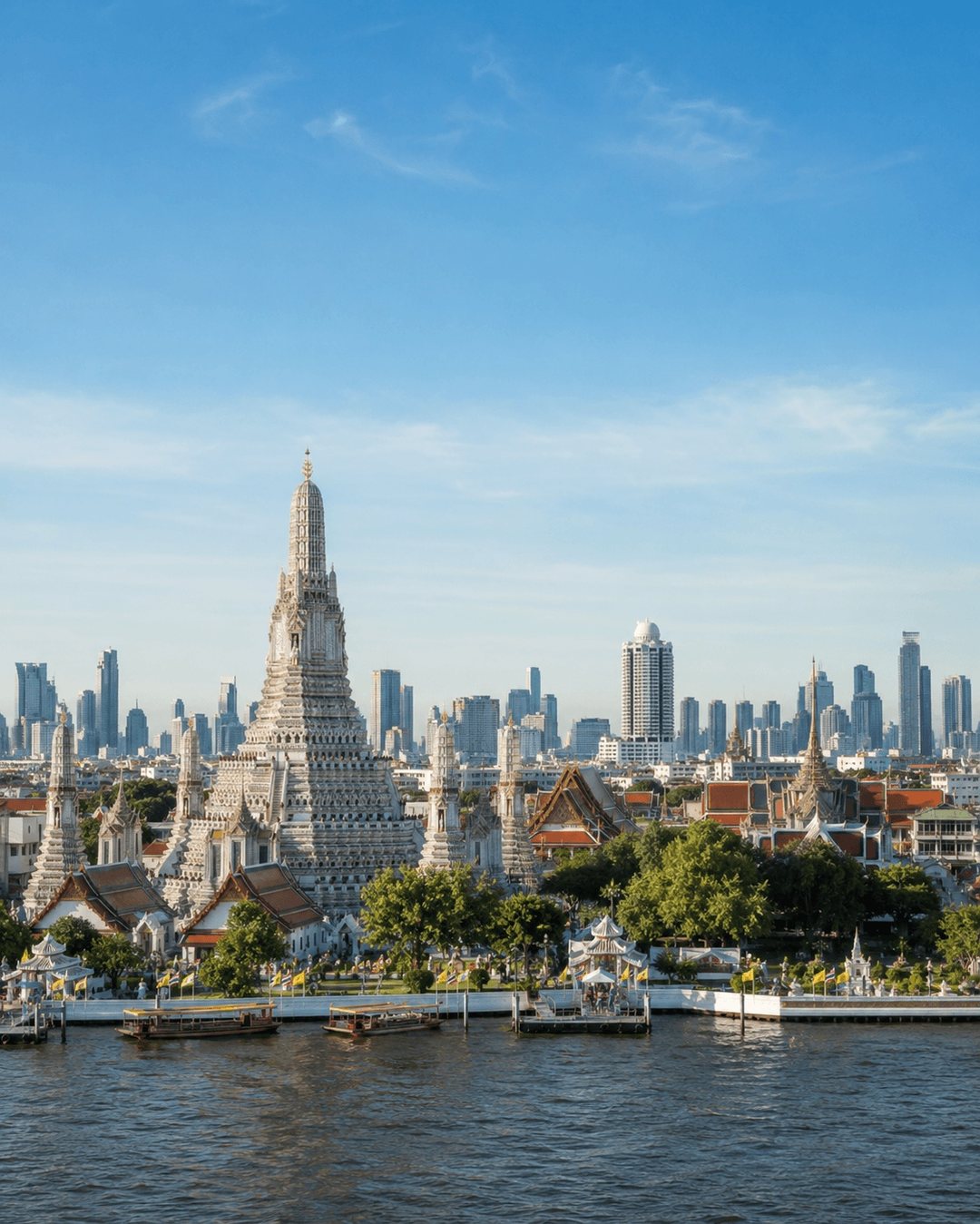
There is a precise reason Sindhorn Kempinski Hotel Bangkok belongs here. Its Bangkok, Thailand record is One GEM · 2026 rating record, and The comparison begins with Bangkok when a private room should still open to local life, where the editorial promise must survive an ordinary hour rather than a staged arrival. The score or distinction establishes evidence; the editorial decision comes from fit. Luxury is persuasive when the address solves the central tension of the trip without demanding that every guest want the same day, the same meal or the same degree of attention.
Its useful difference appears where space, timing and service meet the guest's least flexible need What matters is not whether the experience contains ceremony, but whether ceremony can recede. The address should know how to change volume across the day. Recognition, privacy, food and movement all feel different at breakfast, after an excursion and late at night; luxury depends on that modulation rather than on constant intensity.
Protect the vulnerable transition, then keep the surrounding plan deliberately light Finally, imagine the departure rather than the arrival. Will the location release the next leg cleanly? Will the final meal or morning feel complete without being prolonged? An address that ends well often proves more luxurious than one that announces itself brilliantly. The last hour reveals whether the experience was designed as a whole or merely front-loaded with seduction.
06The final control
Sofitel Luxembourg Europe, in Luxembourg City, Luxembourg, enters this story with One GEM · 2026 rating record. The comparison begins with Luxembourg City when intimacy and an easy walk can coexist, where the editorial promise must survive an ordinary hour rather than a staged arrival. That context matters more than any isolated amenity: it establishes what the address must make easier, what it can ask of the traveller and where its particular luxury should become visible. The useful reading begins after the arrival image, in the ordinary hour when appetite, timing and company no longer follow the brochure.
The current distinction establishes standing; geography and operating rhythm decide whether it serves this particular journey This is the difference between an impressive address and a useful one. The former can dominate an itinerary; the latter gives it shape, making some choices effortless and others clearly unnecessary. Notice how the experience behaves between scheduled moments. If the quieter intervals have texture, the celebrated parts no longer need to carry the entire emotional weight of the trip.
Confirm the sequence and fallback before paying for the symbolic feature Confirm the practical detail before paying for the symbolic one: location before view, timing before access, sleep before space. Then leave enough of the day open for the address to prove its judgement. The best choice will not produce the fullest schedule. It will produce the clearest memory of why this place, on this route, suited the people who came.
The case for The Oberoi Amarvilas begins in Agra, India, where its record stands at One GEM · 2026 rating record. The comparison begins with Agra when the first shared outing should be planned with care, where the editorial promise must survive an ordinary hour rather than a staged arrival. Read the address through that moment rather than through a complete inventory of facilities. A hotel, restaurant or vessel becomes memorable when it handles one specific kind of pressure with unusual accuracy; everything else is supporting material, however polished it may be.
Its useful difference appears where space, timing and service meet the guest's least flexible need The distinction is not cosmetic. It changes who will feel most at ease, how long the stay should be and which compromises are worth making elsewhere. Travellers often compare properties as though the one with more were automatically superior. A senior edit asks instead which address removes the right friction while preserving enough encounter with the destination to keep the journey alive.
Protect the vulnerable transition, then keep the surrounding plan deliberately light Ask the property to explain trade-offs, not simply upgrades. A candid answer about distance, noise, pacing or the limits of a room category is more valuable than another promise of personalisation. Book when the answer aligns with the trip already desired. Decline when the hotel would require rebuilding the journey around benefits that sound impressive but solve no actual need.
Hotel
Sofitel Luxembourg Europe
Luxembourg City, LuxembourgIn Luxembourg City, Luxembourg, Sofitel Luxembourg Europe is distinguished by a convincing food-and-drink offer and the depth of its service system.
Open the record →Hotel
The Oberoi Amarvilas
Agra, IndiaThis hotel in Agra, India draws its authority from the privacy and resolution of its accommodation and the coherence of its design.
Open the record →07Make the decision smaller and more exact
Write down the least flexible hour, the person with the least margin and the next movement before confirming the booking. Plan the shared public hour before adding private extras. A hotel that makes the outside world easy can make the room feel more meaningful when the couple returns. A concise question asked early is more valuable than an elaborate recovery arranged late.
The strongest decision does not attempt to maximise every feature. It preserves attention for the reason to travel, while the rated hotel, restaurant or vessel quietly supports the transitions around it.