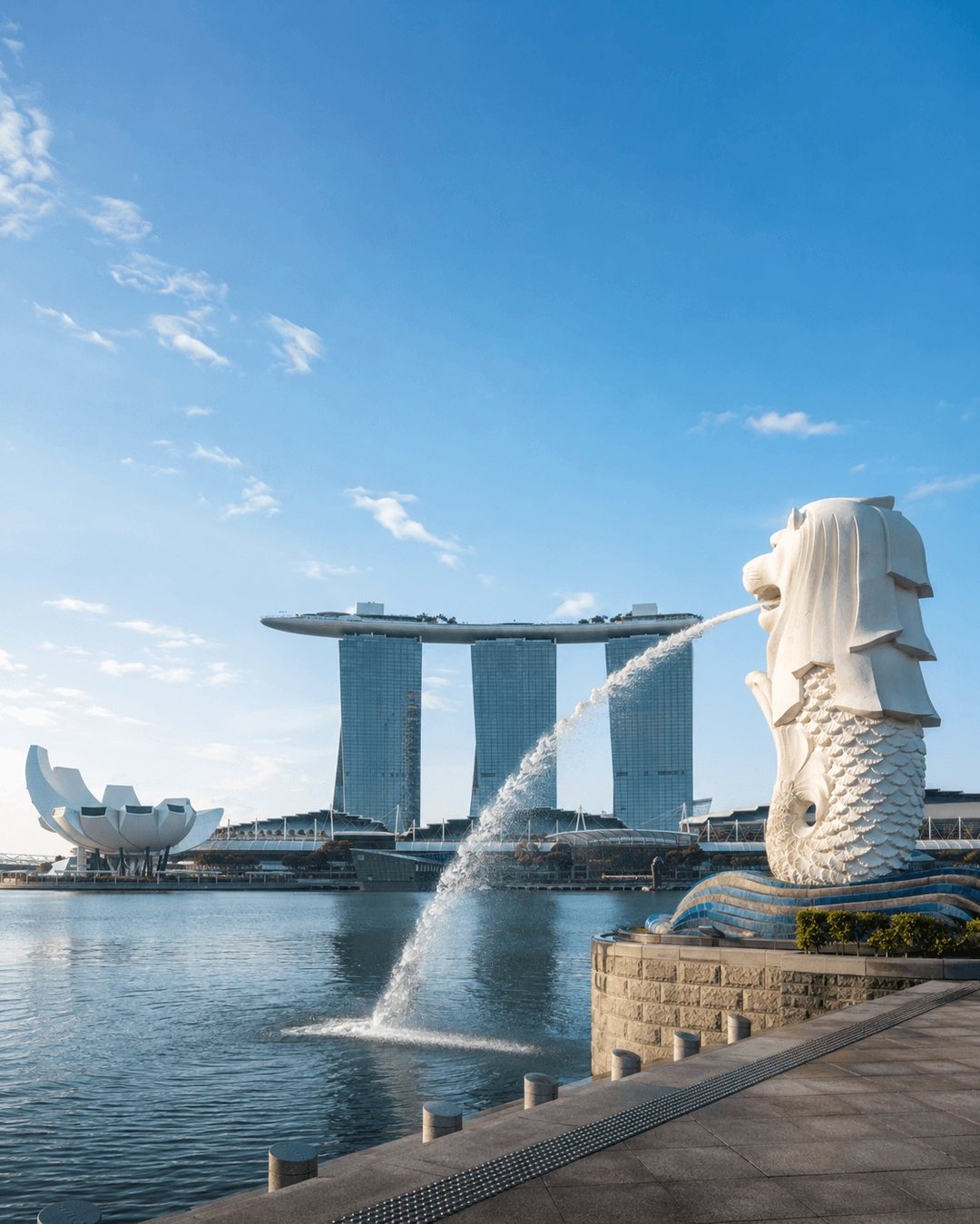
Singapore’s Deepest Pleasures Begin After the Skyline
Heritage, tropical urbanism and three formidable dining rooms turn a convenient aviation hub into one of Asia’s most complete luxury city breaks.
Executive brief
Singapore’s precision is only the surface. Stay long enough and the city opens into neighbourhood rituals, layered food cultures and an unexpectedly sensual relationship with shade, rain and green space.
01The city deserves to be the destination, not the efficient interval
Singapore is still too often booked as a polished pause between longer journeys, admired for an airport transfer that works and a skyline glimpsed between meetings. Four nights overturn that view. The city’s compactness does not make it shallow; it allows different histories, languages, dining traditions and architectural eras to sit close enough for their contrasts to sharpen one another. A morning can move from tropical green to civic stone, lunch can be direct and democratic, and dinner can unfold with the ceremony of a major international table. The itinerary should exploit proximity without abusing it. Two districts a day are ample. Leave the noon hours flexible, walk early and after dark, and let rain become a reason to enter somewhere interesting, not evidence that the plan has failed.
Six The World’s Best records give the stay structure. Shangri-La Hotel Singapore is a hotel record for the stated edition, Conrad Singapore Orchard a hotel record for the stated edition and Raffles Hotel Singapore a hotel record for the stated edition. Shangri-La is led by food, drink and restorative facilities; Conrad by design coherence and sense of place; Raffles by service depth, privacy and the resolution of its accommodation. At dinner, Les Amis holds a leading restaurant record for the stated edition and published, Waku Ghin a leading restaurant record for the stated edition and 96, and Odette a restaurant record for the stated edition and 94. The numbers reveal a city where the strongest restaurant records exceed the hotels, but that does not reduce the hotel to a bed. In equatorial weather, the quality of the retreat governs how much of Singapore remains pleasurable after three o’clock.
Hotel
Shangri-La Hotel Singapore
Singapore, SingaporeShangri-La Hotel Singapore brings unusual clarity to a convincing food-and-drink offer while sustaining its restorative facilities.
Open the record →Hotel
Conrad Singapore Orchard
Singapore, SingaporeA distinctive address in Singapore, defined above all by the coherence of its design and a clear sense of place.
Open the record →Hotel
Raffles Hotel Singapore
Singapore, SingaporeRaffles Hotel Singapore brings unusual clarity to the depth of its service system while sustaining the privacy and resolution of its accommodation.
Open the record →Restaurant
Les Amis
Singapore, SingaporeLes Amis has spent more than three decades proving that a French restaurant in Singapore can be both exactingly classical and locally consequential.
Open the record →Restaurant
Waku Ghin
Singapore, SingaporeWaku Ghin is built around Tetsuya Wakuda's unusual fluency between Japanese ingredient discipline and the European sauce craft that shaped his career in Australia.
Open the record →Restaurant
Odette
Singapore, SingaporeOdette tempers French contemporary formality with Singaporean warmth and careful sourcing.
Open the record →02Select a hotel for its governing mood
Shangri-La Hotel Singapore’s published a hotel record for the stated edition editorial review is the strongest hoteleditorial record in this edit, with food, drink and restorative facilities leading the assessment. It is the sensible choice when the property must carry substantial parts of the day: an arrival meal, a protected afternoon or the recovery required by a long-haul itinerary. Conrad Singapore Orchard, reviewed a hotel record for the stated edition, makes its case through coherent design and a clear sense of place. It suits the traveller who wants the hotel to express contemporary Singapore, not function as neutral international luxury. Raffles Hotel Singapore shares the 78.5editorial record, but its strengths are different—service depth and accommodation privacy. It is the choice when historic stature must be supported by operational calm behind the guest-room door.
Choose among those propositions before comparing room photographs. A couple celebrating an occasion may privilege Raffles for privacy and service; a food-led stay with more time on property may find Shangri-La’s assessed balance persuasive; a design-conscious traveller focused on the Orchard area may prefer Conrad. Confirm room layout, connecting arrangements and access requirements directly, because a hotel name cannot answer the details that determine sleep. Once chosen, do not split a short stay. Singapore’s transport makes moving hotels look easy, yet packing and check-in still fracture the day. The more rewarding luxury is recognition at breakfast, a concierge who understands the week’s priorities and a room that begins to feel like an address, not a beautifully managed transit lounge.
Hotel
Shangri-La Hotel Singapore
Singapore, SingaporeShangri-La Hotel Singapore brings unusual clarity to a convincing food-and-drink offer while sustaining its restorative facilities.
Open the record →Hotel
Conrad Singapore Orchard
Singapore, SingaporeA distinctive address in Singapore, defined above all by the coherence of its design and a clear sense of place.
Open the record →Hotel
Raffles Hotel Singapore
Singapore, SingaporeRaffles Hotel Singapore brings unusual clarity to the depth of its service system while sustaining the privacy and resolution of its accommodation.
Open the record →Singapore is most seductive when its famous efficiency stops being the story and starts giving the traveller time to look more closely.
The World’s Best Travel Desk
03Read the historic centre before the temperature rises
Begin the first full morning in the civic and historic centre, while façades still hold soft light and walking feels effortless. Singapore’s colonial-era buildings should be read beside, not apart from, the communities and institutions that transformed their meaning after independence. One informed walking route is more valuable than a car stopping at six photogenic exteriors. Continue only as far as attention permits, then enter a museum, gallery or shaded interior before the heat dictates the decision. Dress for humidity, not fantasy: breathable clothing, reliable shoes and a layer for aggressively cooled rooms. The city is polished, but its weather remains physical. Travellers who respect that fact see more because they are not spending the afternoon recovering from an avoidable contest with the sun.
Lunch is the point to loosen luxury from ceremony. A hawker centre or neighbourhood dining room can be approached with the same discernment as a tasting menu: observe turnover, order with focus, share a table graciously and return trays where the system requires it. One or two dishes are enough when dinner matters. The aim is not to ‘do’ street food as an authenticity exercise, but to understand that Singapore’s culinary authority exists across price, language and format. Afterwards, retreat. A swim, a nap or an hour reading in the hotel protects the evening without wasting the destination. In this climate, the long afternoon pause is not a concession. It is part of the city’s civilized rhythm, as important to a well-made day as the morning walk itself.
04Les Amis gives classical French cooking a Singapore history
Les Amis carries a leading restaurant record for the stated edition and published, the highest restauranteditorial record in this guide. Its record reflects more than three decades of exact classical French cooking that has become locally consequential. Longevity matters here because Singapore’s dining culture has changed at remarkable speed; remaining relevant requires more than impeccable imported ritual. Reserve the evening well ahead, communicate dietary restrictions at booking and make the meal the day’s only formal commitment. A heavy afternoon tea or prolonged cocktail hour will not enhance the sense of occasion. Arrive with appetite and enough time that service can establish its own pace without compressing dinner around a later engagement.
The meal also offers a useful correction to the idea that culinary identity must be visibly hybrid to belong to Singapore. A restaurant can be resolutely classical and still become part of the city through consistency, audience and influence. Let that history sit beside the day’s informal lunch without forcing the two into competition. They reveal different systems of skill and hospitality. Dress as the restaurant currently requests, verify the policy without assuming, and allow the evening to end when dinner does. Singapore’s late-night options will still exist tomorrow. The restraint of returning to the hotel after a major meal gives its sauces, textures and sequence room to settle into memory instead of becoming the opening act for another venue.
05Odette and Waku Ghin offer two distinct forms of contemporary polish
Odette holds a restaurant record for the stated edition and published for French contemporary cooking whose formality is tempered by Singapore warmth and careful sourcing. It belongs after a day in which art, architecture and neighbourhood life have already established the city’s appetite for precision without coldness. The room may be polished, but the central pleasure should remain a menu with a clear point of view, not a display of refinement detached from ingredients. Choose Odette when the evening calls for grace and an accessible emotional register. Keep the morning active, lunch measured and the afternoon empty enough that dinner is anticipated. An ambitious menu is experienced differently when the guest has not spent the preceding hour watching traffic from the back of a car.
Waku Ghin, a leading restaurant record for the stated edition, brings Tetsuya Wakuda’s fluency between Japanese ingredient discipline and European sauce craft, a language shaped in Australia and made persuasive in Singapore. That international arc fits the city without reducing it to a generic global hub. Choose Waku Ghin when technique, product and cross-cultural culinary biography are the evening’s fascination. Odette and Waku Ghin should not be booked merely because both fit; consecutive long menus can turn distinction into fatigue. Select one alongside Les Amis; save the third for another stay or let it replace a formal lunch. The most luxurious dining itinerary preserves appetite as carefully as it protects the reservations themselves.
Restaurant
Odette
Singapore, SingaporeOdette tempers French contemporary formality with Singaporean warmth and careful sourcing.
Open the record →Restaurant
Waku Ghin
Singapore, SingaporeWaku Ghin is built around Tetsuya Wakuda's unusual fluency between Japanese ingredient discipline and the European sauce craft that shaped his career in Australia.
Open the record →06Efficiency is most valuable when it disappears into the day
Singapore’s rail and bus network makes a private car optional for much of the visit. Use the official transport information to plan the broad route, pay with an accepted contactless method and check station exits before emerging into the heat; the wrong side of a wide road can add more discomfort than the train journey itself. Taxis or booked cars remain useful for formal dinners, heavy rain, mobility needs and airport transfers. The point is not to prove allegiance to public transport. It is to choose the mode that returns the most attention to the city. A cool, direct train can be more luxurious than waiting for a car, while a door-to-door transfer is worth every dollar when evening clothes, weather and timing converge.
Build weather contingencies into each day. Outdoor gardens and neighbourhood walks go first; museums, covered retail and the hotel move into the rain column. Carry water, but do not overpack the day bag. Singapore is easy to navigate and well supplied, which allows the traveller to move lightly. Verify current entry rules, opening times and restaurant policies shortly before the trip, as convenience should never be mistaken for permanence. Food allergies require precise advance communication across every dining format, including informal meals. Finally, leave time for the airport without treating its efficiency as permission to cut the margin. A calm departure protects the tone of the visit far better than one last rushed purchase in the city.
07Rain reveals Singapore’s quieter intelligence
A tropical shower provides the most revealing test of Singapore’s design. Covered passages fill, trees deepen in colour, traffic changes tone and a route is redrawn without the day collapsing. Follow that intelligence into one residential neighbourhood: market, places of worship, small shops, housing and the shaded spaces where daily life gathers. Observe without converting residents into scenery. The city’s celebrated order becomes more interesting when understood as lived infrastructure—systems built not simply to impress, but to make heat, rain and density workable at human scale.
Shangri-La Hotel Singapore, Conrad Singapore Orchard and Raffles Hotel Singapore interpret that ease as restoration, design and service. Les Amis, Waku Ghin and Odette extend it to the table through classical discipline, international biography, sourcing and warmth. The editorial reviews distinguish their achievements; the city connects them through an instinct for precision that rarely feels brittle. Let Singapore close in the softened light after rain, when façades reflect, gardens release their scent and dinner feels connected to climate as much as appetite. That sensory intelligence is the argument for staying, and it reaches far beyond the skyline.
Hotel
Shangri-La Hotel Singapore
Singapore, SingaporeShangri-La Hotel Singapore brings unusual clarity to a convincing food-and-drink offer while sustaining its restorative facilities.
Open the record →Hotel
Conrad Singapore Orchard
Singapore, SingaporeA distinctive address in Singapore, defined above all by the coherence of its design and a clear sense of place.
Open the record →Hotel
Raffles Hotel Singapore
Singapore, SingaporeRaffles Hotel Singapore brings unusual clarity to the depth of its service system while sustaining the privacy and resolution of its accommodation.
Open the record →Restaurant
Les Amis
Singapore, SingaporeLes Amis has spent more than three decades proving that a French restaurant in Singapore can be both exactingly classical and locally consequential.
Open the record →Restaurant
Waku Ghin
Singapore, SingaporeWaku Ghin is built around Tetsuya Wakuda's unusual fluency between Japanese ingredient discipline and the European sauce craft that shaped his career in Australia.
Open the record →Restaurant
Odette
Singapore, SingaporeOdette tempers French contemporary formality with Singaporean warmth and careful sourcing.
Open the record →