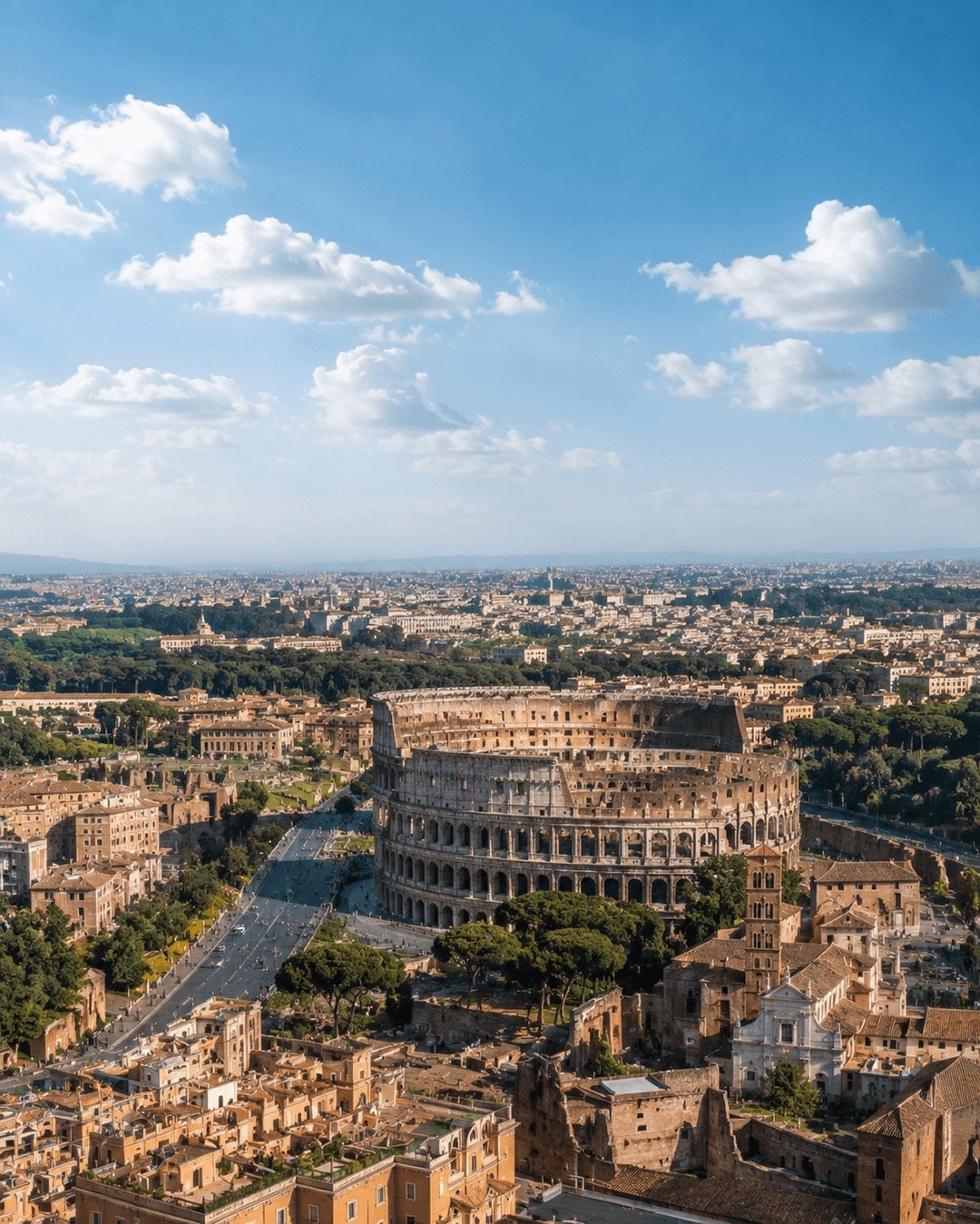
Rome by the Clock: The City Before Breakfast and After Dark
A four-day guide to Rome that gives the monuments their quietest hours, makes restoration part of the itinerary and saves one evening for La Pergola’s enduring Roman theatre.
Executive brief
Rome becomes more generous when the day is divided deliberately. Walk early, surrender the hottest hours, return to the streets as the light softens and treat dinner as a destination in its own right, never the final item on a sightseeing list.
01Rome rewards choreography, not conquest
Rome can make even an experienced traveller behave like a first-time tourist with a stopwatch. The density of the historic centre suggests that everything can be collected in a long weekend: antiquity before lunch, the Renaissance after it, a baroque fountain on the way to dinner. The map encourages ambition and the streets punish it. Pavements are uneven, distances expand in the heat, timed entries fragment the day and every unnecessary taxi through the centre steals more attention than it saves. The answer is not a longer checklist. It is a firmer edit, organised around the hours when the city is most itself.
Four days allow Rome to be read in distinct registers. One belongs to the ceremonial centre, when the Pantheon, Piazza Navona and the lanes between them are still setting up for the day. Another belongs to ancient Rome, where scale needs several unhurried hours and will not submit to a sprint between famous silhouettes. A third can turn north towards gardens and galleries, while the fourth should cross the river or settle into a residential quarter. Give each day one anchor and no more than two supporting ideas. The empty interval between them is where a courtyard, church or unexpectedly good lunch acquires meaning.
The most useful habit is to start before the city reaches full volume. Breakfast can wait on one morning; a nearly empty piazza cannot. Walk for ninety minutes, return for coffee and then approach the reserved visit that defines the day. By early afternoon, stop. Rome is not diminished by a pause behind shutters, a long lunch or an hour in the hotel. The second half begins when stone loses its glare and residents reclaim the streets. This divided rhythm turns apparent inefficiency into the trip’s central luxury: enough energy to notice what is in front of you.
02Six Senses Rome makes restoration part of the city guide
A central hotel is valuable in Rome only if it offers more than a short walk to monuments. Proximity without refuge can leave the traveller permanently exposed to the city’s momentum. Six Senses Rome earns its exceptional luxury distinction at published through the depth of its service system, its food-and-drink offer and its restorative facilities. Those strengths make it a particularly intelligent base for this itinerary. The property does not need to compete with Rome’s spectacle; its role is to absorb the friction of the day and return the guest to the street with appetite intact.
Use the hotel as a genuine hinge between morning and evening. Leave early with only water, a small bag and the first reservation confirmed. Return after lunch, leaving another monument for a more forgiving hour. A treatment, a quiet room or simply time away from traffic can prevent the familiar collapse in which an ambitious afternoon ruins dinner. The point is not to spend a Roman holiday indoors. It is to understand that high-level hospitality can create a second beginning within the same day, a benefit far more valuable than an additional tour performed while tired.
Service matters most in the transitions. Ask for realistic walking times and be suspicious of optimistic ones, then settle transfers to fixed reservations before leaving the hotel. Keep restaurant bookings, museum confirmations and train details in one place. If a visit requires a particular entrance, have the route marked precisely; famous sites often occupy far more ground than their postal address suggests. Six Senses Rome is best used as a centre of judgement, not a machine for overplanning. Let the team solve the complications that would otherwise consume attention, while protecting enough freedom for the city to provide its own diversions.
The rare luxury in Rome is not privileged access to everything; it is enough time to see one extraordinary thing before the city begins to hurry around it.
The World’s Best Travel Desk
03Give ancient Rome the first clear morning
The Forum and Palatine deserve the freshest hours of the trip. Their impact comes from spatial relationships—the rise from civic ground to imperial hill, the proximity of triumphal routes to domestic ruins—not from a sequence of isolated photo stops. Arrive with the appropriate timed entry already secured, carry less than you think you need and resist attaching a second major archaeological site to the same session. Context is tiring even when it is exhilarating. A strong guide can make the fragments legible, but the visit still needs silence in which the scale can register.
Afterwards, move away from the most obvious lunch corridors before choosing a table. Rome’s traditional repertoire is direct enough that the best meal need not be elaborate: pasta with a clear point of view, seasonal vegetables and a room that serves its neighbourhood, not a queue. Avoid turning lunch into another research project while standing in the sun. Keep two or three vetted possibilities saved in advance and accept that the nearest suitable one may be the correct decision. The afternoon should contain shade, water and no promise that depends on crossing the city at speed.
A single indoor visit can complete the day, but it should differ in scale. A church, a compact museum or a palazzo gives the eye a new distance after the exposed grandeur of antiquity. Save the largest collections for another morning. As evening approaches, walk again without a destination that requires punctuality. The Capitoline slopes, Monti’s lanes and the edges of the imperial forums change character when commuters and evening diners replace tour groups. Rome’s ruins are most moving when they return to being part of an inhabited city rather than a sealed historical precinct.
04The historic centre is best understood at its edges
The centre’s icons are close enough to connect on foot, but the direct line between them is rarely the most rewarding. Begin near a landmark, then take the side street that leads away from the crowd. The streets around Campo de’ Fiori, the Jewish Ghetto, Via Giulia and the quieter approaches to the Pantheon reveal how different eras sit against one another without explanatory space. Look up as often as forward. Courtyard glimpses, reused columns, worn thresholds and apartment windows carry the continuity that a grand façade can obscure.
This is also the day to reject the fantasy that every celebrated fountain or square must be enjoyed at midday. Visit the most exposed places early or late, when the architecture can recover its proportions. In the middle hours, choose interiors and smaller streets. A private guide is useful when the subject is specific—baroque planning, ancient water systems, a painter’s Roman years—but a generic march through highlights can reproduce the pressure the trip is meant to escape. Expertise should deepen the route, not lengthen it.
Allow one aperitivo to remain unstrategic. Rome has enough ceremonious rooms; the pleasure at this point is simply a well-made drink, a chair and the chance to watch the neighbourhood change shift. Keep dinner within a sensible radius unless it is the evening reserved for La Pergola. Repeatedly crossing the city for a name on a list is a poor use of luxury. A day becomes coherent when its meals, walks and rest belong to the same geography, leaving the traveller with a memory of place, not a ledger of addresses.
05La Pergola should stand apart from the sightseeing day
La Pergola is not the restaurant to add after an already maximal schedule. Its a leading restaurant record for the stated edition and published assessment recognise a dining institution with unusual continuity and a present-tense appetite for revision. Heinz Beck has led the kitchen since 1994, and the restaurant’s 2024 renewal sharpened the setting without severing that authorship. Mediterranean ingredients, lightened classical technique and controlled acidity define the current record. The meal deserves the same protection as a major cultural visit: a clear evening, an unhurried arrival and no early obligation the following morning.
Plan the transfer before dressing for dinner. Destination restaurants lose some of their grace when the guest arrives agitated by traffic or uncertain about the entrance. Build in enough margin for a drink and let the evening develop at the restaurant’s pace. A long tasting format asks for concentration, so lunch should be simple and the afternoon quiet. This is not deprivation in service of dinner; it is the sensible allocation of appetite. Rome offers abundance everywhere, but abundance becomes memorable only when one experience is allowed to occupy the foreground.
The significance of La Pergola lies in the relationship between institutional memory and continued movement. Longevity can harden a dining room into ritual for its own sake. Here, the more interesting argument is that a mature service culture can hold change without becoming anonymous. Read the menu as a contemporary Mediterranean proposition, not a museum of luxury dining. The most rewarding finale is not another bar reservation across town. Return to the hotel, let the meal settle and give the next morning a later start. Serious pleasure needs room after it as well as before it.
06Cross the river for the Rome of daily life
By the fourth day, the centre’s visual authority can become exhausting. Cross the Tiber and choose a smaller field of attention. Trastevere is most persuasive before its evening performance gathers force; Testaccio makes more sense when approached through food, daily commerce and its layers of working history; the Aventine offers quiet and elevation without requiring a full excursion. Pick one, not all three. The purpose is to exchange the monumental sequence for a neighbourhood rhythm and to notice how Romans use their city when they are not moving between its most photographed rooms.
Public transport can assist the longer jumps, but it should not become the itinerary’s organising romance. Check official ATAC information for the current network and service notices, then combine a practical ride with walking. A taxi is justified when it protects a timed entry, a formal dinner or a departure; it is less useful for short movements through a congested centre. Comfortable shoes remain the most consequential piece of equipment. Rome’s surfaces are part of its beauty and part of the physical demand, and elegant plans quickly become absurd when every block hurts.
Leave the final afternoon without a ticket. Return to a place glimpsed earlier, buy one object from a shop whose work you understand or sit somewhere with a view that does not require climbing another dome. Let the focus narrow even as the city keeps moving. A successful Rome itinerary ends with unfinished business: a gallery saved, a neighbourhood barely entered, a restaurant noted for next time. The city is too layered to complete, and pretending otherwise converts wonder into failure. The better privilege is to leave knowing exactly why you will return.
07Rome is measured in returns to the street
A convincing Roman itinerary is built as a sequence of departures and returns. The early walk establishes the city before its public rooms fill; the midday interval at Six Senses Rome restores attention; the evening sends the traveller back into streets whose scale has changed with the light. Weather may lengthen or compress each movement, and major civic or religious events may alter access, but the underlying cadence holds. Secure the hotel, the hardest cultural entry and La Pergola first. Leave the connective hours loose enough for Rome to interrupt the plan.
The two reviewed addresses give that cadence definition without pretending to contain the city. Six Senses Rome absorbs heat, distance and logistical friction, while La Pergola concentrates a long culinary argument into one protected evening. Their value becomes clearest when ordinary Roman pleasures keep their own register around them: lunch close to the day’s route, an aperitivo chosen by mood, a church entered because the door happened to be open. Luxury here depends on contrast. Every hour cannot carry the same ceremonial weight, and none needs to.
Proportion is the Roman test. Antiquity remains embedded in commutes, errands and dinner plans; grandeur is convincing because daily life keeps passing through it. The itinerary should do the same. Walk before the heat, stop before fatigue turns wonder into duty and return when the pavements recover their evening energy. A traveller who leaves with several monuments unseen has not failed the city. The stronger measure is whether one piazza, one inhabited ruin and one beautifully paced dinner can still be recalled as complete experiences, each given enough silence to endure.