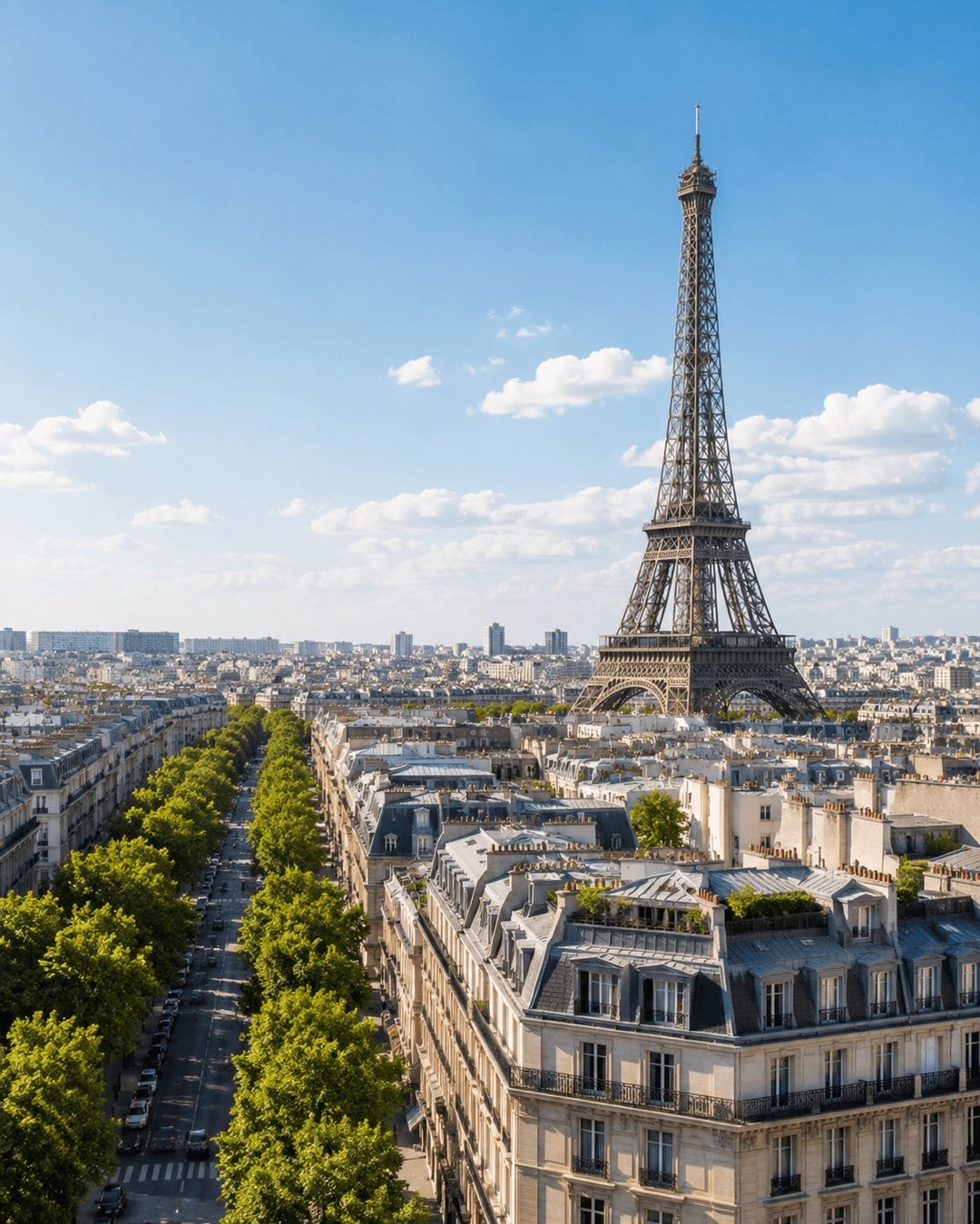
Paris Is Having Another Moment—Here Are the Rooms and Tables Worth Crossing Town For
The city’s latest chapter runs from a maximalist Marais hotel to four dining rooms where French technique is being stretched, polished and argued over in public.
Executive brief
Paris never stopped being Paris. What has changed is the number of compelling ways to inhabit it—and the confidence with which its best kitchens now look forward.
01Paris is best approached as a collection of private worlds
The fantasy of Paris depends on repetition: the zinc bar, the cream stone, the bridge at dusk. Yet the city remains compelling because those familiar images are continually reframed by new rooms and new appetites. Le Grand Mazarin and Hôtel de Sers offer opposite bases on the Right Bank, while Plénitude, Kei, Arpège and Table by Bruno Verjus demonstrate how elastic the idea of a great Paris restaurant has become.
Do not organize four days around arrondissements alone. Organize them around energy. The Marais is animated from morning until late; the western avenues feel grander and more composed; a long lunch requires an empty evening; a tasting menu demands a lighter day. Paris punishes the traveller who confuses abundance with obligation. The city becomes more luxurious when one can sit through a second coffee without checking the time.
Four nights allow three serious meals and one spontaneous dinner. The unreserved evening matters. It keeps the trip connected to neighbourhood life and prevents every encounter from arriving with a confirmation email. Parisian pleasure often lies in scale: a plate of radishes, a perfect sole, a room with six tables. The major reservations below should frame that pleasure, not overwhelm it.
Hotel
Le Grand Mazarin
Paris, FranceA distinctive address in Paris, France, defined above all by a convincing food-and-drink offer and its restorative facilities.
Open the record →Hotel
Hôtel de Sers
Paris, FranceIn Paris, France, Hôtel de Sers is distinguished by the depth of its service system and a convincing food-and-drink offer.
Open the record →02Le Grand Mazarin makes the Marais feel glamorous again
Le Grand Mazarin’s published exceptional luxury editorial review recognizes a hotel with a clear appetite for decoration and a serious operational foundation beneath it. Dining, wellbeing and service lead the reviewed case, but the reason to choose it is emotional. The hotel does not retreat into tasteful anonymity. It treats colour, craft and a certain Parisian mischief as essential parts of hospitality.
The location changes the shape of the day. From here, the Marais, the Seine and the Île Saint-Louis can be explored on foot, with the hotel serving as a richly composed pause between walks. Early mornings reveal the neighbourhood before retail shutters rise; evenings bring a completely different social current. Staying locally allows both versions to register without turning every return into a cross-city negotiation.
This is the better choice for travellers who want Paris to feel lively at the door and theatrical inside. It also suits repeat visitors, who may be less interested in postcard grandeur than in the pleasure of inhabiting a neighbourhood. Use the pool and wellbeing spaces when the streets are busiest, then re-emerge in the late afternoon. The rhythm feels indulgent because it refuses the tourist day’s usual clock.
The enduring Paris fantasy survives because each generation finds a way to make it feel slightly dangerous again.
The World’s Best Travel Desk
03Hôtel de Sers keeps the grand avenues within reach
Hôtel de Sers, reviewed a leading hotel record for the stated edition, offers a calmer and more classical proposition near the Champs-Élysées and the Triangle d’Or. Its appeal lies in proportion and access rather than theatrical reinvention. Choose it when appointments, couture houses and western Paris are central to the visit, or when a composed residential atmosphere matters more than having nightlife immediately outside.
The hotel works especially well for a first Paris trip built around major museums and formal dinners. Transfers west are simpler, rooms provide a retreat from the busiest streets, and the address carries enough character to avoid corporate blandness. Return before dinner, change properly and allow the evening to begin in the hotel rather than in the back of a car.
Between Le Grand Mazarin and Hôtel de Sers, neighbourhood should decide. The former is immersive, colourful and pedestrian; the latter is polished, strategic and suited to a more ceremonial itinerary. Paris contains both moods, but a short stay benefits from choosing one. Crossing the city for dinner is a pleasure. Crossing it six times a day is merely poor planning.
04Plénitude and Kei turn precision into emotion
Plénitude at Cheval Blanc Paris carries a leading restaurant record for the stated edition and published, a distinction that places it among the strongest dining records in the guide. The kitchen’s fascination with sauces gives the meal a classical backbone, but the experience is not an exercise in historical reenactment. Depth, concentration and sequence create drama. Reserve it for an evening when no later engagement is allowed to compete.
Kei, reviewed a leading restaurant record for the stated edition, is equally exacting but speaks in a different voice. Japanese sensibility and French technique meet without either being used as decoration. The beauty of the plates is part of their meaning, yet the meal’s success depends on flavour, temperature and progression rather than visual astonishment alone. It is a restaurant for diners who appreciate refinement without mistaking quietness for simplicity.
Attempting both on consecutive nights would blunt their distinctions. Separate them with a day of markets, galleries and a modest dinner. Plénitude is the more opulent and enveloping experience; Kei offers a finer, more tensile kind of luxury. Together they explain why Paris remains a global dining capital: not because it protects one canon, but because it gives ambitious chefs the stage on which to revise it.
Restaurant
Plénitude - Cheval Blanc Paris
Paris, FrancePlénitude - Cheval Blanc Paris: sauce is not the final adjustment applied to an ingredient; it is the composition from which the ingredient takes its meaning.
Open the record →Restaurant
Kei
Paris, FranceKei: kei Kobayashi works through sauces, roasts and classical progression, yet every plate is tightened by an unusual command of texture, temperature and visual interval.
Open the record →05Arpège still makes vegetables feel like an event
Arpège’s Two-restaurant records, published record carries the weight of a restaurant that changed the terms of haute cuisine by placing vegetables at its centre. That history should not make the meal feel archival. The point is the continuing tension between luxury and apparent simplicity: a garden ingredient, handled with enough attention, can carry the drama once reserved for rare meat or elaborate garnish.
Lunch is the intelligent reservation. Daylight suits the cooking, and the timing leaves room for a slow walk afterward rather than an abrupt return to the hotel. Arrive with curiosity rather than a list of legendary dishes. Restaurants with long reputations are most alive when allowed to serve the present season instead of being asked to reproduce a visitor’s idea of their past.
Arpège also resets the appetite after richer meals. Its influence is visible far beyond Paris, but influence alone does not justify a table. What matters is whether the restaurant still turns produce, heat and timing into a coherent experience. The editorial review argues that it does, while preserving the sensible boundary between a reviewed record and the unpredictable details of any individual service.
06Table by Bruno Verjus brings the city back into the room
Table by Bruno Verjus, reviewed a restaurant record for the stated edition, offers a more direct relationship between ingredient, cook and guest. The restaurant’s creative identity is rooted in exceptional produce and an alertness to its condition on the day. This is not rustic simplicity dressed for Paris. It is luxury defined by sourcing, immediacy and the confidence to let a product remain recognizable.
Book it after several days in the city, when the appetite has moved beyond spectacle. The meal’s openness and personality provide a useful counterpoint to the controlled grandeur of Plénitude or Kei. A great dining itinerary needs shifts in register. Without them, even brilliance begins to feel like a repeated format: hushed room, long sequence, reverent exit.
Verjus restores conversation to the centre of the evening. The food remains serious, but seriousness does not require stiffness. That distinction captures something important about contemporary Paris. The city has not abandoned ceremony; it has simply become more selective about where ceremony adds pleasure and where it obstructs it. Table belongs to the latter-day Paris that values intelligence without requiring a performance of solemnity.
07How to keep Paris from becoming a schedule
Secure the two hardest reservations, then stop. Keep one lunch free for whatever the neighbourhood suggests and one dinner free for appetite rather than prestige. Paris is dense with excellent cooking below the destination tier. A plate chosen at nine o’clock because the room looked right can become as important to the trip as the table booked three months earlier.
Use cars strategically, not automatically. Walk the Marais and the river; take a taxi across town for a formal dinner when clothes or weather demand it. Build extra time around the Seine because a bridge at the right hour will delay even the most disciplined traveller. That delay is not inefficiency. It is the reason to be in Paris rather than merely moving through it.
The final morning should contain no museum booking. Have breakfast, revisit one street and leave enough time to feel reluctant at departure. Le Grand Mazarin and Hôtel de Sers provide distinct versions of residence; the four restaurants give the trip its appointments. The city itself supplies the connective tissue—stone, light, appetite and the enduring suspicion that the best room may still be around the next corner.
08The Paris details that separate ease from extravagance
Choose the room category with windows and quiet in mind before chasing an extra sitting area. Courtyard rooms can trade outlook for sleep; street rooms may deliver the Paris view with early deliveries beneath it. Ask precise questions about floor, glazing, lift access and bathroom layout. Historic buildings produce irregular rooms, which is part of their character until a sloping ceiling meets a tall guest or a bath replaces the shower someone assumed would be there.
The most expensive restaurant supplement is not automatically the most revealing. Wine pairing after wine pairing can flatten the memory of a trip, especially across three major meals. Buy one exceptional bottle with guidance, drink less at the next dinner and let lunch remain lucid enough for the afternoon. Parisian service is at its best when the guest expresses preferences clearly and then allows the professionals to work, not when every course becomes a negotiation.
Season alters the city’s emotional scale. Late spring gives façades and gardens generous light; early autumn restores local rhythm and appetite; January can feel private, severe and wonderfully free of crowds. Fashion weeks, major fairs and holidays transform rates and restaurant availability. Check the cultural calendar before flights. Paris is always busy, but there is a difference between the city being alive and the city being booked solid by an industry event one never intended to attend.