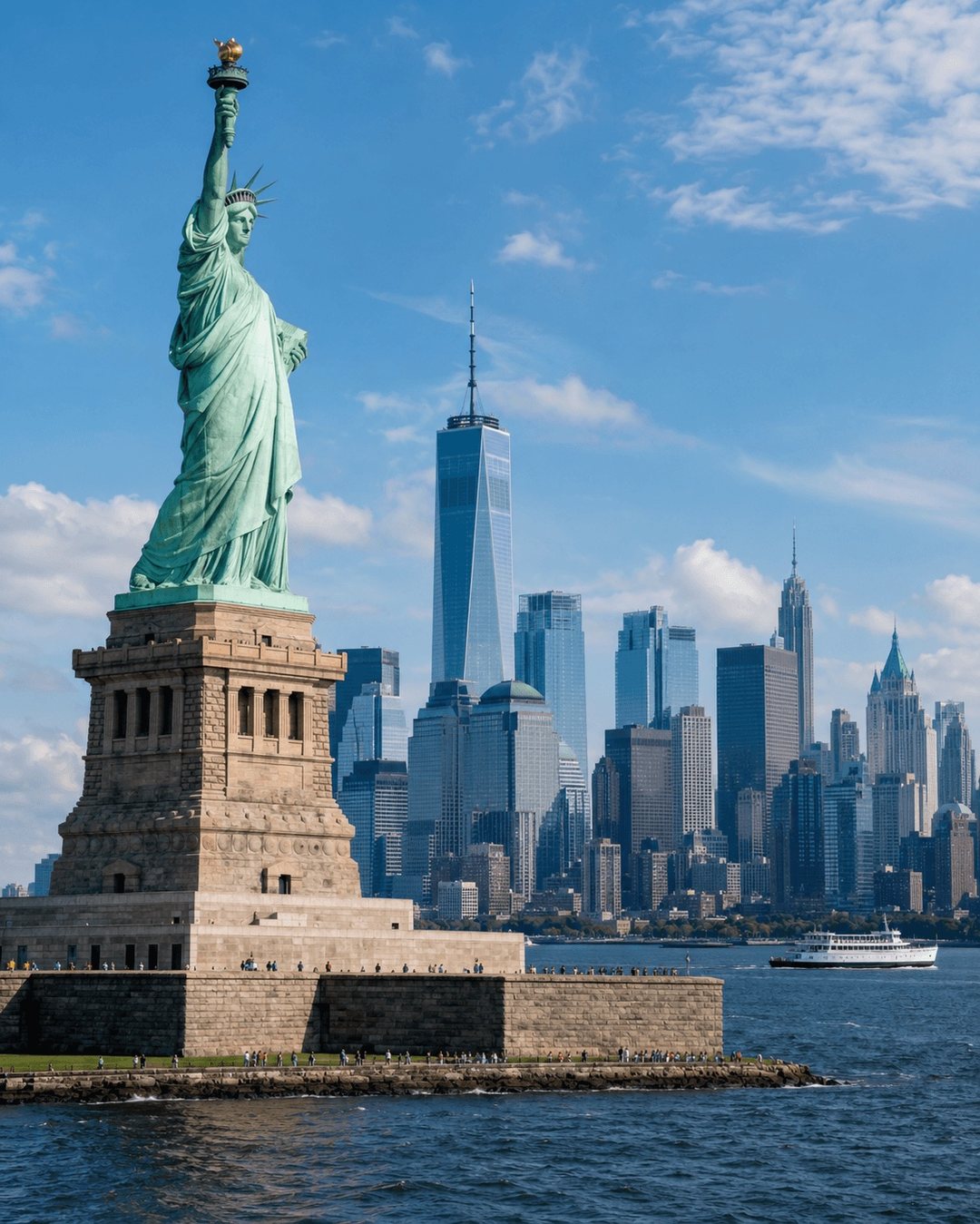
New York, Properly: Four Nights, Three Great Tables, No Wasted Dinner
Three sharply different hotels, three of the city’s most assured kitchens and a borough-by-borough rhythm for travellers who value New York more than a frantic checklist.
Executive brief
The essential New York is not won by covering more ground. It appears when the hotel, neighbourhood and dinner reservations are arranged with enough discipline for the city to remain exhilarating.
01The city becomes luxurious only after the itinerary loses its panic
New York can make even seasoned travellers behave like nervous first-timers. The calendar fills before the flight is booked: a matinee, two museums, a gallery opening, a downtown lunch, an uptown dinner and a Brooklyn detour somehow forced into the same Saturday. That is not ambition; it is poor editing. Four nights are enough for an exceptional city break when each day is anchored by one neighbourhood and each evening by one decision that matters. The rest should remain porous. A cab diverted by traffic, an hour at a bookshop or a drink that becomes dinner is not time lost. It is the city doing what was hoped of it. The rarest New York privilege is not access to everything, but the freedom to decline most of it without regret.
The World’s Best records offer six useful anchors, not a compulsory circuit. Four Seasons Hotel New York leads the three hotels at a hotel record for the stated edition and published, followed by W New York – Union Square at 78.7 and The Times Square EDITION at 78.2. Le Bernardin, with a leading restaurant record for the stated edition and published, sits at the head of the dining trio; Atomix follows at a leading restaurant record for the stated edition and 96, while Estela holds a restaurant record for the stated edition and 95. These numbers describe different forms of confidence. They should guide the architecture of the stay, not turn it into a ranking exercise. Choose one hotel and reserve two major dinners. If the third restaurant enters the plan, let it displace another obligation. New York rewards appetite, but it punishes greed with exhaustion.
Hotel
Four Seasons Hotel New York
New York, United States of AmericaThe case for Four Seasons Hotel New York begins with the coherence of its design and holds through the privacy and resolution of its accommodation.
Open the record →Hotel
W New York - Union Square
New York, United States of AmericaIn New York, United States of America, W New York - Union Square is distinguished by the coherence of its design and a clear sense of place.
Open the record →Hotel
The Times Square EDITION
New York, United States of AmericaAt The Times Square EDITION, strength in the privacy and resolution of its accommodation is matched by strength in the depth of its service system.
Open the record →Restaurant
Le Bernardin
New York, United StatesSeafood remains central, framed by disciplined technique, French restraint and New York poise.
Open the record →Restaurant
Atomix
New York, United StatesAtomix gives Korean culinary heritage a precise, contemporary New York vocabulary.
Open the record →Restaurant
Estela
New York, United StatesEstela brings technical precision and coherent menu architecture to its Contemporary menu in New York, United States.
Open the record →02Choose the hotel by the New York you want outside its doors
Four Seasons Hotel New York makes the strongest reviewed case of the three. Its published a hotel record for the stated edition record is led by design coherence, privacy and the resolution of the accommodation. That combination suits a traveller who wants the room to feel like a genuine retreat from the city’s pressure, especially when the schedule includes formal dinners or long cultural days. W New York – Union Square, reviewed a hotel record for the stated edition, is judged most persuasively on design coherence and a clear sense of place. It belongs in a trip weighted toward downtown walking, neighbourhood restaurants and a livelier return at night. The Times Square EDITION, a hotel record for the stated edition, is led by accommodation privacy and service depth. Its obvious advantage is for a theatre-focused stay in which proximity can return an hour to the evening.
None of the three should be booked as a generic badge of luxury. Ask what the hotel must accomplish between eight in the morning and midnight. If quiet and personal space are the non-negotiables, the Four Seasons record answers directly. If the pleasure lies in stepping into a district with its own urban cadence, W New York – Union Square presents the clearer proposition. If Broadway is central, The Times Square EDITION turns location into operational ease while still foregrounding privacy. Confirm room category, bed arrangement and any specific accessibility need before arrival; New York buildings and room plans resist assumptions. Then stay put. Changing hotels during a four-night visit consumes the precise resource an expensive city break is supposed to protect: unbroken time.
Hotel
Four Seasons Hotel New York
New York, United States of AmericaThe case for Four Seasons Hotel New York begins with the coherence of its design and holds through the privacy and resolution of its accommodation.
Open the record →Hotel
W New York - Union Square
New York, United States of AmericaIn New York, United States of America, W New York - Union Square is distinguished by the coherence of its design and a clear sense of place.
Open the record →Hotel
The Times Square EDITION
New York, United States of AmericaAt The Times Square EDITION, strength in the privacy and resolution of its accommodation is matched by strength in the depth of its service system.
Open the record →In New York, luxury is not protection from the city; it is the confidence to enter its intensity and still keep an hour unclaimed.
The World’s Best Travel Desk
03Give one day to uptown scale and refuse the museum marathon
Begin the first complete day with one museum, not Museum Mile as an endurance event. Choose a collection because it commands attention, enter near opening and leave while looking still feels pleasurable. Central Park can then operate as a transition, not another attraction to be conquered. Walk according to weather and energy, crossing only as far as the next appointment requires. A late lunch should be light; a formal afternoon tea, elaborate room-service order and major dinner stacked together are not decadence but appetite mismanagement. Return to the hotel with enough time to change slowly. New York’s best evenings begin before the reservation, in the calm interval when the day’s noise has receded and nobody is checking a map.
Le Bernardin deserves that protected evening. The restaurant holds a leading restaurant record for the stated edition and published, with seafood at the centre of its identity, disciplined technique, French restraint and unmistakable New York poise. That description is exacting without being theatrical, which is why the meal should not be wedged between a late gallery appointment and a performance across town. Treat it as the evening’s destination. Inform the restaurant about dietary restrictions when booking, arrive on time and avoid ordering according to fear of missing the ‘right’ dish. The point is to experience a kitchen whose authority lies in control. Afterwards, resist the reflex to add a celebrated bar simply because it is nearby. A walk or a direct return to the hotel lets the meal retain its shape instead of being blurred by one more address.
04Downtown is best read at street speed, with Estela as the evening’s hinge
Lower Manhattan should be divided by texture rather than by famous names. Pick a north-to-south or east-to-west line and let the day develop on foot: cast-iron façades giving way to smaller streets, retail polish yielding to residential calm, and the skyline repeatedly disappearing before it returns at the end of an avenue. One gallery cluster is sufficient. Make a lunch reservation only if the restaurant itself matters; otherwise, preserve the capacity to follow the neighbourhood. Comfortable shoes are more consequential than a meticulously planned outfit, though a light layer and a compact umbrella can rescue an evening from New York’s quick changes. The subway is often the most elegant transfer precisely because it avoids the spectacle of sitting in traffic while a reservation time approaches.
Estela, reviewed a restaurant record for the stated edition, brings technical precision and coherent menu architecture to a contemporary dining room. It is the right downtown counterpoint to Le Bernardin: less about extending the same formal register than allowing New York’s culinary confidence to change clothes. Order with judgment, and let staff shape the sequence when choices begin to compete; requesting the entire menu rarely improves it. The restaurant should emerge from the day’s geography, not require a cross-city sprint. Build the afternoon so the final walk is short, and keep the hours after dinner unscripted. Downtown nightlife is most rewarding when selected in response to mood—a listening room, a quiet drink, a return through streets still active—not preloaded as three coloured blocks on a phone calendar.
05Brooklyn needs daylight, and Atomix needs the whole evening
Cross to Brooklyn in the morning, before the day becomes a negotiation with queues and dinner timing. Choose one compact area and remain faithful to it. Brownstone streets, small cultural spaces, independent shops and the changing view back toward Manhattan are diminished when the borough is treated as a scenic annex reached only for a photograph. A ferry can make the transfer part of the day when the route and weather align; the subway is the dependable alternative. Lunch should be neighbourhood-led and deliberately informal. By mid-afternoon, return to the hotel. Atomix is not an evening to approach after six hours of shopping with bags still in hand. The pause between boroughs gives the final dinner anticipation and shape.
Atomix carries a leading restaurant record for the stated edition and published. Its reviewed identity translates Korean culinary heritage into a precise contemporary New York vocabulary, an idea that asks for concentration but not solemnity. Secure the booking before fixing flights if the meal is central to the trip, read cancellation terms carefully and communicate dietary needs early. On the day, protect appetite and punctuality. The experience gains context from having spent the morning elsewhere in the city: New York’s power has always come from cultural languages becoming more exact, not less distinctive, in contact with one another. Atomix makes that argument through dinner. Leave the rest of the night open. After a long menu, the most sophisticated plan may be nothing more than a car waiting at the correct time and a quiet room at the other end.
06The practical edit: cars for thresholds, trains for distance, walking for discovery
Private transfers earn their price at the edges of the trip: an airport arrival after a long flight, a formal dinner in difficult weather, a departure with luggage and no appetite for improvisation. They are rarely the best default for moving around central New York. Streets gridlock, avenues run in opposing directions and a black car can become an upholstered waiting room. Learn the nearest subway stations to the hotel, use the official network guidance for service changes and group the day by district. Walking should connect experiences without acting as a test of stamina. The traveller who alternates fifteen attentive blocks with a short train ride will see more than the one who spends two hours staring through tinted glass.
Reservations should also be tiered. Fix the hotel, the hardest restaurant table and any performance with limited availability. Place museum tickets and a second dinner beneath them. Everything else remains provisional until weather, energy and the city’s own calendar are clear. Book airport time generously, particularly at the end of a weekday, and verify the departure terminal directly with the airline. Keep one credit card separate, carry a modest amount of cash and save addresses offline. These are ordinary precautions, yet they create the smooth surface on which a luxurious trip depends. True ease is rarely improvised; it is prepared quietly, then forgotten as soon as the city begins.
07The city becomes personal on the second pass
New York begins to belong to a traveller when one route is repeated without consulting a screen. Walk back to the coffee counter whose order is now familiar, take the same subway line at a different hour or cross a neighbourhood after its daytime purpose has ended. Repetition reveals what a first pass conceals: the doorman greeting residents, school traffic replacing nightlife, deliveries taking over a celebrated restaurant’s pavement. This is not a hunt for hidden New York. It is an acknowledgment that the city’s most persuasive theatre is ordinary life changing cast through the day.
Four Seasons Hotel New York, W New York – Union Square and The Times Square EDITION frame that theatre from different positions; Le Bernardin, Atomix and Estela give three distinct meanings to a serious New York dinner. Their distinctions supply the architecture, while the city supplies velocity and accident. Let the final night retain both. Make one reservation that deserves certainty, then allow the walk afterwards to choose its own length. The lasting New York image may be the formal room, but it may just as easily be steam above an avenue, a train arriving as the platform fills or a corner briefly transformed by rain.
Hotel
Four Seasons Hotel New York
New York, United States of AmericaThe case for Four Seasons Hotel New York begins with the coherence of its design and holds through the privacy and resolution of its accommodation.
Open the record →Hotel
W New York - Union Square
New York, United States of AmericaIn New York, United States of America, W New York - Union Square is distinguished by the coherence of its design and a clear sense of place.
Open the record →Hotel
The Times Square EDITION
New York, United States of AmericaAt The Times Square EDITION, strength in the privacy and resolution of its accommodation is matched by strength in the depth of its service system.
Open the record →