New York’s Best Old Hotels Practise the Present Tense
The Mark, Soneva Fushi and Four Seasons Bangkok reveal why longevity is earned through operating discipline rather than nostalgia.
Executive brief
On the Upper East Side, an old address succeeds when the building’s manners help a modern day move rather than asking the guest to inhabit a legend. A landmark deserves affection only after it has met the practical demands of the night just spent.
01History must improve the present
On the Upper East Side, an old address succeeds when the building’s manners help a modern day move rather than asking the guest to inhabit a legend. A historic hotel is not exempt from contemporary judgement; inherited beauty matters only when the building still protects sleep, movement, privacy and pleasure. A landmark deserves affection only after it has met the practical demands of the night just spent.
The language of heritage can excuse compromised acoustics, awkward circulation or rituals that have survived beyond their usefulness. The distinction is especially important in 2025, when the most persuasive luxury journeys are being measured less by accumulation than by how coherently they protect time. The finest room, table, treatment or transfer should make the destination more legible. If it asks the traveller to admire expenditure at every turn, it has mistaken display for hospitality.
This report draws on the published 2025 hotel ranking, the named property records and their approved editorial galleries. It makes no claim of a stay, inspection, interview or first-hand visit. Ranking position andeditorial record remain comparative findings for that edition; the work here is to place those findings within a rigorous travel decision, with the limits of the available record kept visible.
02Three landmarks that still have work to do
New York, New York, Baa Atoll, Bangkok should not be treated as interchangeable scenery. Light, water, traffic, altitude, season and the social life beyond each entrance alter the meaning of privacy, food, sleep and service. A hotel choice becomes more exact when geography sits inside the room decision rather than appearing later as a transfer problem.
The Mark offers the first useful test. Its 2025 record describes an urban luxury hotel in New York, New York, defined by Upper East Side location, Jacques Grange redesign, discreet celebrity relevance, and polished service, while the ranking rationale points to The Mark stood out in 2025 for Upper East Side location, Jacques Grange redesign, discreet celebrity relevance, and polished service. Its combination of service, reputation, design, location, lifestyle offering, and editorial relevance made it a defensible global benchmark within urban luxury hotel hospitality. Those findings establish a serious editorial case without pretending that one hotel can answer every traveller. Read the property through on the upper east side, an old address succeeds when the building’s manners help a modern day move rather than asking the guest to inhabit a legend. The address matters here because its operating idea clarifies a choice about time, privacy and place rather than simply adding another celebrated name.
At Soneva Fushi, No. 20 in the 2025 edition, the ranking and the purpose of the trip must be read together. The published record identifies a barefoot luxury island resort in Baa Atoll, defined by barefoot luxury, environmental imagination, villa privacy, and a strong sense of Maldivian place. That proposition becomes meaningful during the unphotographed hours: the early wake-up, the return in heat or rain, the request that changes at short notice and the evening when nobody wants another formal appointment. The language of heritage can excuse compromised acoustics, awkward circulation or rituals that have survived beyond their usefulness. Suitability lives in how confidently the hotel absorbs those ordinary deviations.
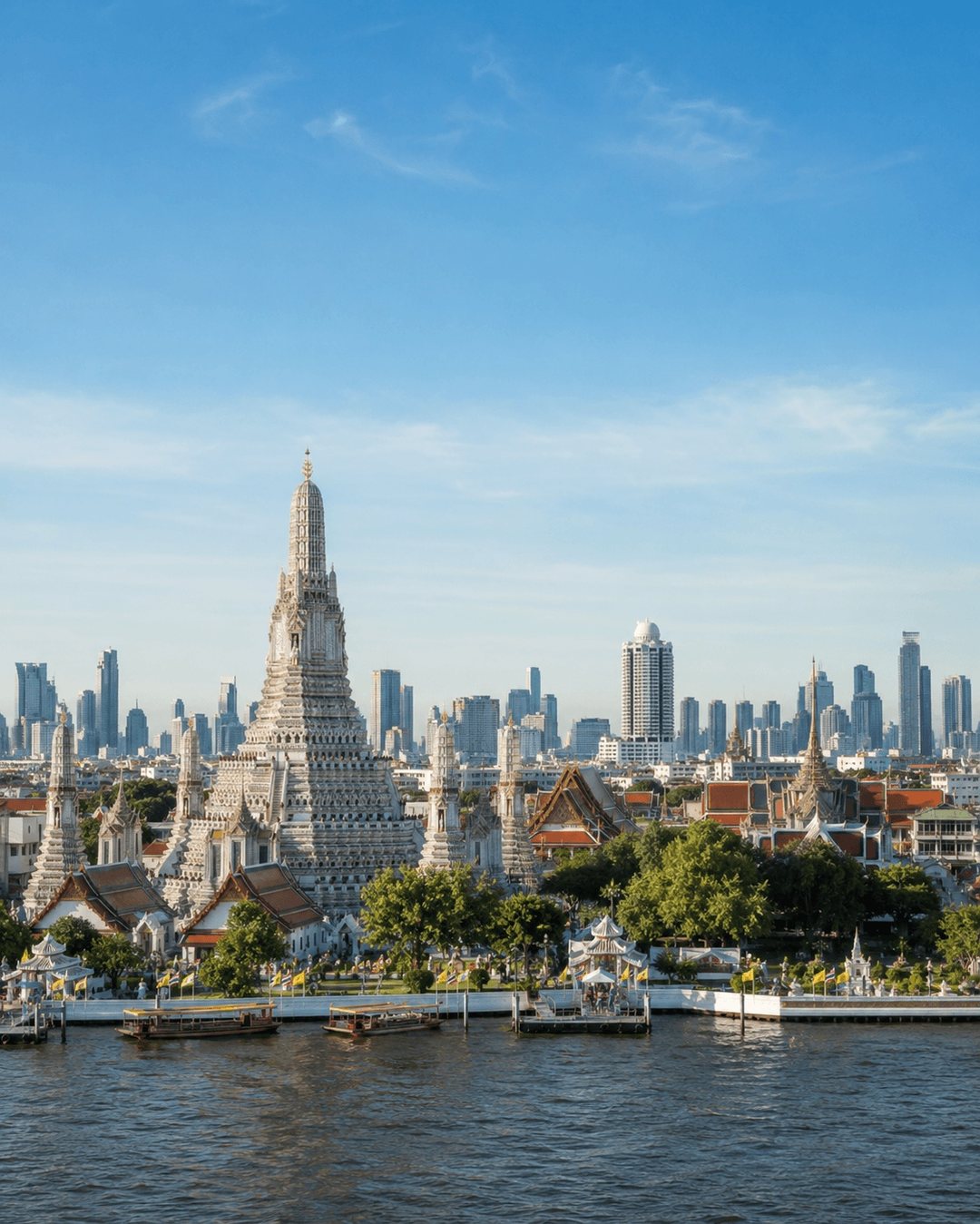
Four Seasons Bangkok at Chao Phraya River makes a deliberately different argument. The 2025 evidence centres on a riverside urban resort in Bangkok, defined by Chao Phraya riverfront, Jean-Michel Gathy design, resort-scale city facilities, strong culinary program, and renewed Bangkok riverfront prestige; the editorial rationale adds Four Seasons Bangkok at Chao Phraya River stood out in 2025 for Chao Phraya riverfront, Jean-Michel Gathy design, resort-scale city facilities, strong culinary program, and renewed Bangkok riverfront prestige. Its combination of service, reputation, design, location, lifestyle offering, and editorial relevance made it a defensible global benchmark within riverside urban resort hospitality. Neither point should be treated as a universal instruction. Follow a full day from first light to sleep and ask whether the property gives its destination more definition or merely makes retreat from it exceptionally comfortable. A landmark deserves affection only after it has met the practical demands of the night just spent. Position No. 12 supplies context, while the guest’s purpose supplies the final measure.
Hotel
The Mark
New York, New York, United StatesThe Mark is an urban luxury hotel in New York, New York, defined by Upper East Side location, Jacques Grange redesign, discreet celebrity relevance, and polished service.
Open the record →Hotel
Soneva Fushi
Baa Atoll, MaldivesSoneva Fushi is a barefoot luxury island resort in Baa Atoll, defined by barefoot luxury, environmental imagination, villa privacy, and a strong sense of Maldivian place.
Open the record →Hotel
Four Seasons Bangkok at Chao Phraya River
Bangkok, ThailandFour Seasons Bangkok at Chao Phraya River is a riverside urban resort in Bangkok, defined by Chao Phraya riverfront, Jean-Michel Gathy design, resort-scale city facilities, strong culinary program, and renewed Bangkok riverfront prestige.
Open the record →A landmark deserves affection only after it has met the practical demands of the night just spent.
The World’s Best Travel Desk
03The building beyond its legend
On the Upper East Side, an old address succeeds when the building’s manners help a modern day move rather than asking the guest to inhabit a legend. That proposition should be tested across a complete day rather than at the ceremonial arrival. Morning reveals sound, shade and neighbourhood access. The middle hours expose whether the room truly restores attention. Evening shows how naturally food, guidance and privacy change register when the guest is tired rather than newly impressed.
Setting imposes limits that money cannot entirely remove. Wind can delay a crossing, summer heat can narrow the useful hours, traffic can make a short distance emotionally costly and an old building can carry acoustic compromises. Authoritative planning acknowledges those facts before departure, then spends only where a transfer, guide, room orientation or additional night will genuinely reduce friction.
An unclaimed hour is part of the evidence. Time beside water, in a garden, under a tree or at a neighbourhood table can reveal whether the hotel has a relationship with its destination or merely a view of it. The ranked address earns its place when staying still feels connected to the journey rather than like a retreat from its substance.
04Ritual without stiffness
Service should be judged as a chain: enquiry, arrival, luggage, orientation, housekeeping, food, local knowledge, privacy, sleep and departure. A polished welcome cannot compensate for responsibility passed conspicuously between departments. The greater the distance or the shorter the stay, the more valuable it becomes when one person retains command of the answer.
The language of heritage can excuse compromised acoustics, awkward circulation or rituals that have survived beyond their usefulness. Ask practical questions in plain language and expect replies that identify the room, timing, route or policy involved. Vague assurance is especially weak where weather, water, mobility, wildlife or congestion controls the day. Precision need not feel cold. At its best, it is a form of care that lets the guest stop supervising the journey.
The finest attention changes volume. It may be anticipatory before arrival, informative before an excursion and almost absent once a private rhythm has been found. Constant performance is not personal service. Judgement appears in the moment staff recognise that landscape, architecture, appetite or conversation should be allowed to carry the experience.
05Why nostalgia is an incomplete service
The language of heritage can excuse compromised acoustics, awkward circulation or rituals that have survived beyond their usefulness. Luxury travel still too easily rewards abundance: more space, more courses, more treatments, more transfers and more appointments. The result can be a journey whose principal activity is managing what has already been purchased. The correction is not austerity; it is a clear reason for every elaborate choice.
The Mark, Soneva Fushi, Four Seasons Bangkok at Chao Phraya River should not be forced into another league table. They answer different needs and inhabit different settings. Comparison is useful only when it sharpens suitability: who welcomes ceremony, who needs independence, who wants guidance and who will feel constrained by the same structure another traveller finds reassuring.
There is a further difference between a hotel that photographs as complete and a journey that feels complete from within. The first can be established in minutes; the second depends on how the property behaves when the scene is untidy—a delayed room, a wet return, a dietary change or an evening when appetite refuses the plan. Resilience, not flawlessness, is the more mature luxury.
06What to verify in an old address
Reconfirm the material facts close to departure: access, seasonal operation, room orientation, food, mobility, cancellation terms and any hours controlled by weather. The 2025 ranking record does not freeze those conditions. Responsible editorial guidance separates durable evidence from details that remain capable of changing.
Protect the least glamorous hour. A late arrival, wet luggage, interrupted transfer, dietary adjustment or request for discretion will reveal more about an operation than the prepared lobby scene. Keep consequential agreements in writing, build realistic margins around transport and avoid making the first important reservation depend on perfect timing.
Then stop administering the trip. Preparation has succeeded when it becomes invisible after arrival. A folder of confirmations should create freedom, not follow the guest from room to car to table. The best arrangements preserve enough attention for the destination to answer back.
07A landmark earns another chapter
A landmark deserves affection only after it has met the practical demands of the night just spent. The three hotels in this report are evidence and contrast, not instructions. Fit still turns on company, mobility, privacy, appetite, season and the amount of attention a traveller wants to give the world outside the hotel.
The World’s Best is most useful when it begins rather than ends judgement. An annual ranking can identify exceptional systems and articulate why they matter, yet even an exceptional system may be wrong for a particular purpose. The informed traveller reads the evidence, tests it against the journey and refuses the false certainty of prestige alone.
Editing is therefore not a retreat from pleasure. Another booking can weaken the one already made; another hotel can turn distinct places into luggage logistics. A disciplined itinerary allows scale, silence and anticipation to return. It also gives staff the space to exercise judgement rather than forcing every hour through a prewritten sequence.
That is the enduring luxury in 2025: time and movement unusually well held, including when weather changes or appetite revises the plan. On the Upper East Side, an old address succeeds when the building’s manners help a modern day move rather than asking the guest to inhabit a legend. Verify what can change, leave part of the day unclaimed and choose the address whose particular limits feel intelligent. The result is not a flawless journey, but a more resilient and memorable one.