Milan After Design Week: The City of Restraint That Lasts All Year
A three-day Milan guide shaped by architecture, disciplined shopping, Château Monfort’s restorative calm and an evening of precise Japanese authorship at IYO Kaiseki.
Executive brief
Milan is most convincing once the event calendar falls quiet. Its luxury is measured in proportion, material and control: a well-placed hotel, one rigorous museum day, a few exact purchases and dinners that understand when to stop talking.
01Milan is more than the week when everyone arrives
Milan is often described through its peak events, as if fashion and design matter only when the guest lists are longest and the rates highest. The city is better outside that compressed theatre. Once the temporary installations disappear and the appointment cars thin out, its permanent intelligence comes into focus: façades that reveal their quality gradually, apartments arranged around private courtyards, museums that reward a precise visit and shops where the object matters more than the spectacle of acquisition. This is not a capital that overwhelms on arrival. It establishes authority through a succession of controlled decisions.
Three days are enough if the itinerary accepts Milan’s preferred scale. The historic centre supplies ceremony, Brera brings intimacy, Porta Nuova shows the modern city and the southern districts offer a more industrial, experimental register. Trying to combine all of them before lunch produces only transit. Give each half-day one geography and connect places by walking whenever the distance remains pleasurable. The Metro is excellent for a clean jump across the map, but the blocks between destinations contain the entrances, materials and small spatial adjustments that make Milanese design a lived language rather than a retail category.
The edit begins before departure. Reserve one major cultural visit each day, mark a small number of design or fashion addresses and leave room for lunch to run late. Do not schedule shopping as an endurance exercise. The city’s best objects require comparison and a little scepticism, particularly when provenance and craft are part of the price. A Milan trip should end with fewer, better decisions: one coat altered properly, one piece for the home, one restaurant evening that changes the rhythm. Accumulation is the opposite of the city’s most persuasive luxury.
02Château Monfort is a base for recovery, not retreat
Château Monfort holds a hotel record for the stated edition and published in The World’s Best 2026 hotel review. Its strongest case rests on food and drink, restorative facilities and service—the useful fundamentals for a city break built around long walks and sustained visual attention. Milan can look effortless while demanding stamina: museum floors, stone streets, shop appointments and dinners that begin after a full day. A hotel earns its place when it provides a credible interval between them, not merely an attractive room in which to leave bags.
Use the first arrival hour to simplify the trip. Unpack fully, confirm the evening and ask for realistic routes to the next day’s fixed appointments. If rain or heat changes the plan, decide which bookings deserve protection and which can move. The hotel’s restorative offer should be scheduled before fatigue makes it an emergency. A late-afternoon pause can return precision to the evening, while an overfilled day tends to flatten every experience into the same level of effort. Milan rewards the traveller who understands that attention is finite.
The property should also prevent the centre from becoming the entire city. Begin one morning on foot and watch the architecture move from monumental to residential, then use public transport for the longer shift. Return before dinner and leave the purchases and museum catalogues in the room for the evening. Château Monfort’s value is not isolation from Milanese life but a controlled re-entry into it. When the hotel handles breakfast, recovery and the small logistics with confidence, the guest can spend judgement on Milan itself, not on the mechanics of the stay.
Milan does not ask to be consumed at first sight; it asks the traveller to recognise the quality of a decision that has been edited until nothing unnecessary remains.
The World’s Best Travel Desk
03Take the Duomo seriously, then leave its orbit
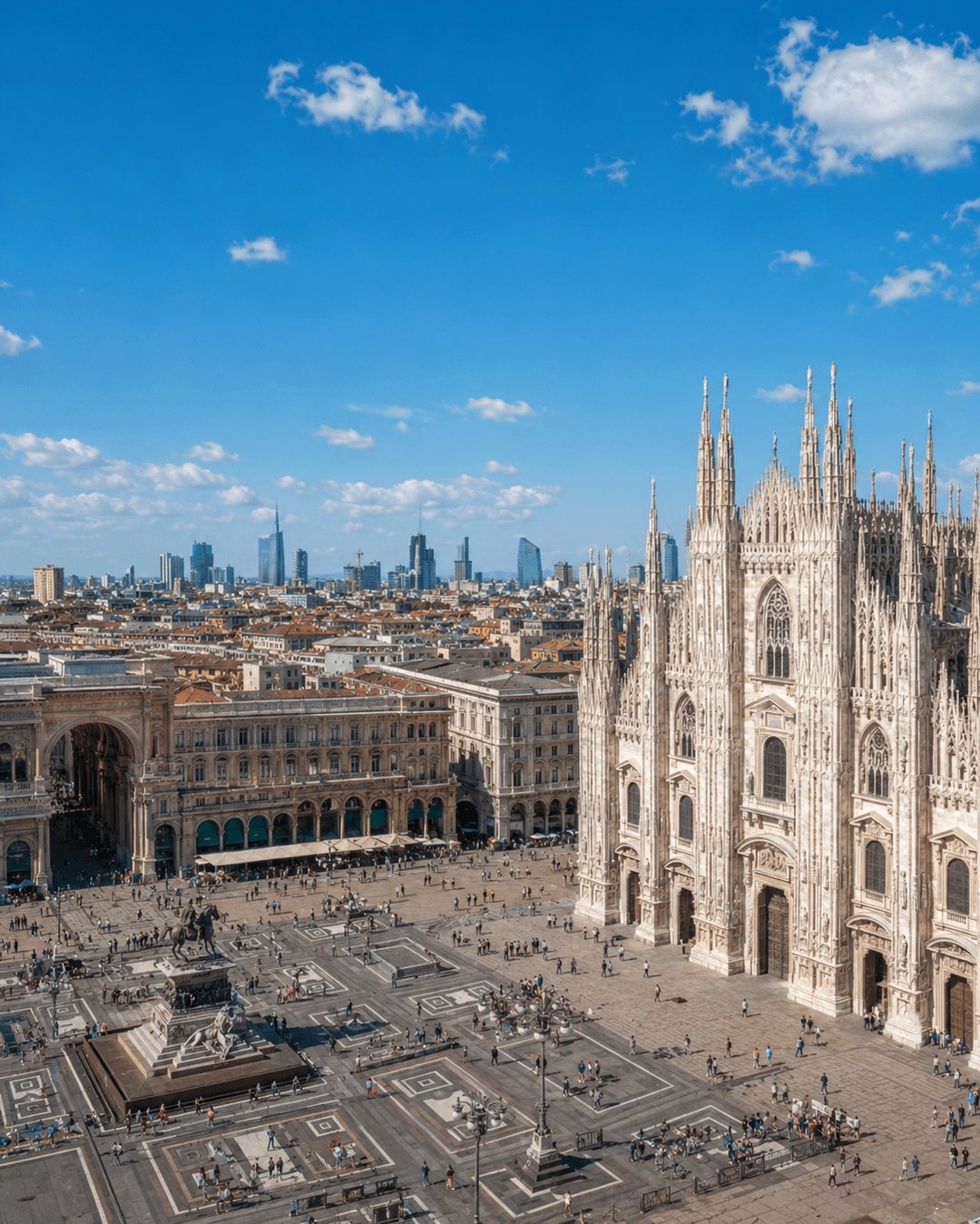
The cathedral district deserves an early start, before its open spaces become a test of crowd navigation. Approach the Duomo as architecture, never as backdrop: understand the exterior before moving inside, and choose in advance whether the roof is essential to the day. The Galleria is most impressive when its geometry can be seen without being fought through. A coffee nearby can be worth the ceremony, but a famous room is not improved by joining a long queue with no sense of why it matters. Milanese ritual works through confidence, not submission.
From the centre, turn towards smaller interiors. Historic houses, private collections and churches can reveal more about the city’s patronage and domestic scale than a second giant institution. Book where booking is required and read enough beforehand to know the collection’s particular argument. The pleasure is concentration. A room of twentieth-century Italian work, a staircase or a garden can hold the afternoon more convincingly than an inventory of masterpieces consumed at speed. Milan’s culture is often encountered through framing: the way an object sits in a room and the room within the city.
Lunch should offer a change of register. Leave the retail axis, choose a room with a dependable local clientele and order for the day in front of you, not an abstract idea of northern Italian abundance. A substantial midday meal can eliminate the need for an elaborate dinner; a lighter lunch protects appetite for a tasting menu. Decide which before sitting down. This simple choice prevents a common luxury-travel mistake in which every reservation is individually desirable and collectively punishing. Milan is an editor’s city, and appetite benefits from editing too.
04Brera and Porta Nuova reveal two versions of confidence
Brera’s appeal lies in compression. Art, design, fashion and residential life occupy a small field, but the neighbourhood should not be reduced to picturesque streets and shop windows. Visit with one purpose—a gallery, a collection, a specialist store—then allow the surrounding blocks to extend it. Examine materials and construction before labels. Ask who designed an object, where it was made and whether it can be serviced or repaired. The most Milanese purchase may be the one whose quality remains obvious after its novelty has disappeared.
Porta Nuova offers the counterpoint: larger scale, contemporary towers, planted public spaces and the visible ambition of a city that does not preserve itself under glass. Walk the transition; an arrival made only for a photograph misses the argument. The changing street widths and building eras explain more than a single viewpoint. Continue only as far as interest holds. New districts are often presented as compulsory proof of modernity, but the useful question is whether their public rooms work at the pace of daily life. Milan invites that kind of critical looking.
Place a hotel interval between these worlds and the evening. Drop parcels, change shoes and avoid the reflex to turn aperitivo into a multi-stop performance. One well-chosen bar is enough. The ritual matters because it marks a shift from the transactional day to the social night; chasing several fashionable rooms destroys that purpose. Sit, order once, watch how the room is used and then proceed to dinner with appetite. The luxury is not access to every door but freedom from the anxiety that another room might be better.
05IYO Kaiseki gives Milan a different kind of precision
IYO Kaiseki holds a restaurant record for the stated edition and published, with a current record grounded in Japanese technique, coherent menu architecture and a dining room capable of supporting the experience beyond the plate. Its offer includes omakase and kaiseki, formats that ask the guest to surrender some control while paying closer attention to sequence. That proposition belongs in Milan more naturally than a superficial contrast might suggest. Both the city and the restaurant value proportion, detail and the authority of a decision carried through without decorative explanation.
Reserve the evening as a focused encounter, not a fashionable detour. Confirm the chosen format, dietary constraints and expected duration directly with the restaurant, then keep the preceding hours moderate. A kaiseki or omakase sequence is diminished when it follows an aggressive aperitivo circuit or a late lunch that never ended. Arrive ready to notice temperature, pacing, texture and the relationship between courses without turning the meal into an examination. Technical cooking is most pleasurable when concentration remains alert but relaxed.
The restaurant also expands the city guide beyond the assumption that a serious Milan meal must make an argument about Italian tradition. Milan’s identity has long depended on exchange, industry and a willingness to absorb international disciplines into its own exacting social world. IYO Kaiseki should be judged on the clarity of its Japanese culinary authorship, not as a novelty between regional meals. Its precision makes a persuasive final dinner because it casts the rest of the trip in relief: the same preference for structure, restraint and details that continue working after the first impression.
06Shop like an editor and look beyond the obvious rooms
Luxury shopping in Milan becomes tedious when it is treated as a sweep of logos. Divide the task by expertise. Use established houses when construction, alterations and aftercare matter; seek independent studios or specialist dealers when the aim is discovery; and ask hard questions wherever heritage is part of the sales language. Photograph dimensions, record lead times and resist buying for the fantasy life created by the fitting room. The city respects clients who know the difference between desire and decision, and the best staff can work more intelligently with a clear brief.
Design for the home requires even more discipline. Confirm shipping, insurance, duties and access at the destination before committing to furniture or fragile work. A smaller object with a direct relationship to its maker may carry more Milan than a statement piece selected in haste. Visit showrooms by appointment when possible, but keep at least one hour for an unscripted district walk. Temporary displays can be seductive; permanent workshops and long-running stores reveal how the city sustains quality after the event audience leaves.
The same edit applies to culture. Choose between a major modern-art foundation, a design museum and a concentrated historic collection according to genuine interest, not prestige. One deep visit followed by a walk through the district will produce a clearer memory than three institutions connected by taxis. Check current exhibitions through the official city visitor resources, then confirm access with the venue itself. Milan changes through programming, and the best itinerary leaves enough flexibility to respond to what is actually on without repeating a list written for another season.
07Milan’s standard is precision without pressure
Milan reveals quality through the relationship between decisions. An early cultural entry justifies a quiet lunch; a long architectural walk earns the interval at Château Monfort; a specialist appointment gains value when the surrounding afternoon has not been filled with indiscriminate shopping. The Metro can make the decisive cross-city movement, while trams and walking keep materials, thresholds and changing street widths in view. Nothing in this sequence needs to announce itself as a grand tour. The coherence appears in the fit between each part.
Château Monfort and IYO Kaiseki hold different positions within that edit. The hotel restores the concentration spent on museums, shops and streets. The restaurant asks for that concentration back, directing it toward temperature, pacing and craft. Both are diminished by excess around them. Give the property an honest pause and the restaurant an uncluttered evening; let the remaining meals and rooms carry a lighter social register. Milanese luxury becomes persuasive when it knows where emphasis belongs and where restraint can do more.
The city’s standard is therefore not speed, access or the number of admired names collected in three days. It is precision without pressure: one building understood from inside, one object bought with knowledge of its making, one district followed beyond its most recognisable façade. Milan stays in the mind through edges and proportions, the details noticed after spectacle has receded. A successful visit acquires the same composure as the city’s best design—nothing superfluous, nothing strained, and enough unresolved space for the eye to continue working after the itinerary ends.