Marrakech’s Best Palace Stay Is a World of Private Doors
Royal Mansour Marrakech interprets palace luxury through riad-scale privacy, internal paths and service that must remain present without becoming visible.
Executive brief
Marrakech rewards proximity and retreat in equal measure. Royal Mansour’s 2025 proposition is a private world that should sharpen, not replace, the city outside.
01Privacy is a structure, not a slogan
A private door changes the emotional scale of Marrakech, replacing a conventional corridor with the feeling of returning to a small house. Privacy is among luxury travel’s most overused promises and one of its most operationally demanding achievements. Marrakech’s best palace stay uses riad privacy, craft and internal circulation to create freedom without severing the guest from the medina.
A self-contained world becomes indulgent isolation when every meal, shop and encounter is kept behind the hotel’s own gates. That tension is the reason for this edit. The featured hotels are drawn from the annual The World’s Best Hotels file current to this editorial argument, using the distinctions and year-specific assessments available at publication. No later editorial review, reopening or change of management is used to rewrite the present.
Marrakech travellers who value a private residential scale and enough service depth to support a slower city stay should read the selection as a set of decisions rather than a command. Keep the arrival evening inside, enter the medina early the next day and alternate outward hours with long returns rather than commuting continuously. The objective is not exhaustive coverage; it is enough evidence and context to decide which form of luxury belongs to this journey now.
02The retreats with different answers
Marrakech’s best palace stay uses riad privacy, craft and internal circulation to create freedom without severing the guest from the medina. The distinctions provide a common editorial frame, but rank alone cannot explain suitability. Royal Mansour Marrakech, Rosewood Villa Magna, The Oberoi Udaivilas and The Taj Mahal Palace, Mumbai operate across different landscapes, city rhythms and service cultures. Their positions make them worth examining; their differences make the examination useful.
A 2025 recommendation must remain in the present tense. Prices, policies, access and opening arrangements can change within the year, so the fixed facts of the editorial file should be separated from details that require direct confirmation. Confirm riad layout, stairs, pool privacy, medina guide, car access, dining, spa timing, dietary requirements and heat-sensitive planning. Authority is not confidence about an unchecked detail; it is clarity about what is known and what still needs to be asked.
A private door is luxurious when it opens the city rather than closes it out.
The World’s Best Travel Desk
03Distance, access and the true cost of seclusion
At Royal Mansour Marrakech, privacy is not simply the absence of strangers. The 2025 file gives the property No. 49 · The World’s Best Hotels 2024 · and records: Royal Mansour Marrakech is a palace riad hotel in Marrakech, defined by private riad architecture, exceptional craftsmanship, discreet service tunnels, and royal-scale Moroccan design. In that edition, it was one of Marrakech's most globally visible exceptional luxury properties, built around private riads, craft detail, and discreet palace service. The strongest retreat allows the guest to control contact—when the room is entered, when meals arrive, when the landscape becomes social and when assistance is immediately available. Marrakech’s best palace stay uses riad privacy, craft and internal circulation to create freedom without severing the guest from the medina. A closed door means little if the stay requires constant negotiation.
Rosewood Villa Magna frames privacy through geography and operation. The hotel’s No. 74 · The World’s Best Hotels 2025 · record states: Rosewood Villa Magna is a reimagined city luxury hotel in Madrid, defined by Paseo de la Castellana location, Rosewood sense-of-place repositioning, garden frontage, and polished Madrid service. In that edition, it strengthened Madrid's luxury-hotel revival with a second major reimagined city address. Seclusion is credible only when access, staffing and accommodation remove observation without removing competence. Ask how transfers work, what spaces are genuinely private and which experiences require sharing time or transport with others. Confirm riad layout, stairs, pool privacy, medina guide, car access, dining, spa timing, dietary requirements and heat-sensitive planning. Distance should produce freedom, not dependence disguised as exclusivity.
At The Oberoi Udaivilas, privacy is not simply the absence of strangers. The 2025 file gives the property No. 37 · The World’s Best Hotels 2025 · and records: The Oberoi Udaivilas is a palace resort in Udaipur, Rajasthan, defined by palatial lakefront design, deeply polished Oberoi service, and a destination experience inseparable from Udaipur's royal landscape. In that edition, it was a leading symbol of Indian luxury hospitality and a benchmark for experiential palace resorts within Rajasthan's lake-and-palace travel circuit. The strongest retreat allows the guest to control contact—when the room is entered, when meals arrive, when the landscape becomes social and when assistance is immediately available. Marrakech’s best palace stay uses riad privacy, craft and internal circulation to create freedom without severing the guest from the medina. A closed door means little if the stay requires constant negotiation.
The Taj Mahal Palace, Mumbai frames privacy through geography and operation. The hotel’s No. 55 · The World’s Best Hotels 2024 · record states: The Taj Mahal Palace, Mumbai is a historic urban grand hotel in Mumbai, defined by Gateway of India prominence, historic resilience, and a central role in Indian luxury hospitality. In that edition, it remained a commercially and editorially relevant global luxury hotel, supported by Gateway of India prominence, historic resilience, and a central role in Indian luxury hospitality and a clear position within Mumbai's high-end hospitality market. Seclusion is credible only when access, staffing and accommodation remove observation without removing competence. Ask how transfers work, what spaces are genuinely private and which experiences require sharing time or transport with others. Confirm riad layout, stairs, pool privacy, medina guide, car access, dining, spa timing, dietary requirements and heat-sensitive planning. Distance should produce freedom, not dependence disguised as exclusivity.
Hotel
Royal Mansour Marrakech
Marrakech, MoroccoRoyal Mansour Marrakech is a palace riad hotel in Marrakech, defined by private riad architecture, exceptional craftsmanship, discreet service tunnels, and royal-scale Moroccan design.
Open the record →Hotel
Rosewood Villa Magna
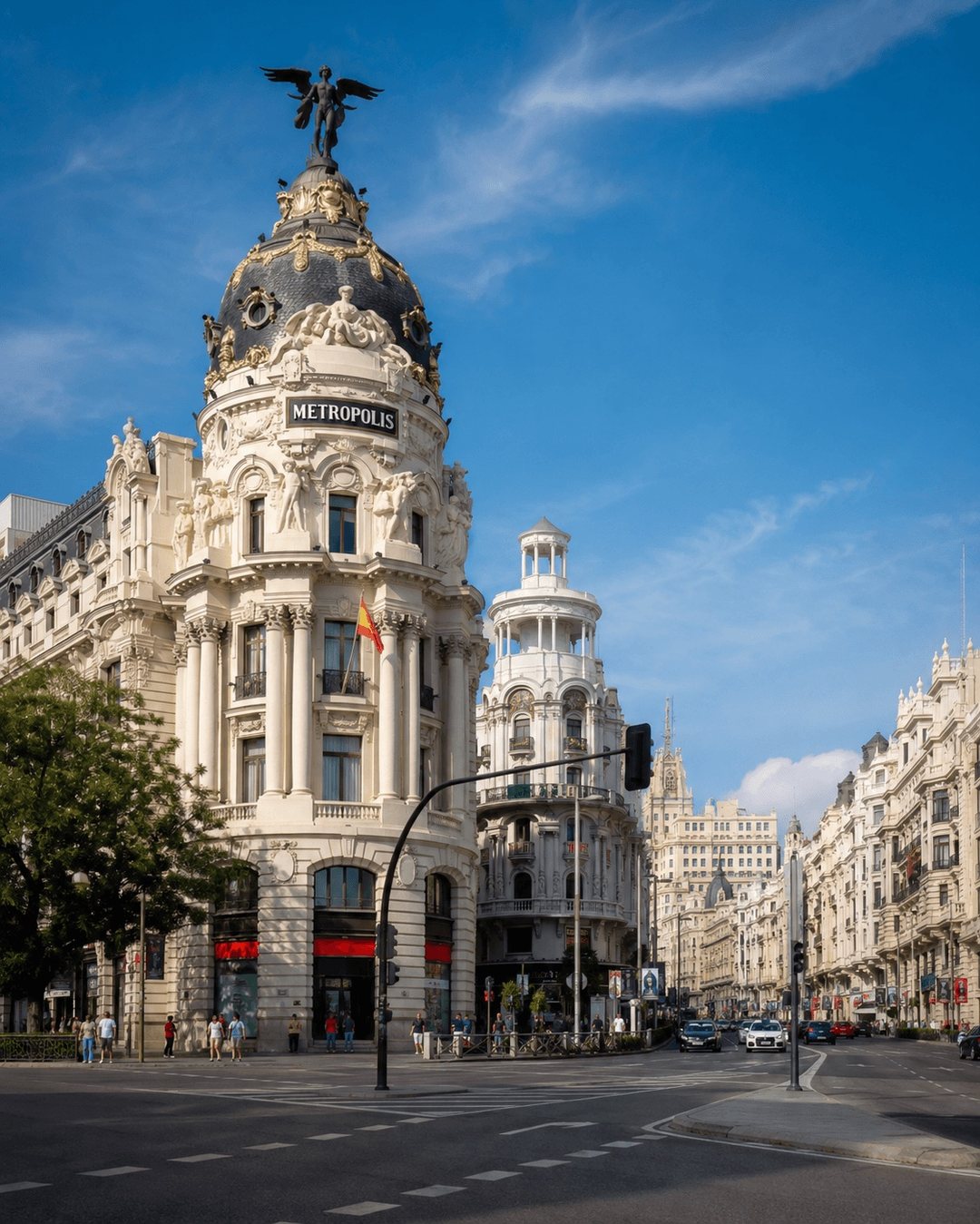
Madrid, SpainRosewood Villa Magna is a reimagined city luxury hotel in Madrid, defined by Paseo de la Castellana location, Rosewood sense-of-place repositioning, garden frontage, and polished Madrid service.
Open the record →Hotel
The Oberoi Udaivilas
Udaipur, Rajasthan, IndiaThe Oberoi Udaivilas is a palace resort in Udaipur, Rajasthan, defined by palatial lakefront design, deeply polished Oberoi service, and a destination experience inseparable from Udaipur's royal landscape.
Open the record →Hotel
The Taj Mahal Palace, Mumbai
Mumbai, IndiaThe Taj Mahal Palace, Mumbai is a historic urban grand hotel in Mumbai, defined by Gateway of India prominence, historic resilience, and a central role in Indian luxury hospitality.
Open the record →04Service that knows when to disappear
Confirm riad layout, stairs, pool privacy, medina guide, car access, dining, spa timing, dietary requirements and heat-sensitive planning. Send the important questions in one concise note and look for answers that demonstrate ownership rather than forwarding. The response should identify the room, transfer or dining condition being promised and explain any limitation without ornamental language.
On property, examine the full chain: arrival, luggage, room orientation, housekeeping, food, transport, privacy and departure. A single memorable gesture is welcome, but consistency is the more demanding luxury. A self-contained world becomes indulgent isolation when every meal, shop and encounter is kept behind the hotel’s own gates. The hotel should be able to recover when the ideal sequence breaks.
05What isolation cannot solve
A self-contained world becomes indulgent isolation when every meal, shop and encounter is kept behind the hotel’s own gates. The answer is not austerity. It is to demand that every expensive or scarce element contributes to the central purpose of the stay. An upgrade, private transfer or elaborate dinner has value when it protects attention, sleep, appetite or access; otherwise it is simply another transaction requiring management.
Marrakech travellers who value a private residential scale and enough service depth to support a slower city stay should decide what to decline before adding another promise. Keep the arrival evening inside, enter the medina early the next day and alternate outward hours with long returns rather than commuting continuously. The strongest edit leaves enough unclaimed time for the hotel and its setting to become more than a sequence of services.
06The booking conversation
Confirm riad layout, stairs, pool privacy, medina guide, car access, dining, spa timing, dietary requirements and heat-sensitive planning. Confirm the material points close to travel: exact room category, orientation, access, transfer, meal format, cancellation terms and any work that could alter the stay. Use the hotel’s current written response and competent official sources rather than an old itinerary or saved promotional page.
Then map the least glamorous hour. Consider a late arrival, heat, rain, seas, luggage, mobility, dietary limits or a request for discretion. If the plan still works under those conditions, its luxury is structural rather than decorative. Marrakech’s best palace stay uses riad privacy, craft and internal circulation to create freedom without severing the guest from the medina.
The booking should preserve alternatives without making staff or local providers absorb avoidable uncertainty. The palace is most successful when each private return restores curiosity about Marrakech. Communicate changes promptly, respect cancellation policies and keep the most important arrangements documented offline. Good preparation is felt as freedom once the journey begins.
07A more exact form of escape
The palace is most successful when each private return restores curiosity about Marrakech. The editorial record supports why these hotels belong in the 2025 conversation; it does not claim that one property is universally correct. Personal suitability remains a matter of route, company, mobility, appetite, privacy and the kind of attention the traveller wishes to give.
Marrakech travellers who value a private residential scale and enough service depth to support a slower city stay should also consider the physical and emotional cost of the choice. Keep the arrival evening inside, enter the medina early the next day and alternate outward hours with long returns rather than commuting continuously. A celebrated hotel can still be wrong for a short stay, an early departure, a guest who needs step-free movement or a family whose days divide naturally. Luxury is not diminished by naming those limits. It becomes more exact. The most persuasive booking is the one in which room, access, service and setting support the traveller’s real behaviour without requiring constant adaptation to the property’s preferred image.
This is a 2025 editorial file, written for decisions being made now. The rankings and year-specific assessments establish a point of view at publication; changeable details remain the responsibility of direct verification. Confirm riad layout, stairs, pool privacy, medina guide, car access, dining, spa timing, dietary requirements and heat-sensitive planning. If a material condition changes, protect the central premise—Marrakech’s best palace stay uses riad privacy, craft and internal circulation to create freedom without severing the guest from the medina.—and alter the least essential booking around it. A sound itinerary can absorb weather, timing or availability without losing its character. That resilience is not separate from luxury. It is the quiet result of priorities set before the journey begins.
There is a simpler final test. If the hotel’s name can be removed and the day still has a distinct geography, service rhythm and emotional shape, the stay is probably doing more than trading on reputation. A private door is luxurious when it opens the city rather than closes it out. That is the form of Best worth carrying forward through the rest of this year.
Hotel
Royal Mansour Marrakech
Marrakech, MoroccoRoyal Mansour Marrakech is a palace riad hotel in Marrakech, defined by private riad architecture, exceptional craftsmanship, discreet service tunnels, and royal-scale Moroccan design.
Open the record →Hotel
Rosewood Villa Magna
Madrid, SpainRosewood Villa Magna is a reimagined city luxury hotel in Madrid, defined by Paseo de la Castellana location, Rosewood sense-of-place repositioning, garden frontage, and polished Madrid service.
Open the record →Hotel
The Oberoi Udaivilas
Udaipur, Rajasthan, IndiaThe Oberoi Udaivilas is a palace resort in Udaipur, Rajasthan, defined by palatial lakefront design, deeply polished Oberoi service, and a destination experience inseparable from Udaipur's royal landscape.
Open the record →Hotel
The Taj Mahal Palace, Mumbai
Mumbai, IndiaThe Taj Mahal Palace, Mumbai is a historic urban grand hotel in Mumbai, defined by Gateway of India prominence, historic resilience, and a central role in Indian luxury hospitality.
Open the record →