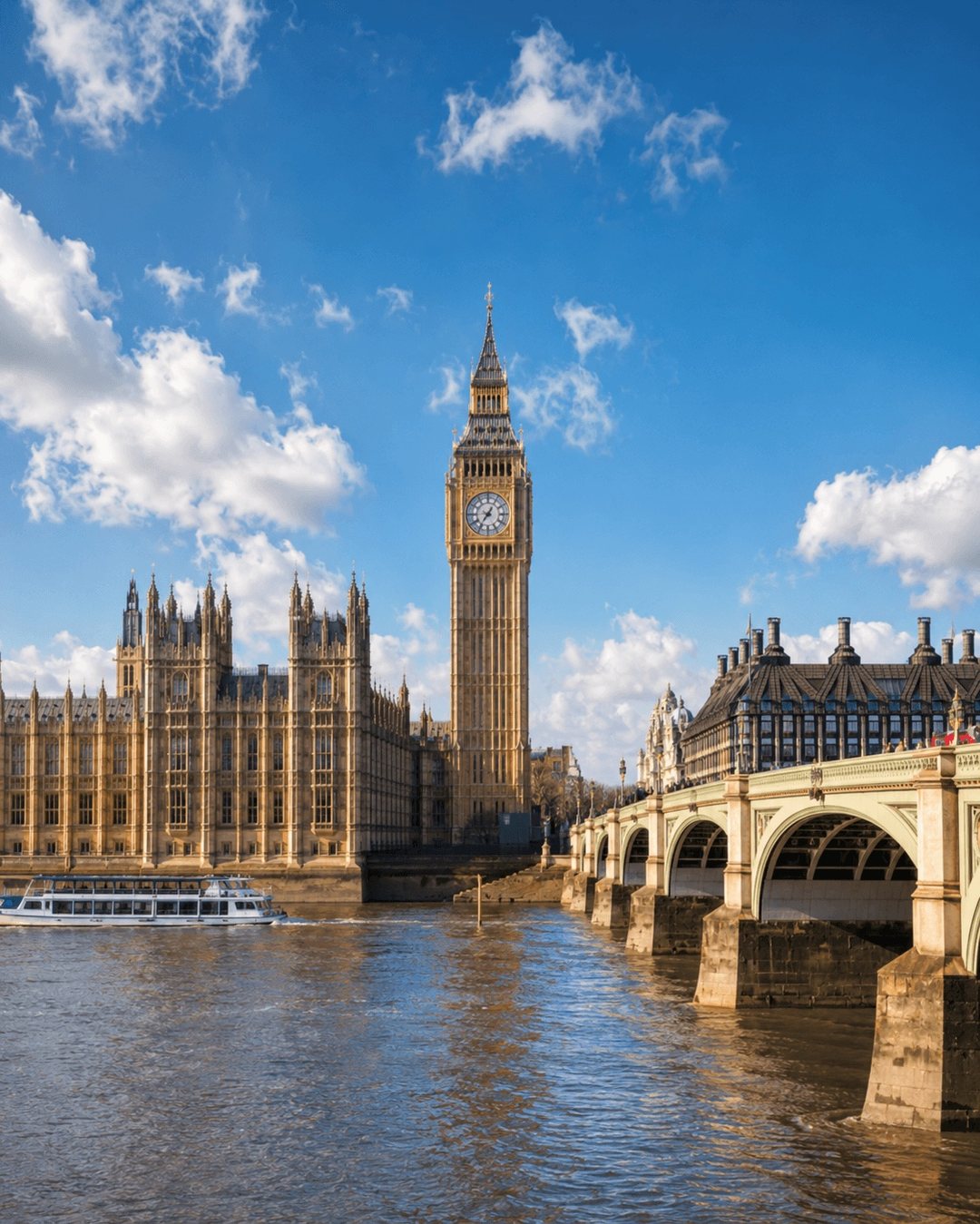
London in Four Acts: The Hotels and Tables That Hold the City Together
Three characterful hotels and three restaurants with unmistakable culinary positions turn an overwhelming capital into a sequence of neighbourhood days and exceptional nights.
Executive brief
London feels luxurious when distance is edited out: stay where the evenings matter, group the days tightly and let the city’s creative friction replace a parade of famous addresses.
01London becomes manageable when the city is allowed to remain large
London defeats the traveller who treats every famous address as nearby. A morning in one museum, lunch across town, a shop in another postcode and theatre back in the West End may look efficient in a calendar and feel like a study in platforms. Four nights work when each day occupies a tight area and each evening has a single reason to travel. Choose the hotel partly for the nights already booked. The view from a room matters; the ability to walk home after the final drink may matter more.
Broadwick Soho leads the hotel group with an exceptional luxury distinction and published. Its record gives particular weight to food, drink and service depth. NoMad London follows closely at exceptional luxury and published, again led by dining and the service system. The Standard, London holds a leading hotel record for the stated edition, with service and food-and-drink strengths carrying its case. These editorial reviews identify three confident urban propositions. None can solve London’s geography for a traveller who refuses to edit, but each can support a well-shaped day.
The dining choices are equally distinct. Ikoyi and KOL both receive a restaurant record for the stated edition, yet one builds around British micro-seasonality and a deep spice library while the other establishes a Mexican identity through technical precision and ingredient provenance. Restaurant Gordon Ramsay, a restaurant record for the stated edition, turns modern French discipline into a durable house style. Theeditorial record are almost level; the experiences are not. Decide which culinary argument belongs to which night, then let the rest of the day prepare for it.
Hotel
Broadwick Soho
London, United Kingdom of Great Britain and Northern IrelandIn London, United Kingdom of Great Britain and Northern Ireland, Broadwick Soho is distinguished by a convincing food-and-drink offer and the depth of its service system.
Open the record →Hotel
NoMad London
London, United Kingdom of Great Britain and Northern IrelandA distinctive address in London, United Kingdom of Great Britain and Northern Ireland, defined above all by a convincing food-and-drink offer and the depth of its service system.
Open the record →Hotel
The Standard, London
London, United Kingdom of Great Britain and Northern IrelandThe case for The Standard, London begins with the depth of its service system and holds through a convincing food-and-drink offer.
Open the record →Restaurant
Ikoyi
London, United KingdomIkoyi: the strongest dishes deliver unusual intensity with real compositional logic; the room at 180 Strand gives that work greater focus and calm.
Open the record →Restaurant
KOL
London, United KingdomIn London, United Kingdom, KOL builds a distinct Mexican identity through technical precision and ingredient provenance.
Open the record →Restaurant
Restaurant Gordon Ramsay
London, United KingdomRestaurant Gordon Ramsay turns modern French discipline into a remarkably durable house style.
Open the record →02Broadwick, NoMad and The Standard offer three kinds of urban confidence
Broadwick Soho is the most highly reviewed hotel here, an exceptional luxury address at 93.1 whose reviewed strengths centre on food, drink and a deep service system. Soho is declared in the name and should be treated as an asset, not a decorative association. Choose it when evenings, performance, restaurants and street energy are central to the visit. Ask carefully about room position and sound preferences. A lively district can provide exactly the desired charge, but sleep should be negotiated before arrival rather than discovered after midnight.
NoMad London, exceptional luxury at 92.8, also combines a convincing food-and-drink offer with service depth. It suits travellers who want the hotel’s social and dining life to remain visible throughout the stay. Leave room for it. Breakfast, an early drink or a pause between cultural appointments can make the property part of London, not a sealed retreat from it. The editorial review does not promise every conceivable facility; it identifies the operating strengths that give the address authority. Use those strengths instead of chasing an abstract idea of the complete luxury hotel.
The Standard, London carries a leading hotel record for the stated edition and published. Service comes first in its editorial review case, followed by food and drink. That makes it a useful choice for guests who value a more direct, contemporary proposition and expect the staff to keep a complex city moving smoothly. Confirm transfer plans, room priorities and late-arrival details early. London travel often involves train stations, airports and luggage crossing at inconvenient times. A good service system shows its value in those ordinary moments long before anyone orders a celebratory bottle.
Hotel
Broadwick Soho
London, United Kingdom of Great Britain and Northern IrelandIn London, United Kingdom of Great Britain and Northern Ireland, Broadwick Soho is distinguished by a convincing food-and-drink offer and the depth of its service system.
Open the record →Hotel
NoMad London
London, United Kingdom of Great Britain and Northern IrelandA distinctive address in London, United Kingdom of Great Britain and Northern Ireland, defined above all by a convincing food-and-drink offer and the depth of its service system.
Open the record →Hotel
The Standard, London
London, United Kingdom of Great Britain and Northern IrelandThe case for The Standard, London begins with the depth of its service system and holds through a convincing food-and-drink offer.
Open the record →The London upgrade that matters most is not a larger car; it is a day designed so that a car is rarely needed.
The World’s Best Travel Desk
03The restaurant choice is a question of language, not rank
Ikoyi is reviewed a restaurant record for the stated edition. The record describes a cuisine built from British micro-seasonality and a deep spice library, using techniques including smoking, fermentation, curing and classical sauce work without submitting to a fixed national repertoire. That complexity is the reason to go. Reserve Ikoyi for travellers comfortable with an authored tasting experience that resists easy labels. Keep the afternoon unhurried and arrive willing to follow the sequence rather than search for a familiar reference point. Originality is most pleasurable when attention has not already been spent elsewhere.
KOL shares the 94.6editorial record and Two-restaurant records distinction but makes a different argument: a Mexican identity in London expressed through technical precision and ingredient provenance. The editorial review record notes a tasting menu, langoustine, smoking and a beverage programme, but the larger appeal is translation without generic compromise. Book KOL when the relationship between place, sourcing and Mexican culinary thought is the draw. It should not be treated as an alternative slot merely because Ikoyi is unavailable. Each restaurant deserves a guest who wants its particular conversation.
Restaurant Gordon Ramsay receives a restaurant record for the stated edition for modern French discipline and a remarkably durable house style. The record emphasises lucid sauces, exact treatment of fish and offal, and a current kitchen capable of holding established signatures beside newer work. This is the formal counterpoint in the group. Choose it when continuity, classical technique and the machinery of a long-running dining room feel more compelling than novelty. Allow generous travel time and dress according to the restaurant’s current guidance, checked directly before the evening.
Restaurant
Ikoyi
London, United KingdomIkoyi: the strongest dishes deliver unusual intensity with real compositional logic; the room at 180 Strand gives that work greater focus and calm.
Open the record →Restaurant
KOL
London, United KingdomIn London, United Kingdom, KOL builds a distinct Mexican identity through technical precision and ingredient provenance.
Open the record →Restaurant
Restaurant Gordon Ramsay
London, United KingdomRestaurant Gordon Ramsay turns modern French discipline into a remarkably durable house style.
Open the record →04One London per day is enough
The capital is best approached through daily chapters. A West End day can hold a major collection, independent galleries, shopping and theatre without demanding repeated journeys across the river. Another day can follow the Thames or concentrate on one part of the east, while a third can remain in the west around a formal dinner. The names of the districts matter less than the refusal to zigzag. Place the evening reservation on the map first, select one cultural anchor nearby and let everything else earn its place through proximity.
Museums reward an early start, but two monumental collections in one day will make both feel smaller. Choose a department, exhibition or question without attempting an entire building. A private guide is valuable when the subject is defined and the group wants depth; it becomes expensive crowd control when the brief is simply ‘show us everything’. Leave after concentration fades. London’s streets, parks and bookshops can hold the remaining hours without requiring another ticket.
Theatre nights need their own rhythm. Eat early nearby or dine properly afterwards, depending on appetite and the restaurant’s hours. Avoid a tasting menu before a fixed curtain unless both venue and timings make the sequence genuinely comfortable. Tickets, intervals and post-performance transport should be confirmed, especially on Sundays or during planned engineering works. The city’s cultural abundance creates constant fear of missing out. A well-edited trip replaces that fear with anticipation for the next visit.
05Public transport is often the most discreet luxury
Transport for London supports contactless and Oyster pay-as-you-go travel across its network, with fare capping when the same payment method is used correctly. For most central journeys, the Tube and walking are faster and more predictable than a car. Buses add a street-level view when time allows. Check planned closures before each day, and do not assume the return route will mirror the outbound one late at night. A few minutes with the official journey planner can save an hour of improvisation.
A black cab or booked car remains valuable for formal evenings, heavy luggage, limited mobility and routes that do not connect cleanly. Use one because it solves a problem, not because London is believed to require a chauffeur. Road congestion can turn the grandest vehicle into a stationary room. For airport travel, choose between rail and road after considering terminal, departure time, luggage and the likelihood of disruption. The premium decision is the one with the strongest margin for error.
Walking supplies the connective tissue. London changes block by block, and the shift between grand square, working street, garden and railway arch is part of the city’s character. Pack for weather that changes its mind, with shoes suited to long pavements and a compact waterproof layer. Formal clothes should travel easily enough that the day does not need to be rebuilt around changing. The freedom to move between gallery, train and dining room without returning to the hotel is an underrated form of polish.
06Reservations should create structure without turning into surveillance
Book the scarce commitments: the room category that matters, a high-demand restaurant, a particular performance and any limited exhibition. Confirm all four shortly before travel. Leave breakfasts, most lunches and at least one evening flexible. London produces new possibilities every day, and hotel staff are most useful when they can respond to an emerging interest rather than administer an itinerary fixed months earlier. The purpose of advance work is to protect freedom around the edges.
Build recovery into the calendar. A long lunch after an overnight flight may sound civilised and feel punishing. Keep arrival day local, use the hotel’s food-and-drink strengths and sleep before attempting the capital at full volume. On later days, a quiet hour at Broadwick Soho, NoMad London or The Standard can separate public engagements. The rates become more defensible when the hotel is allowed to perform its service and dining role, not reduced to a cloakroom between appointments.
Gratuities, service charges and cancellation terms should be read rather than guessed. Many London restaurants add service to the bill; private guides, cars and bespoke appointments follow their own terms. The expensive error is not paying appropriately but discovering a policy after plans change. Keep confirmations accessible, notify venues promptly and respect the time reserved. Courtesy is the lightest thing a luxury traveller carries and the one staff remember most clearly.
07Let London end after the curtain
Arrival belongs to the hotel and its immediate streets. Settle at Broadwick Soho, NoMad London or The Standard, take one long walk and avoid making the first dinner a test of stamina. The next day can hold a major museum or collection in the morning, a light lunch and Ikoyi or KOL at night. Choose the restaurant according to culinary interest, then keep the route compact. The meal should be the day’s escalation, not its sixth headline.
Use the second full day for a neighbourhood with sharper edges: independent retail, smaller galleries, architecture or performance, all within a walkable frame. Return to the hotel before the evening and decide whether dinner needs to be important. The third day can move west for a park, a collection and Restaurant Gordon Ramsay, whose modern French discipline provides a composed closing statement. If another tasting menu feels excessive, reverse the order and place the formal house earlier in the trip.
Give the final evening to London’s public life. A theatre curtain, a small music room, a late bookshop or a quiet table after the performance reveals the capital through shared attention, not private access. Broadwick Soho can return the night to Soho’s energy; NoMad London can keep the hotel’s social pulse in view; The Standard can connect the stay to a different urban current. The reviewed restaurants have already supplied precision. The coda should be looser: rain on paving, a cab light crossing the square, conversation continuing after coats are collected. London does not need a summary. It needs a final scene with enough life to stand on its own.
Hotel
Broadwick Soho
London, United Kingdom of Great Britain and Northern IrelandIn London, United Kingdom of Great Britain and Northern Ireland, Broadwick Soho is distinguished by a convincing food-and-drink offer and the depth of its service system.
Open the record →Hotel
NoMad London
London, United Kingdom of Great Britain and Northern IrelandA distinctive address in London, United Kingdom of Great Britain and Northern Ireland, defined above all by a convincing food-and-drink offer and the depth of its service system.
Open the record →Hotel
The Standard, London
London, United Kingdom of Great Britain and Northern IrelandThe case for The Standard, London begins with the depth of its service system and holds through a convincing food-and-drink offer.
Open the record →Restaurant
Ikoyi
London, United KingdomIkoyi: the strongest dishes deliver unusual intensity with real compositional logic; the room at 180 Strand gives that work greater focus and calm.
Open the record →Restaurant
KOL
London, United KingdomIn London, United Kingdom, KOL builds a distinct Mexican identity through technical precision and ingredient provenance.
Open the record →Restaurant
Restaurant Gordon Ramsay
London, United KingdomRestaurant Gordon Ramsay turns modern French discipline into a remarkably durable house style.
Open the record →