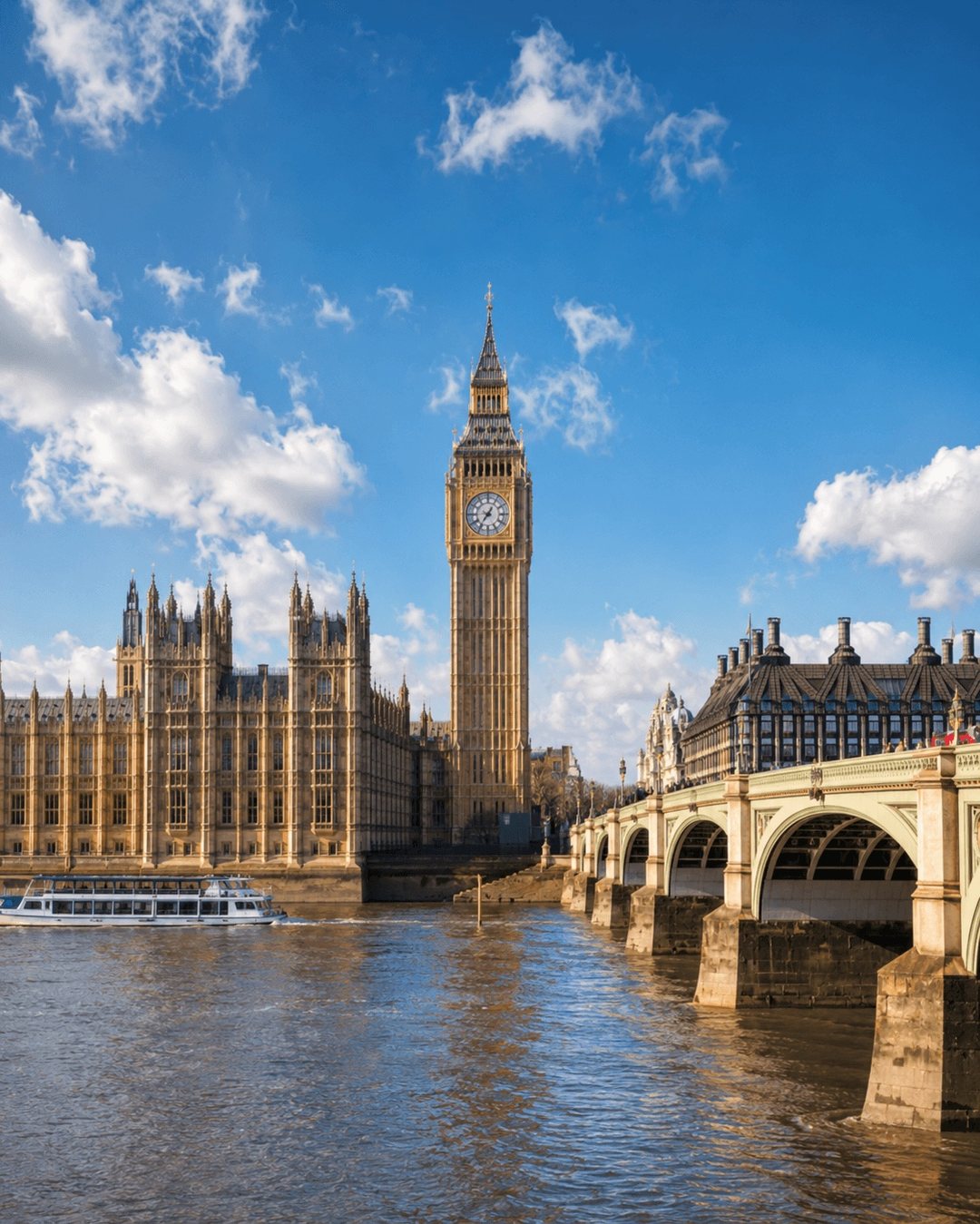
London After Dark: Six Addresses That Make a Weekend Feel Illicitly Short
Two magnetic hotels and four singular dining rooms turn a familiar capital into a tightly edited three-night affair, from Soho velvet to West African fire.
Executive brief
The right London weekend is not a race across postcodes. It is a sequence of rooms with enough personality to make the city outside feel newly charged.
01London rewards a ruthless edit
London can absorb every hour you offer and still make you feel late. The mistake is trying to conquer it. A genuinely luxurious weekend keeps the geography tight, the reservations deliberate and the afternoons porous enough for a bookshop, a sudden downpour or a second drink. Broadwick Soho and NoMad London make ideal anchors because both are destinations in their own right, yet neither asks you to retreat from the city. They intensify it.
The four restaurants here tell a more interesting story than a parade of old-school grandeur. Ikoyi and KOL are among the capital’s sharpest expressions of contemporary authorship; Chishuru gives West African cooking a room and rhythm entirely its own; Restaurant Gordon Ramsay remains a study in the value of sustained classical control. Taken together, they show why London’s dining scene feels less like a hierarchy than a brilliant argument conducted across neighbourhoods.
Three nights are enough if arrival is early and departure late. Reserve two serious dinners, not three. Use the remaining evening for the hotel bar, a theatre curtain or a counter seat found by instinct. London’s great pleasure is adjacency: ceremony beside eccentricity, fashion beside domestic comfort, a tasting menu followed by a pub whose carpet has survived several eras. An itinerary should preserve that friction rather than polish it away.
Hotel
Broadwick Soho
London, United Kingdom of Great Britain and Northern IrelandIn London, United Kingdom of Great Britain and Northern Ireland, Broadwick Soho is distinguished by a convincing food-and-drink offer and the depth of its service system.
Open the record →Hotel
NoMad London
London, United Kingdom of Great Britain and Northern IrelandA distinctive address in London, United Kingdom of Great Britain and Northern Ireland, defined above all by a convincing food-and-drink offer and the depth of its service system.
Open the record →02Broadwick Soho turns the first night into theatre
Broadwick Soho has the confidence to meet Soho at its own volume. The hotel’s 2026 exceptional luxury editorial review rests on more than decorative nerve: service, dining and wellbeing carry the proposition. Yet the immediate impression is emotional rather than technical. Colour, pattern and a certain after-dark glamour make arrival feel like entry into a private house where the host has a very good tailor and no interest in beige restraint.
Choose it when the weekend should begin at once. Soho’s restaurants, theatres and late bars sit close enough that a car becomes unnecessary, and the hotel provides a convincing return after the streets reach peak intensity. The best city hotels perform this double act. They give guests access to the neighbourhood’s energy while controlling acoustics, lighting, temperature and service so the room still feels like a sanctuary at midnight.
Do not schedule the first evening too tightly. Leave time to unpack, take the measure of the public rooms and walk without a destination before dinner. Soho changes from street to street; its pleasure lies in the collision of polished storefronts, old institutions and people treating Thursday as Saturday. Broadwick belongs to that theatre without becoming a prop inside it, which is precisely why it works as the opening address.
London is most seductive when the itinerary leaves just enough room for the city to interrupt it.
The World’s Best Travel Desk
03NoMad London offers a grander kind of seduction
NoMad London occupies a different emotional register. Set in the former Bow Street Magistrates’ Court, it carries architectural memory without turning the stay into a museum visit. The reviewed record places it in the exceptional luxury band, with dining and service central to the case. Its rooms and public spaces favour shadow, texture and a cultivated sense of enclosure—a useful counterpoint to Covent Garden’s daytime crowds.
This is the hotel for travellers who want a lobby with genuine gravity and a neighbourhood that opens in several directions. The Royal Opera House is close, the Strand and river are walkable, and Soho remains within easy reach. More importantly, NoMad can hold an evening on its own. A late return does not feel like the end of the night; the building retains enough atmosphere to make one final drink seem like part of the itinerary.
Pairing Broadwick and NoMad across one short trip would be excessive. Choose according to temperament. Broadwick is vivid, intimate and immediately social; NoMad is darker, more architectural and better for travellers who enjoy the slow drama of a large room. Both reject anonymous international luxury. That refusal matters in London, where the hotel should sharpen the capital’s personality rather than protect guests from it.
04Ikoyi and KOL redraw the centre of the table
Ikoyi’s creative cooking is not easily reduced to a national label, and that resistance is part of its force. The Two-restaurant records, published record recognizes a dining room where spice, produce and technique form a language specific to the restaurant. Go expecting concentration rather than comfort-food nostalgia. The experience rewards attention, and the evening should be given space on either side; this is not a reservation to squeeze between cocktails and a show.
KOL, also reviewed a restaurant record for the stated edition, approaches London through Mexican ingredients, memories and methods while accepting the productive limits of a British larder. Its excitement comes from translation without dilution. The room is warmer and more immediately convivial than the term tasting menu sometimes suggests, but the food is exacting. Book it for the night when appetite, not ceremony, should lead.
Choosing between them is less about quality than mood. Ikoyi is the more inward, elemental experience; KOL carries a stronger current of hospitality and social ease. A four-night stay could sustain both, provided a simpler dinner separates them. Serious restaurants become less memorable when consumed in succession like exhibits. London offers enough excellent neighbourhood cooking to give the palate—and the conversation—a night off.
Restaurant
Ikoyi
London, United KingdomIkoyi: the strongest dishes deliver unusual intensity with real compositional logic; the room at 180 Strand gives that work greater focus and calm.
Open the record →Restaurant
KOL
London, United KingdomIn London, United Kingdom, KOL builds a distinct Mexican identity through technical precision and ingredient provenance.
Open the record →05Chishuru proves that authority does not require ceremony
Chishuru’s One-restaurant reviews and 90.5editorial record place it in distinguished company, but numbers only begin the explanation. Its West African cooking brings a different set of references to the centre of a London dining room, handled with conviction rather than translated into timid familiarity. The result feels contemporary because the point of view is clear, not because the food has been stripped of memory.
Make this the lunch that expands into the afternoon or the dinner that precedes a night in Soho. The experience has the kind of energy that invites discussion rather than reverence. Flavour arrives with directness, and the room avoids the stiffness that can turn technically accomplished meals into tests of endurance. London needs restaurants like Chishuru because a global capital should allow its many culinary traditions to speak with full authority.
The address also offers a useful lesson in luxury. Expense, silver and hushed service are not the only forms of distinction. Confidence, welcome, originality and a meal that could not convincingly exist elsewhere matter more. Chishuru belongs on this itinerary precisely because it changes the register, preventing the weekend from becoming a tour of rooms designed to impress in the same language.
06Restaurant Gordon Ramsay gives the weekend a classical finale
Restaurant Gordon Ramsay remains the most formal choice in this edit, and that is its value. The Two-restaurant records, published record reflects a dining room built on control: French technique, disciplined service and the expectation that details will survive close inspection. In a city fascinated by the new, longevity becomes compelling when it is expressed as continued precision rather than nostalgia.
Save it for the final evening. Chelsea’s relative calm provides a change of scenery after Soho and Covent Garden, and the restaurant’s ceremony gives departure a proper closing chapter. Dress with intent, arrive on time and allow the meal to dictate the pace. A classical dining room is most persuasive when guests accept its rhythm instead of trying to accelerate it toward the next engagement.
London’s range is clearest in the distance between this table and Chishuru, Ikoyi or KOL. None cancels the others. The city’s achievement is its capacity to sustain them all at a high level, each with its own audience and code. That is why a weekend here can feel inexhaustible even when the itinerary is disciplined. The capital keeps suggesting another version of itself just as the car arrives for the airport.
07The reservation strategy that saves the trip
Book the hardest table first, then choose the hotel and theatre around it. Friday arrivals are vulnerable to delays, so keep the most important dinner for Saturday or Sunday. London’s traffic can turn an elegant plan into a sprint; group each day geographically and use the Underground when the roads seize. A chauffeured car is comfortable only while it is moving. Often the quickest luxury is walking ten minutes in good shoes.
Lunch deserves restraint. If dinner runs to many courses, take breakfast late and keep midday simple. The city’s bakeries, cafés and hotel dining rooms can provide pleasure without sabotaging appetite. Reserve energy as carefully as tables. One museum, one neighbourhood and one serious meal make a richer day than a schedule crowded with landmarks seen through the window of a car.
Most of all, leave one interval unclaimed. London has a habit of delivering its best scene outside the official plan: a pianist in a bar, an empty gallery before closing, rain turning the pavements theatrical. Broadwick Soho and NoMad London give the weekend strong bookends; the four restaurants provide its essential appointments. The space between them is where the city becomes personal.
08What is worth paying for—and what is not
Pay for location before square footage. On a three-night visit, the ability to walk back after dinner is more valuable than a larger room forty minutes away. Pay for breakfast only if the hotel room is where the morning genuinely wants to begin; London has too many excellent bakeries and cafés to turn an automatic buffet into a daily obligation. A beautiful suite is worthwhile when time has been left to inhabit it, not when every daylight hour is already committed elsewhere.
Spend on the table that could not be moved to another city. Ikoyi, KOL and Chishuru carry London’s particular cultural confidence, while Restaurant Gordon Ramsay offers the pleasure of a classic institution still operating at a high level. Save on transfers by grouping the day intelligently. A private car waiting in stationary traffic is not more luxurious than a direct train, and the city’s black cabs remain one of its most useful forms of theatre.
London changes dramatically with the calendar. May and early June bring long evenings without peak-summer pressure; September restores cultural energy after August; December is beautiful and relentlessly busy. Winter rain can be atmospheric if the hotel and coat are right. The least satisfying period is not a particular month but any weekend planned as though weather, traffic and appetite will all obey a spreadsheet.