Lisbon Before the Viewpoints Fill: A Guide to the City’s Quiet Luxury
Torel Palace Lisbon and Belcanto frame four nights of hills, river light and contemporary Portuguese cooking, with enough restraint to hear the city beneath its popularity.
Executive brief
Lisbon is not improved by racing between miradouros. Stay above the rush, descend one neighbourhood at a time and let the Tagus, the table and the changing light determine the pace.
01The famous view is only the beginning of Lisbon
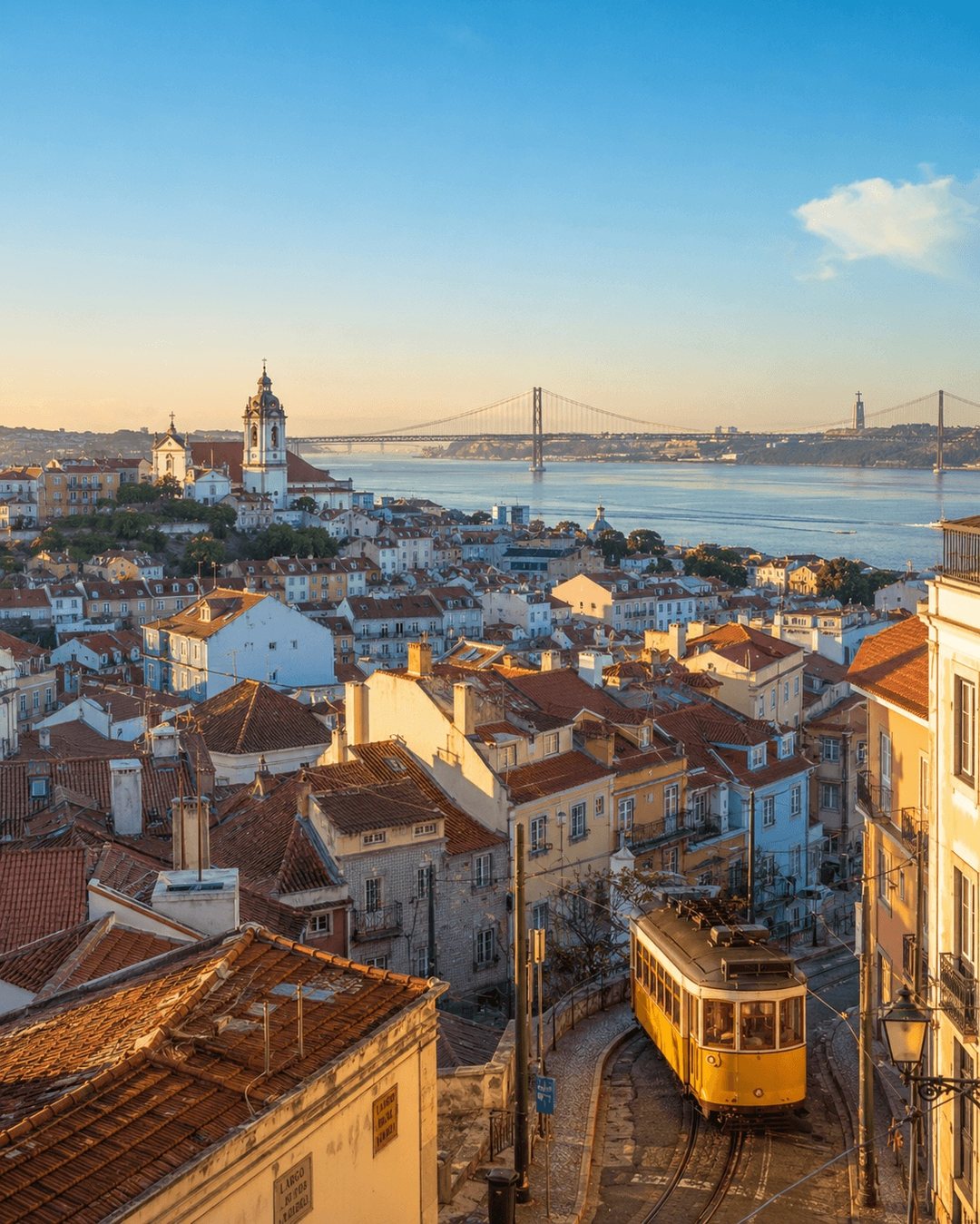
Lisbon now carries the visual burden of its own success. Yellow trams, tiled façades, steep lanes and river viewpoints arrive before the traveller does, repeated so often that the city can seem pre-edited for a screen. The escape is simple: begin earlier, walk shorter distances and allow ordinary streets to interrupt the icons. Four nights are enough for the historic slopes, the lower city, a western cultural day and one return to whatever proved most compelling. They are not enough for Lisbon, Sintra, Cascais and every celebrated restaurant compressed into a single breath.
Torel Palace Lisbon provides the hotel anchor. It is reviewed a hotel record for the stated edition, with a convincing food-and-drink offer leading the case and the depth of its service system close behind. Belcanto supplies the culinary focus at a restaurant record for the stated edition and published, recognised for coherent menu architecture and a persuasive sense of place. These are complementary forms of Lisbon confidence: one supports the rhythms of the stay, the other concentrates Portuguese identity into a composed evening.
Book both with purpose. Choose the Torel Palace room for outlook, quiet and access needs; category language alone cannot make the decision. Place Belcanto on the third night, when arrival fatigue has passed and appetite has not yet been dulled by a succession of long meals. Secure the cultural appointments that genuinely have limited entry, then keep at least half of every day open. Lisbon’s hills create delays, but they also create the pauses through which the city becomes distinct.
Hotel
Torel Palace Lisbon
Lisbon, PortugalThe case for Torel Palace Lisbon begins with a convincing food-and-drink offer and holds through the depth of its service system.
Open the record →Restaurant
Belcanto
Lisbon, PortugalBelcanto is a Creative restaurant in Lisbon, Portugal, defined by coherent menu architecture and a persuasive sense of place.
Open the record →02Torel Palace turns the view into a daily rhythm
The approved image of Torel Palace shows Lisbon descending beyond the hotel, a useful reminder that geography is part of the stay. The editorial review itself remains disciplined: a hotel record for the stated edition, published, a strong food-and-drink offer and service depth. Use those strengths at the beginning and end of the day. Breakfast can determine whether the first descent happens with curiosity or haste; a drink on return can separate a crowded afternoon from dinner. A hotel above the city should provide more than a photograph taken on arrival.
Ask practical questions before choosing a room. Lisbon’s slopes, historic buildings and changes of level can affect a stay more than square footage. Confirm lifts, stairs, the route to the entrance, likely room position and the ease of arranging a car when luggage or mobility requires one. A beautiful uphill walk at sunset may be unwelcome after a long dinner. Service becomes luxurious when these details are solved without turning the guest into a passenger through every hour.
The hotel’s food-and-drink strength also offers permission to stay in. Arrival dinner need not be another cross-city booking, and one lunch or late afternoon at the property can protect the trip from cumulative exertion. Lisbon encourages perpetual movement because every roofline suggests a better view beyond it. The mature response is to recognise when the view already held is sufficient. Time at Torel Palace should feel like time in Lisbon, not time withheld from it.
Lisbon’s most convincing luxury is the decision to stop climbing toward the next view and remain with the one already in front of you.
The World’s Best Travel Desk
03Belcanto’s sense of place is the reason to reserve
Belcanto’s One-restaurant records distinction and publishededitorial record rest on coherent menu architecture and a persuasive sense of place. The language is more useful than celebrity. Architecture means a meal whose courses relate to one another; place means Lisbon and Portugal are present as an idea rather than scenery outside the door. Give that argument an evening. Avoid a heavy lunch, return to the hotel before dinner and arrive on time enough that the sequence begins without negotiation.
A sense of place should not be mistaken for a catalogue of familiar national dishes. Contemporary cooking can draw from memory, product and landscape without reproducing a tourist’s expected repertoire. Let the menu establish its own vocabulary. Dietary restrictions need to be shared accurately at booking, since a tightly composed progression is easier to adapt with notice. Read current cancellation terms and dress guidance directly. The best preparation is not researching every plate; it is understanding the commitment the reservation requires.
Belcanto should remain the singular formal table in a four-night plan. The other meals can explore Lisbon at lower volume: grilled fish, pastries, small plates, a market lunch or a neighbourhood restaurant where convenience and character matter more than status. Repetition of prestige makes every dining room less distinct. Contrast allows the published meal to hold its shape and gives the city’s everyday appetite a place beside it.
04The city belongs to early mornings and the hour before dinner
Lisbon’s historic streets carry a different mood before day visitors and tour groups gather. Use the first morning for the lower city and river, or for one climb through older neighbourhoods while temperatures are manageable. Stop for coffee; it is not merely fuel between landmarks. Churches, small museums and shops often follow their own schedules, so verify the places that matter and allow closed doors to redirect the walk. The city’s texture survives minor inconvenience better than an overplanned visitor does.
Midday is the natural place for a long lunch or a return to the hotel, particularly in warm months. The impulse to keep climbing can turn Lisbon’s beauty into physical attrition. Choose one viewpoint, not five. Look long enough for the river traffic, roofs and changing light to become more than a background. A private guide can add depth when the interest is architecture, tiles, music or political history; the brief should be specific and the route compact.
Late afternoon restores the city. Shops reopen, shadows lengthen and the descent toward dinner becomes part of the evening. Fado requires care in selection and expectation: decide whether music, a full meal or an intimate setting is the priority, then reserve through a reliable source. Do not add it automatically after Belcanto. Two complete evening experiences deserve separate nights. Lisbon is generous after dark, but it should not be consumed as an entertainment package.
05Give the river one day and the hills another
The Tagus provides the clearest orientation. A waterfront day can connect architecture, museums and open space without requiring constant ascent. Choose a western focus according to current exhibitions and interests, check official opening information and leave gaps between institutions. The distances appear gentle beside the water but still accumulate. A car in one direction and public transport back can preserve energy while allowing the day to remain visually continuous.
The hills require a more granular plan. Group streets by elevation as well as neighbourhood; descending is not the same journey as climbing back. A taxi or funicular used uphill can be the intelligent choice, leaving the downward walk for discovery. Historic trams are working transport with limited capacity, not private sightseeing props. Travel outside the busiest hours, follow current operator guidance and do not build a fixed appointment around a service likely to be crowded.
A day trip should be considered only after Lisbon has received at least three complete days. Sintra and the coast are compelling, but inserting them into a short first visit often leaves the capital experienced only at breakfast and dinner. Add nights if the excursion is essential, arrange timed entries and transport carefully, and resist combining several major sites into one chauffeured endurance test. Proximity on a regional map does not make every place part of the same day.
06Transport works best when it acknowledges both beauty and gradient
Lisbon City Council identifies Metro, Carris buses and trams, elevators, funiculars and urban rail among the public-transport options. The network is useful, but each mode solves a different geography. Metro handles longer urban movements, surface transport connects the hills and river, and taxis are valuable with luggage or late at night. Check current service information, particularly where works or operational changes affect familiar routes. A beautiful vintage vehicle should never be the only plan for reaching a timed reservation.
Walking remains essential and counts as an activity in its own right, not dead space between appointments. Pavements can be polished, uneven and steep. Shoes need grip, and a small bag leaves hands free for steps. Formal dinner clothes should survive a short walk without demanding heroic footwear. The city’s elegance is compatible with practicality; indeed, the traveller moving calmly through a steep lane looks considerably more assured than the one dressed for a photograph and negotiating every stone.
Airport transfers are short on a map and variable in practice. Select Metro, taxi or a booked car according to arrival time, luggage and the hotel’s access, then add a margin for departure. Ask Torel Palace for the precise pick-up point. Lisbon’s narrow streets can place car and entrance farther apart than expected. The final morning should not depend on a vehicle discovering an impossible doorway at the exact minute check-in closes.
07Lisbon asks the itinerary to yield to the slope
Lisbon sets its own tempo through gradient. A descent can turn a short distance into an entire morning of streets, thresholds and changing light; the return uphill asks whether the next appointment deserves the effort. Build the guide with that physical truth in mind. Give the lower city and river one clear movement, the western waterfront another, and allow an older neighbourhood to occupy more time than its map dimensions suggest. The pauses created by the terrain are not inefficiencies. They are where the city acquires texture.
Torel Palace Lisbon and Belcanto work because each understands the value of a pause. The hotel converts elevation into outlook and gives service a practical role in negotiating the day. The restaurant concentrates Lisbon and Portugal into a coherent published menu architecture. Keep that evening singular. Grilled fish, pastries, a market lunch and a room chosen close to the day’s route can carry the other meals, letting the formal table retain its clarity without forcing the city’s appetite into one register.
Lisbon makes softness a demanding discipline. Beauty here does not excuse careless pacing: polished stones demand sound shoes, hills punish vanity and the best view loses force when treated as a compulsory stop. Move with enough restraint to hear the city change between river level and the higher streets. Its luxury appears in those shifts—in a coffee allowed to take time, in orientation replacing navigation, and in the moment the slope stops feeling like an obstacle and becomes the principle that holds the whole visit together.
Hotel
Torel Palace Lisbon
Lisbon, PortugalThe case for Torel Palace Lisbon begins with a convincing food-and-drink offer and holds through the depth of its service system.
Open the record →Restaurant
Belcanto
Lisbon, PortugalBelcanto is a Creative restaurant in Lisbon, Portugal, defined by coherent menu architecture and a persuasive sense of place.
Open the record →