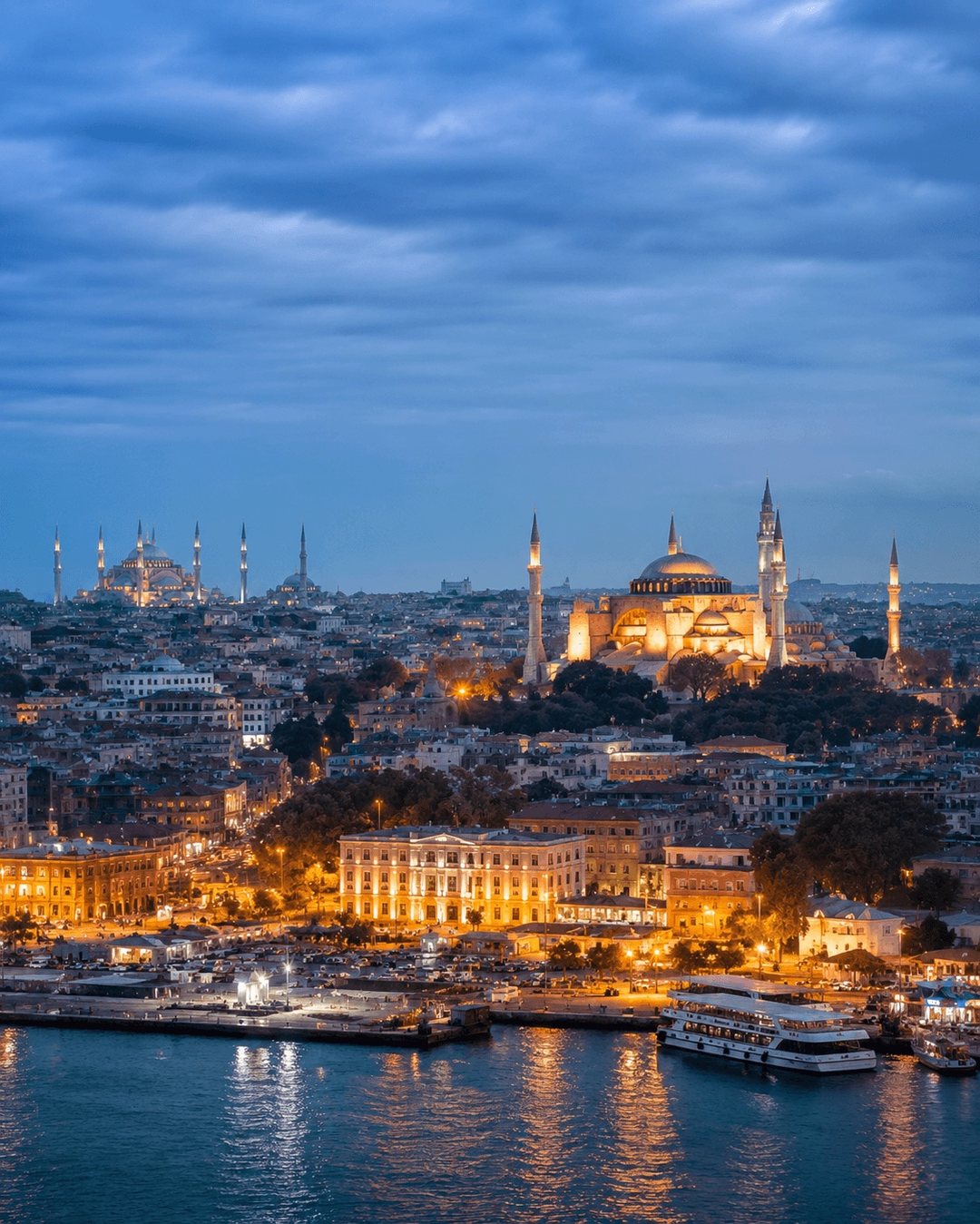
Istanbul by Water: The Five-Night Plan That Makes the City Feel Infinite
Vakko Hotel Sumahan Bosphorus and Sankai by Nagaya anchor a journey organised by shorelines, with traffic demoted from the itinerary as it moves from the historic peninsula to contemporary Istanbul without reducing either.
Executive brief
The Bosphorus is orientation, theatre and transport. Give Istanbul five nights, cross between continents with purpose and let one service-led hotel provide calm at the water’s edge.
01The Bosphorus is the itinerary’s organising intelligence
Istanbul becomes overwhelming when approached as a field of attractions joined by traffic. It becomes coherent when the water comes first. The Bosphorus separates continents, connects neighbourhoods and keeps the city’s scale visible. Five nights allow the historic peninsula, Beyoğlu and the modern centre, one Asian-shore day and an unhurried final chapter. Each should occupy its own geography. Crossing the city is then part of the story rather than the tax paid between famous sites.
Vakko Hotel Sumahan Bosphorus holds a hotel record for the stated edition and published. The record gives unusual clarity to the depth of its service system while sustaining restorative facilities. Sankai by Nagaya is reviewed a restaurant record for the stated edition, presenting Japanese Contemporary cooking shaped by technical precision and coherent menu architecture. The pairing is not an attempt to summarize Istanbul through two addresses. It supplies a calm operational base and a sharply defined culinary counterpoint inside a city too plural for a single emblem.
Secure the room, the restaurant and any timed site entries, then organise by shore. Airport transfer, bridge traffic, ferry schedules and weather all affect movement, so the day needs margins. Leave one afternoon entirely undecided. Istanbul rewards plans with strong bones and loose joints: the mosque or museum that receives enough time, the lunch that runs late, the crossing taken because the light changed.
Hotel
Vakko Hotel Sumahan Bosphorus
Istanbul, TürkiyeVakko Hotel Sumahan Bosphorus brings unusual clarity to the depth of its service system while sustaining its restorative facilities.
Open the record →Restaurant
Sankai by Nagaya
Istanbul, TürkiyeSankai by Nagaya presents Japanese Contemporary cooking in Istanbul, Türkiye, shaped by technical precision and coherent menu architecture.
Open the record →02Vakko Hotel Sumahan Bosphorus offers the rarest commodity: calm
The hotel’s published a hotel record for the stated edition editorial review is led by service depth and supported by restorative facilities. Those are practical strengths in Istanbul. A day among major monuments or dense commercial streets can leave even an experienced traveller saturated. Returning to a property designed around calm allows the city to remain exhilarating without becoming exhausting. Schedule a slow morning or late afternoon at the hotel and let the water provide the transition between public intensity and private space.
The Bosphorus name and approved waterfront image make location emotionally clear, but logistics still require attention. Ask the hotel how travel times change through the day, which ferry connections are useful, where cars collect guests and how early an airport departure should begin. Choose the room according to quiet, outlook and ease of movement. A water view is valuable; sleep and a workable daily route are more valuable when they can be secured together.
Service should reduce uncertainty without insulating the guest from Istanbul. Use the desk to confirm current opening information, reputable guides, transport and restaurant arrangements. Keep ownership of curiosity. Ask for help with a defined interest: Ottoman architecture, contemporary art, textiles or food history. A generic highlights circuit is too blunt an instrument. The city responds poorly to abstraction and generously to specific attention.
In Istanbul, the water is not the view left behind at breakfast; it is the line that makes the entire city intelligible.
The World’s Best Travel Desk
03Sankai by Nagaya is a deliberate change of culinary language
Sankai by Nagaya receives a restaurant record for the stated edition and published for Japanese Contemporary cooking in Istanbul, defined by technical precision and coherent menu architecture. Its place in this guide comes from contrast. After several days of Turkish breakfasts, market aromas, grilled food, seafood and richly layered local traditions, a disciplined Japanese Contemporary sequence can sharpen the palate and show another side of Istanbul’s international present. It is not a substitute for local cooking; it is evidence of the city’s range.
Reserve Sankai for the final or penultimate evening and protect the hours before it. A light lunch, a return to the hotel and realistic transport time will preserve appetite and punctuality. Communicate restrictions in advance. Coherent menu architecture depends on relationships between courses, so last-minute omissions can alter more than one plate. Arrive interested in precision and free of expectations of decorative theatre.
The remaining dinners should stay varied and geographically sensible. Eat near the day’s final neighbourhood instead of crossing Istanbul for every recommendation. Seek Turkish cooking through more than one register—home-style, seafood, grills, pastries and contemporary interpretations—without insisting that every meal become a formal event. Sankai will remain clearer as the singular non-local tasting statement; it should not become one entry in a nightly procession.
04The historic peninsula requires an early start and a firm stopping point
The concentration of monuments on the historic peninsula tempts visitors to treat the day as a conquest. Choose two major sites and perhaps one smaller museum, verify current access and dress requirements, and begin early. Security, queues, prayer times and restoration work can alter the sequence. A qualified guide adds real value when the brief connects Byzantine and Ottoman layers; a chronology recited at each doorway is not enough.
Lunch should mark the end of the most concentrated looking. Continue only if attention remains available. The covered markets and commercial streets deserve curiosity but also discernment. For carpets, jewellery, ceramics or textiles, ask about material, workmanship, origin and shipping; compare without allowing hospitality to create obligation. Significant purchases require documentation and an independent sense of value. Bargaining is not improved by confusion.
Return by a different route, ideally with water visible at some point, and avoid placing Sankai or another long dinner after the most demanding day. The historic city will have supplied enough scale and ceremony. An uncomplicated meal near the hotel allows impressions to settle. Istanbul’s past is not made more meaningful by adding one more monument after the mind has stopped receiving it.
05Crossing to the Asian shore should be a day, not a photo opportunity
The ferry is both transport and the clearest way to understand Istanbul’s relationship with water. Check current routes and schedules, travel outside the hardest commuting periods when possible and keep the crossing free of an immediate timed appointment. Tea, gulls, working vessels and the shifting skyline provide the context no car can offer. Give the journey full attention; a stream of photographs turns it into a moving backdrop.
Choose one Asian-side district and stay with it. Markets, food, residential streets, contemporary culture and the shoreline can occupy a full day without constant transfers. The goal is not to declare one side more authentic than the other; both are lived Istanbul. A guide can illuminate food or architecture, but an independent afternoon is equally valuable once orientation is secure. Return in evening light if weather and schedule cooperate, with enough margin before dinner.
Beyoğlu and nearby contemporary districts deserve their own day on the European side. Follow art, design, architecture and the steep relationship between upper streets and the water. Check exhibition calendars close to travel and group spaces by walking distance. Istanbul’s creative life changes quickly; a current programme is more useful than a famous list. Stop for coffee, look into passages and allow the city’s modernity to remain as layered as its history.
Food exploration benefits from the same geographical discipline. Markets, bakeries, grills, seafood and sweets are most revealing when encountered within the ordinary sequence of a neighbourhood, not gathered through a vehicle-based tasting marathon. A specialist guide can explain ingredients, regional migrations and commercial customs, but portions must be managed if dinner matters. Ask before photographing vendors or working kitchens, pay fairly and remember that a busy counter serves residents before it performs for visitors. Appetite opens Istanbul; entitlement closes it quickly.
06Use rail and ferries to escape the tyranny of road distance
Metro Istanbul operates metro, tram, funicular and cable-car lines and publishes network maps, timetables and service information. Rail is often the most predictable choice for longer urban movements, while trams can serve key historic corridors. Ferries add another essential layer. Understand the current payment system, keep the travel card ready and follow local flow through gates. Public transport is not a concession in Istanbul; it can be the only mode that makes a busy day feel composed.
Cars remain necessary for some hotel and airport movements, formal evenings, luggage and mobility needs. Book through a reliable operator, confirm the precise pick-up point and allow for traffic far beyond the optimistic map estimate. A private driver is valuable when several remote appointments genuinely require continuity. Keeping one all day through areas better served by rail may add waiting without access. The right luxury is not permanent possession of a vehicle but freedom from anxiety about the next movement.
Footwear and clothing should accommodate steep streets, polished stone, security checks and religious sites. Carry a scarf or layer where appropriate, and follow posted guidance. Istanbul weather can shift on the water, so a light outer layer earns space even on a warm day. Formal dinner clothes should be simple enough to travel. The city’s elegance comes from confidence and respect, not from remaining untouched by its streets.
07The Bosphorus keeps the final word
Istanbul becomes coherent through crossings. The historic peninsula establishes the depth of the city, Beyoğlu changes its vertical and cultural register, and the Asian shore alters the view back across the water. Rail and ferries make those shifts legible because the journey remains visible. Road traffic compresses Istanbul into delay; the Bosphorus restores scale, orientation and anticipation. Build each day on one shore or within one district, then allow the crossing itself to announce that the argument has changed.
Vakko Hotel Sumahan Bosphorus and Sankai by Nagaya hold opposite edges of that composition. The hotel gives service and restoration a waterfront calm, making retreat part of the city’s rhythm. Sankai concentrates published precision into a distinct culinary language that benefits from a light day and a measured arrival. Neither replaces the Turkish meals, streets and working ferries around it. Their value lies in contrast: one quiet frame, one exact evening and a vast urban field still moving between them.
The Bosphorus keeps the final word because it refuses to reduce Istanbul to a sequence of monuments. From the water, domes, towers, ferries and apartment fronts belong to the same living horizon. That view does not make the city simple; it makes its magnitude intelligible. Five nights can hold only a portion, yet a route organised by shorelines gives that portion shape. Istanbul’s luxury is the ability to move between intensity and calm without severing either, while every crossing makes the next part of the city feel newly possible.
Hotel
Vakko Hotel Sumahan Bosphorus
Istanbul, TürkiyeVakko Hotel Sumahan Bosphorus brings unusual clarity to the depth of its service system while sustaining its restorative facilities.
Open the record →Restaurant
Sankai by Nagaya
Istanbul, TürkiyeSankai by Nagaya presents Japanese Contemporary cooking in Istanbul, Türkiye, shaped by technical precision and coherent menu architecture.
Open the record →